
Data centers now carry massive traffic from cloud services, AI platforms, video systems, finance networks, and enterprise backup sites. Therefore, they need fast and stable links between different facilities.
A DCI BOX helps solve this challenge. It connects data centers through high-capacity optical transmission. Moreover, it improves bandwidth use, reduces fiber pressure, and supports future network growth.
For companies building modern digital infrastructure, this device is more than a simple transmission unit. It is a core part of reliable data center interconnection.
What Is a DCI BOX?
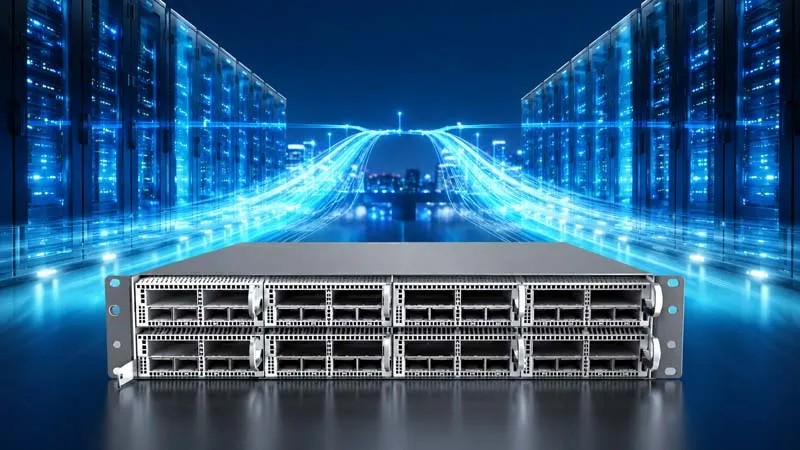
DCI means Data Center Interconnect. A DCI BOX is a compact optical transmission platform for high-speed data center links.
In simple terms, it moves large volumes of data between two or more data centers. It often supports Ethernet, OTN, DWDM, coherent transmission, optical amplification, and network management.
Unlike traditional transmission equipment, it usually has a smaller size and faster deployment. As a result, it fits well in cloud data centers, IDC rooms, enterprise networks, and carrier edge sites.
Its main purpose is clear: deliver more bandwidth through limited fiber resources while keeping the network stable and easy to manage.
Why Data Centers Need This Solution
Modern data centers rarely work alone. Instead, they operate as connected resource pools. Cloud providers need cross-region resource scheduling. AI platforms need fast movement of training data. Financial institutions need disaster recovery links.
Therefore, data center interconnection must support high bandwidth, low latency, and strong reliability.
In addition, many operators face limited fiber resources. Laying new fiber can be expensive and slow. With DWDM technology, one fiber pair can carry many wavelengths. As a result, the available fiber capacity increases greatly.
For this reason, a DCI BOX becomes a practical choice for fast network expansion.
Main Types of DCI Solutions
Different projects need different technical paths. Therefore, buyers should understand the main types before making a decision.
DWDM-Based Solution
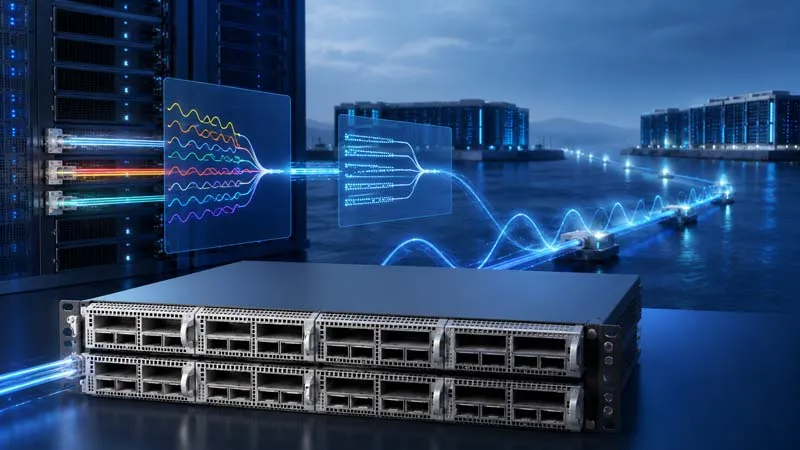
A DWDM-based system uses dense wavelength division multiplexing. It sends multiple optical wavelengths through one fiber pair.
This type works well when fiber resources are limited. Moreover, it helps IDC providers, ISPs, and carriers expand capacity without laying new cables.
It is suitable for 10G, 100G, 200G, 400G, and even higher-rate transmission.
OTN-Based Solution
An OTN-based solution focuses on service grooming, protection, monitoring, and management. It can carry multiple services with better control.
Therefore, it suits networks that need high reliability and clear service visibility. For example, finance, government, energy, and carrier networks often need this structure.
In addition, OTN helps simplify maintenance when the network carries many service types.
Coherent Transmission Solution
Coherent transmission supports long-distance and high-speed optical links. It usually works with 100G, 200G, 400G, or 800G line-side rates.
As a result, it fits metro, regional, and long-haul data center interconnection. It also improves transmission performance over complex fiber routes.
This type is important for cloud platforms, AI computing centers, and large backbone networks.
Compact Box-Type Platform
A compact box-type platform usually uses a 1U or 2U design. It saves rack space and supports quick deployment.
Moreover, it can combine service boards, line boards, amplifiers, mux/demux modules, and protection units. This design gives users a flexible and scalable network structure.
For many data center rooms, compact design is a major advantage.
Core Architecture
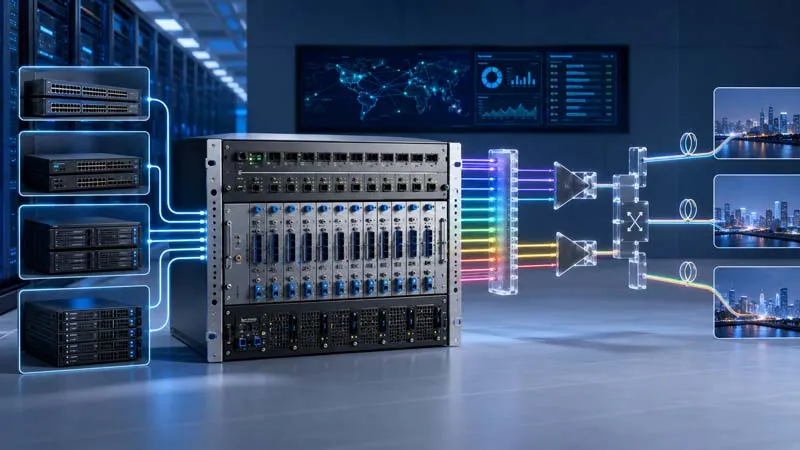
A complete DCI transmission system usually includes client-side interfaces, line-side interfaces, DWDM modules, optical amplifiers, protection units, and network management.
The client side connects switches, routers, firewalls, storage systems, or servers. It may support 10G, 25G, 100G, 200G, 400G, and 800G Ethernet.
The line side converts service traffic into optical signals for long-distance transmission. Therefore, it often uses coherent optics, FEC, and optical performance monitoring.
Meanwhile, DWDM modules combine many wavelengths into one fiber link. Optical amplifiers then help compensate for link loss.
In addition, protection units can improve network availability. For example, optical line protection can switch traffic when a fiber route fails.
Finally, the network management system helps engineers monitor alarms, ports, optical power, and service performance.
Key Application Scenarios
A DCI BOX can serve many network environments. However, its value becomes most clear in high-bandwidth and high-reliability scenarios.
Cloud Data Center Interconnection
Cloud platforms need fast data exchange between resource pools. Therefore, they require high-capacity optical links.
This solution helps cloud providers support service migration, data backup, and multi-site resource scheduling.
AI Computing Centers
AI training and inference generate huge data flows. In addition, GPU clusters often need fast access to storage and service platforms.
A high-capacity DCI system can support these traffic demands. As a result, AI infrastructure can work with better efficiency.
IDC and ISP Networks
IDC providers often connect multiple computer rooms in one city or region. Therefore, they need scalable and cost-effective transmission links.
With DWDM and coherent technologies, they can provide private lines, cloud access, and disaster recovery services to enterprise customers.
Financial and Enterprise Backup Networks
Banks, securities firms, and large enterprises need stable disaster recovery systems. Moreover, they must protect data and reduce service interruption.
A reliable DCI architecture can support active-active data centers, backup centers, and business continuity networks.
Carrier Metro and Backbone Expansion
Carriers need to upgrade metro and backbone capacity as traffic grows. Therefore, compact high-capacity optical platforms can help them expand faster.
At the same time, they can improve fiber utilization and simplify network operations.
How to Choose the Right DCI BOX
Before choosing a DCI BOX, users should not only compare capacity. They also need to review distance, service type, fiber condition, reliability, and future expansion.
First, define the required bandwidth. If the network will grow from 100G to 400G or 800G, choose a platform with smooth upgrade ability.
Second, check the transmission distance. Metro links, regional links, and long-haul links need different optical modules and amplification plans.
Third, review service interfaces. A strong platform should support flexible access for Ethernet, OTN, and other high-value services.
Fourth, focus on reliability. Redundant power, redundant fans, optical protection, alarm monitoring, and remote management all matter.
Finally, choose a supplier with real solution capability. DCI projects need link budget design, product selection, deployment support, and long-term maintenance.
Why Choose Shenzhen HTF Technology
Shenzhen HTF Technology focuses on optical transmission products and WDM system solutions. The company serves data centers, 5G networks, cloud computing, metro networks, and access networks.
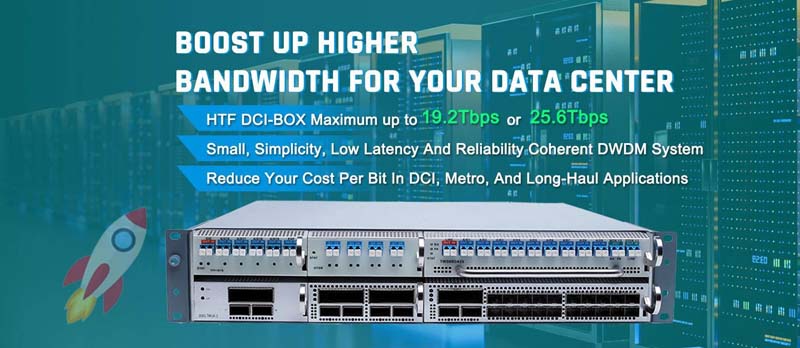
For data center interconnection, HTF provides compact and scalable transmission platforms. Its HT6800 series supports high-capacity service access and flexible optical-layer expansion.
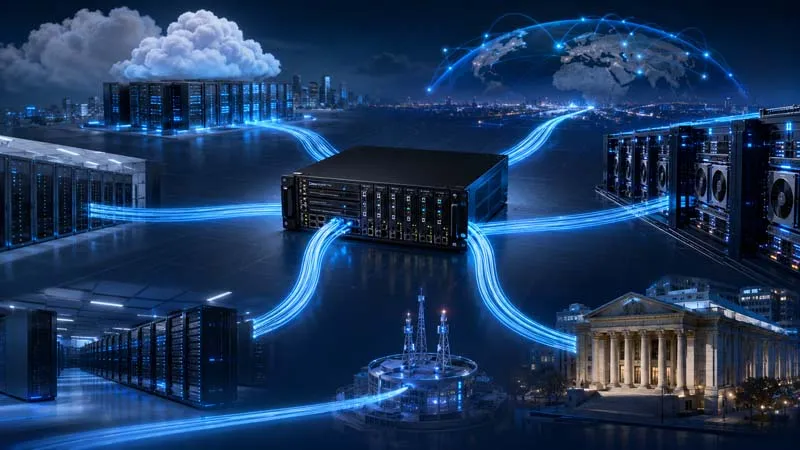
In addition, HTF can provide DWDM, OTN, EDFA, OLP, and high-speed transmission solutions. Therefore, customers can build a complete system based on real project needs.
For IDC providers, carriers, cloud platforms, and enterprise users, HTF offers not only products but also practical engineering support.
Conclusion
Data center traffic will continue to grow. Therefore, networks need higher bandwidth, lower latency, and stronger reliability.
A DCI BOX gives data centers a compact, scalable, and efficient way to connect. It helps users increase fiber capacity, simplify deployment, and prepare for future service growth.
When selecting a solution, companies should focus on capacity, distance, interfaces, protection, management, and supplier experience. With the right platform and the right partner, data center interconnection can become faster, safer, and more future-ready.