
What Is a DCI BOX?
DCI BOX is a high-capacity optical transmission platform for data center interconnect networks. It connects data centers across campuses, cities, and regions. Today, cloud computing, AI training, video platforms, and financial services create massive traffic growth. Therefore, enterprises need faster and more stable interconnection between data centers.
A traditional single-link design often struggles with capacity, latency, and fiber cost. Instead, a DCI BOX uses optical transport technology to move large data flows efficiently. It helps users increase bandwidth, reduce delay, save fiber resources, and simplify expansion.

Why Data Center Interconnect Matters
Data centers no longer work as isolated facilities. Instead, they form distributed computing networks. Cloud platforms share resources across regions. AI workloads move data between training clusters. Financial systems require real-time disaster recovery.
As a result, inter-data-center traffic keeps rising. This growth increases pressure on bandwidth, fiber resources, rack space, and power consumption. A strong optical transport system can reduce that pressure. Therefore, data center interconnect has become a core part of digital infrastructure.
How a DCI BOX Works
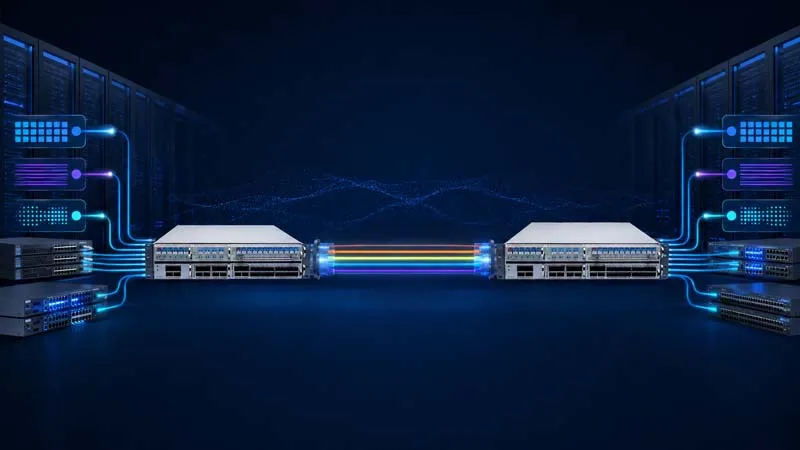
A DCI BOX receives high-speed service signals from switches, routers, or servers. These services may include 100G, 200G, 400G, or higher-speed connections. Then, the system converts and maps these services into optical channels.
With DWDM technology, multiple wavelengths can travel through one fiber pair. This design increases fiber capacity without many new cables. In addition, OTN functions improve service monitoring, protection, and management. Network teams can track performance, detect faults, and maintain stable transmission.
As a result, the platform creates a more efficient optical layer for data center interconnect. It gives operators a clear path for future capacity growth.
Core Benefits of DCI BOX
The first benefit is high capacity. Modern data centers need massive bandwidth for cloud services, AI computing, backup, and content delivery. DCI BOX supports this growth with scalable optical transmission.
The second benefit is fiber saving. DWDM allows many wavelengths to share the same fiber. Therefore, operators can carry more traffic with limited fiber resources.
The third benefit is low latency. Many services need fast response times. These include financial trading, AI data exchange, cloud migration, and disaster recovery. Moreover, stable low-latency transmission helps improve user experience.
In addition, a compact optical transport platform can reduce rack space and power pressure. Compact systems help data centers use space more efficiently. They support easier maintenance and faster expansion.
Typical Application Scenarios
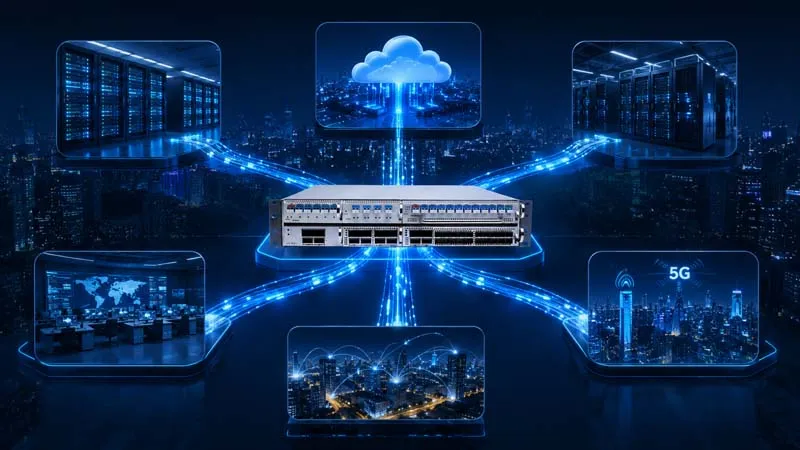
DCI BOX fits many high-bandwidth network scenarios. Cloud data centers use it to connect resource pools across regions. AI data centers use it to move training data and model information between computing clusters.
IDC operators use the system to expand backbone transmission capacity. Internet service providers use it for metro network upgrades and large-bandwidth private lines. Moreover, financial institutions use data center interconnect for disaster recovery.
They need stable transmission between primary and backup sites. In this case, reliability matters as much as speed. For enterprises, the platform can support campus interconnect, storage synchronization, and business continuity.
DCI BOX, DWDM, and OTN
DCI means data center interconnect. DWDM refers to optical transmission technology. It allows many wavelengths to carry traffic through one fiber. OTN refers to the service transport and management layer.
In practice, DCI BOX often combines these technologies in one platform. Therefore, users do not need to treat them as separate systems. DWDM improves fiber capacity. OTN improves monitoring, protection, and service organization.
Together, these technologies improve capacity, reliability, and operating efficiency. They help engineers build cleaner and more scalable network architecture.
How to Choose the Right DCI BOX
Before choosing a DCI BOX, users should define the required capacity. A small project may start with 100G links. However, a fast-growing data center may need 400G or 800G expansion.
Next, users should evaluate transmission distance. Campus, metro, and long-haul networks have different optical requirements. The right design depends on fiber quality, distance, loss, and future growth.
In addition, interface compatibility matters. The system should match existing switches, routers, optical modules, and management tools. This reduces integration risks and shortens deployment time.
Finally, users should check power consumption, heat dissipation, redundancy, and network management. A reliable vendor should provide planning, product support, testing, and after-sales service.
Deployment Considerations
A successful data center interconnect project needs more than equipment selection. First, engineers should assess the existing fiber route. Fiber loss, connector quality, and route redundancy can affect the final design.
Next, teams should confirm service growth over the next three to five years. This step helps avoid repeated upgrades. It helps the network reserve enough capacity for new services.
Moreover, network managers should plan monitoring and maintenance before deployment. Clear alarms, remote management, and fast fault location can reduce downtime. In this way, the optical transport layer can support stable business growth.
Important Performance Metrics
Engineers should measure capacity, latency, optical power, service availability, and packet loss. These metrics show whether the link can support real business traffic. A stable design should leave enough margin for future bandwidth growth.
Latency matters for finance, AI computing, and real-time cloud services. Service availability matters for disaster recovery and critical applications. Optical margin matters for long-term fiber aging and route changes. Good planning reduces emergency maintenance and protects service continuity.
In many projects, network teams also review rack space and power budgets. These factors affect total operating cost. Careful evaluation helps customers build a stronger and more predictable interconnect network.
Key Factors for Procurement
A good procurement decision should look beyond device price. Instead, buyers should consider total project cost. This includes fiber usage, rack space, power, maintenance, and future expansion.
For example, a high-density platform may cost more at first. However, it can reduce space, cabling, and operating costs later. Therefore, long-term value matters more than short-term price.
Buyers should review supplier experience. A professional supplier understands optical transmission, fiber solutions, WDM systems, and real network operation. This experience helps reduce project risk.
Future Trends in Data Center Interconnect
The data center industry is moving toward higher speed and higher density. AI computing, 5G, cloud services, and edge computing will continue to increase traffic demand. As a result, optical transmission platforms need stronger capacity and better scalability.
They must support simple operation, fast service activation, and stable long-term performance. DCI BOX will remain important in this evolution. It connects computing power, storage resources, and digital services across different locations. Therefore, it will become a key foundation for future data infrastructure.
HTF Optical Transmission Solutions
HTF is a professional supplier of fiber optic products and WDM system solutions. Its team has more than ten years of experience in optical communication R&D, fiber solutions, component development, and manufacturing.
HTF helps customers build, connect, and optimize fiber infrastructure. The company serves global data centers, 5G networks, cloud computing, metro networks, and access networks. Its services cover transmission solution design, product supply, and technical support.
In addition, HTF HT6000 offers a compact, high-capacity, and cost-effective OTN optical transmission system. It uses a universal CWDM/DWDM platform design and supports transparent multi-service transmission.
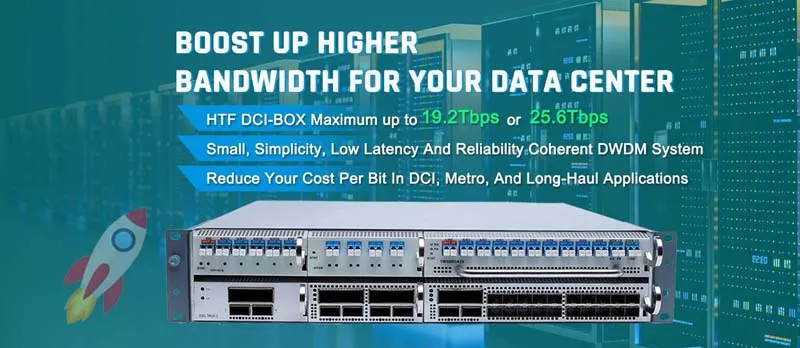
The system provides flexible networking and access capabilities. It fits national backbone networks, provincial backbone networks, metro backbone networks, and other core networks. With support for large-capacity nodes above 1.6T, HTF HT6000 helps IDC and ISP operators build scalable WDM transmission expansion solutions.