
A compact dci box for rack mount is becoming a vital platform for modern data center interconnect. Cloud computing, AI workloads, financial systems, video platforms, and disaster recovery services now demand faster data movement. Therefore, enterprises need more than basic connectivity. They need high bandwidth, low latency, flexible expansion, and stable optical transmission.
As data centers grow, network pressure rises quickly. Traditional transport systems often require more space, more cables, and more power. However, a compact dci box for rack mount helps solve these limits through a smaller and smarter architecture. It brings optical transport, service access, wavelength division, and management into one efficient platform.
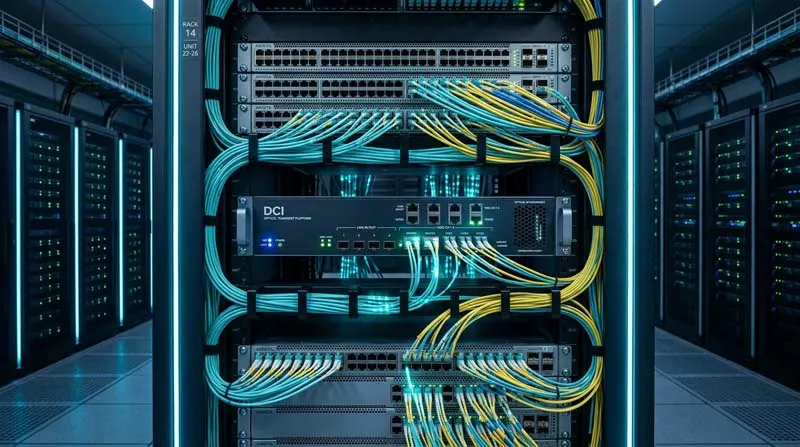
Why Data Center Interconnect Needs a Compact Architecture
Data center interconnect, or DCI, links two or more data centers through high-speed optical networks. In many cases, this connection supports cloud resource scheduling, storage backup, business migration, and real-time service delivery. As a result, the quality of the DCI layer directly affects digital business performance.
A compact dci box for rack mount fits this new demand because it uses standard rack space with high port density. It also simplifies deployment inside IDC rooms, carrier sites, and enterprise network nodes. Moreover, its compact form helps operators reduce equipment layers and improve cabinet efficiency.
The core value does not come only from saving space. Instead, it comes from better system integration. When one platform handles multiple transport functions, the network becomes cleaner. Therefore, teams can reduce jumpers, shorten deployment cycles, and improve daily maintenance.
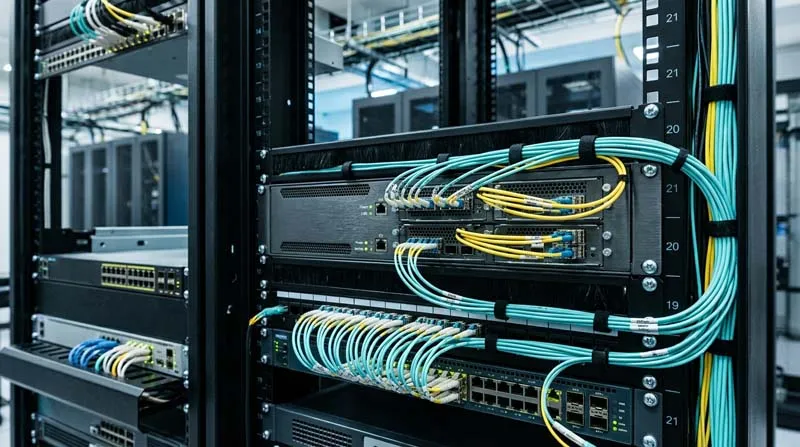
What Makes a Compact DCI Box Different
A compact dci box for rack mount usually supports Ethernet services, OTN services, DWDM or CWDM transmission, and optical layer monitoring. It can work in point-to-point links, metro DCI networks, cloud access networks, and multi-site enterprise systems. Because of this flexibility, it suits both new builds and network upgrades.
Compared with traditional multi-device solutions, this architecture offers a more direct path. Engineers can deploy fewer devices and manage fewer physical connections. In addition, modular design allows users to expand capacity when traffic grows. This approach helps companies avoid large-scale network rebuilding.
For cloud providers and IDC operators, fast service delivery matters. A compact dci box for rack mount allows them to open new high-capacity links with less complexity. Meanwhile, enterprise users can gain stronger business continuity for backup, replication, and cross-site operations.
Higher Bandwidth Density for AI and Cloud Growth
AI training, cloud storage, and big data analytics create huge east-west traffic. Therefore, inter-data-center links must carry more information with predictable performance. A compact dci box for rack mount supports this trend by improving bandwidth density within limited rack space.
Many networks now move from 100G toward 400G and 800G paths. This shift helps operators reduce cost per bit and prepare for future traffic growth. However, bandwidth alone cannot solve every problem. The device must also offer stable transmission, flexible service mapping, and simple management.
In AI scenarios, storage clusters and computing clusters exchange massive data sets. If the interconnect layer becomes a bottleneck, the whole computing process slows down. Therefore, a compact optical transport platform can help improve resource efficiency across the network.

Lower Operating Costs and Easier Maintenance
Cost control remains a major concern in every data center. Space, power, cooling, fiber resources, and maintenance labor all affect long-term return. A compact dci box for rack mount can reduce these pressures by combining multiple functions in one platform.
Fewer devices usually mean fewer cables and fewer possible fault points. Moreover, centralized monitoring helps engineers locate issues faster. This improves network reliability and reduces operational risk.
Power efficiency also matters. As traffic grows, data centers must increase capacity without raising energy use at the same pace. Therefore, compact optical transmission platforms support greener network growth. They help operators build larger links while keeping the infrastructure more manageable.
Key Application Scenarios
A compact dci box for rack mount fits many high-value scenarios. First, cloud service providers can use it to connect availability zones and regional data centers. This supports resource scheduling, backup, and flexible service expansion.
Second, financial institutions can use DCI links for active-active data centers and disaster recovery. Low latency and stable transmission help protect transaction systems and core databases. In addition, government and enterprise users can use it for secure cross-site data synchronization.
Third, IDC and ISP operators can use compact DCI platforms to build high-capacity leased line services. They can also offer cloud connection, metro transport, and bandwidth expansion services. Therefore, the platform creates both technical value and business value.
Future Trends: From High Speed to Intelligent Optical Networks
The DCI market will continue to move toward higher speed, better automation, and lower power use. A compact dci box for rack mount will play an important role in this shift. It gives operators a practical way to scale capacity without expanding equipment rooms too quickly.
In the future, 400G and 800G applications will become more common in core interconnect scenarios. Meanwhile, intelligent monitoring and automated configuration will become basic requirements. These features help teams respond faster to traffic changes and service faults.
However, the real direction goes beyond hardware speed. The next generation of optical networks will need platform-level thinking. Devices must support flexible service access, efficient wavelength use, and unified management. Therefore, compact DCI equipment will become a key building block for cloud, AI, 5G, and metro networks.
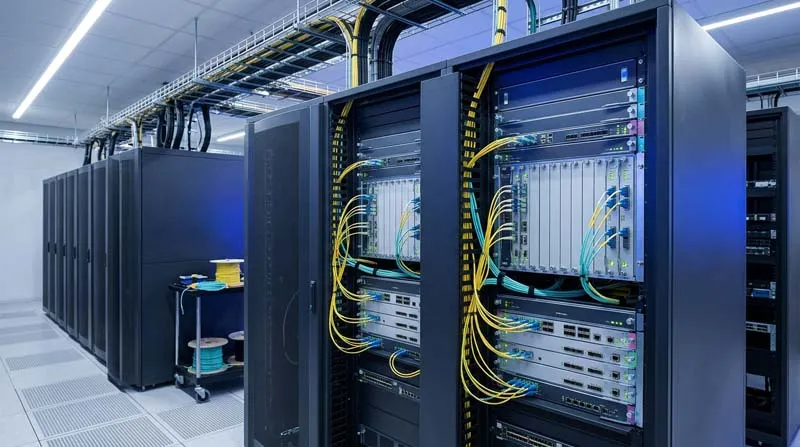
Choosing the Right Optical Transport Partner
A strong DCI project depends on both equipment and solution capability. Enterprises should review bandwidth needs, transmission distance, fiber resources, protection design, and future expansion plans. In addition, they should work with partners who understand optical products, WDM systems, and data transmission scenarios.
HTF is a professional supplier of fiber optic products and WDM system solutions. Its team has more than 10 years of experience in optical communication product research, fiber solutions, component development, and manufacturing. Therefore, HTF helps customers build, connect, and optimize fiber infrastructure for data centers, 5G networks, cloud computing, metro networks, and access networks.
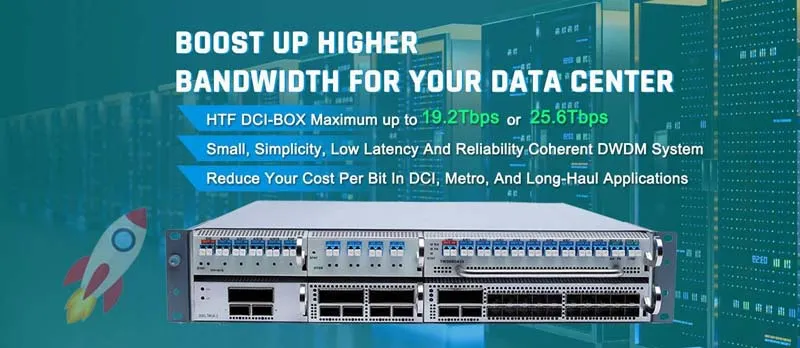
HTF HT6000 is a compact, high-capacity, and cost-effective OTN optical transport system. It uses a universal CWDM and DWDM platform design. It also supports transparent multi-service transmission, flexible networking, and flexible access. With capacity for more than 1.6T nodes, it helps IDC and ISP operators build scalable WDM transmission expansion solutions.
Conclusion: Compact Design, Bigger Network Value
A compact dci box for rack mount is not just a smaller device. It represents a more efficient way to build data center interconnect. Through high integration, high bandwidth density, lower operating cost, and simpler maintenance, it helps enterprises prepare for the next stage of digital infrastructure.
Ultimately, the future of optical networking belongs to systems that move more data with less space and less complexity. A compact dci box for rack mount supports that future with practical engineering value. It helps data centers connect faster, scale smarter, and turn network capacity into business growth.