
High-Speed Optical Modules now stand at the center of the AI infrastructure boom. They no longer serve as simple transmission components inside data centers. Instead, they connect computing resources, unlock cluster efficiency, and support the rapid movement of massive data flows. As AI training grows larger and inference spreads across more scenarios, network bandwidth has become a decisive factor in system performance.
At the same time, the market has entered a new expansion cycle. 800G products are moving into large-scale deployment, while 1.6T products are starting to move from validation into commercial rollout. Therefore, the industry is no longer discussing whether demand will grow. It is now asking how fast the next wave will arrive, which technologies will lead it, and which companies can deliver at scale.
Why AI Is Driving a New Cycle of Optical Demand
The AI era has changed the logic of infrastructure investment. In the past, many buyers focused first on processors, storage, and switching capacity. However, AI clusters have made high-speed interconnection just as important as raw compute power. When thousands of GPUs work together, data must move across nodes, racks, and campuses with very low latency and very high stability.

As a result, networks have become a core bottleneck. If the interconnect cannot keep pace, expensive compute resources cannot reach full efficiency. High-Speed Optical Modules solve this problem by supporting faster and denser traffic transmission across modern AI architectures. They help cloud providers build larger clusters, faster training systems, and more flexible resource pools.
Moreover, inference demand is spreading beyond one training site or one availability zone. That trend creates even more pressure on bandwidth, density, and power efficiency. Therefore, optical connectivity is now a strategic layer of AI infrastructure rather than a supporting detail.
800G Leads the Scale-Up Phase
Today, 800G products are the first major winners in this growth cycle. The reason is straightforward. The ecosystem around 800G has matured faster than the ecosystem around higher-rate products. Switch architectures, thermal design, packaging methods, and customer verification have all advanced enough to support volume deployment. Therefore, many operators now see 800G as the most practical solution for near-term expansion.
In addition, hyperscale cloud companies need products that can scale now, not only in theory. They want stable supply, consistent quality, and proven field performance. High-Speed Optical Modules in the 800G category meet those requirements more effectively at this stage. That is why 800G has become the leading volume segment in AI cluster interconnection.
Meanwhile, the market still has room for long growth. Existing cloud and data center networks continue to upgrade from lower-speed generations. As that installed base evolves, 800G will remain a crucial bridge between today’s production needs and tomorrow’s more advanced architectures.
1.6T Opens the Next Layer of Growth
While 800G drives current volume, 1.6T defines the next stage of industry expansion. It represents more than a simple speed increase. Instead, it reflects the need for higher density, stronger bandwidth efficiency, and better support for future cluster design. As AI systems keep expanding, traffic concentration rises sharply. Therefore, operators need even more capable optical links.
This shift gives High-Speed Optical Modules a second growth engine. 1.6T products can support larger east-west traffic loads, higher-performance switching platforms, and more demanding interconnect topologies. In that sense, 1.6T is not replacing 800G overnight. Rather, it is extending the upgrade roadmap and creating a layered market structure.
Furthermore, the adoption path will likely follow a practical pattern. 800G will continue to dominate broad deployment, while 1.6T will first enter premium and bandwidth-hungry scenarios. That dual-track structure gives the market both scale and imagination. It also creates a stronger foundation for long-term investment across the optical supply chain.
DCI Is Expanding the Market Beyond a Single Data Center
AI growth does not stop inside one building. In fact, many of the most important future use cases depend on data center interconnect, or DCI. Training, inference, storage coordination, and multi-site scheduling all require strong links between facilities. Therefore, DCI has become a powerful second driver for High-Speed Optical Modules.
This shift matters because interconnection now operates on two levels. First, optical products support scale-up and scale-out traffic inside AI clusters. Second, they support scale-across traffic between data centers. As enterprises and cloud operators distribute workloads across campuses and regions, long-haul and metro connectivity become more important.
Moreover, DCI supports resilience and business continuity. It allows operators to balance loads, protect services, and move data more intelligently. As a result, the value of optical connectivity extends from component performance to network architecture itself. High-Speed Optical Modules are therefore becoming critical tools for building unified compute fabrics across larger geographic footprints.
Technology Competition Now Focuses on Density, Power, and Reliability
The industry no longer competes on speed alone. Today, High-Speed Optical Modules succeed only when they combine bandwidth, low power consumption, strong thermal control, and reliable long-term performance. As data rates rise, each design decision matters more. Signal integrity becomes harder to maintain, thermal margins narrow, and packaging requirements become more demanding.
Therefore, vendors now compete across a wider technology stack. Silicon photonics, DSP capability, advanced packaging, and low-power interconnect architectures all shape product competitiveness. In addition, approaches such as LPO, NPO, and CPO have drawn growing attention because the market wants shorter electrical paths and better energy efficiency.
However, the race is not only about advanced concepts. Customers still care most about mass production, delivery stability, and operational reliability. That is why the strongest suppliers will not be the ones with the loudest roadmap. Instead, they will be the ones that turn complex engineering into dependable commercial deployment. In this environment, High-Speed Optical Modules must prove both performance and manufacturability.
Why This Trend Matters for the Broader Transmission Ecosystem
As traffic volumes rise, network operators must think beyond a single module. They need a complete transmission strategy that links components, platforms, and capacity planning. Therefore, the rapid growth of High-Speed Optical Modules is also pushing the wider optical transmission market toward new upgrades in WDM and OTN systems.
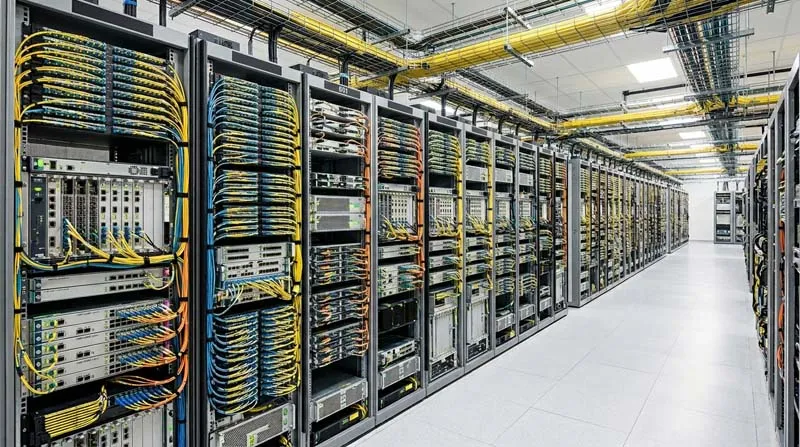
This is where experienced solution providers gain strategic value. HTF, for example, focuses on fiber products, WDM system solutions, and large-data transmission applications. Its team brings more than ten years of experience in optical communication product development, fiber solutions, device engineering, and manufacturing. As a result, HTF can support the design, supply, and service needs of global data centers, 5G networks, cloud computing platforms, metro networks, and access networks.
In addition, HTF HT6000 offers a compact, high-capacity, and cost-effective OTN transmission platform. It uses a universal CWDM/DWDM design, supports transparent multi-service transport, and provides flexible networking and access capabilities. For operators that need more than 1.6T node capacity, this platform offers a practical WDM expansion path for IDC and ISP environments.
The Industry Is Entering a More Strategic Phase
The growth of High-Speed Optical Modules signals more than a strong product cycle. It signals a structural shift in how the digital world moves, scales, and connects computing power. AI has raised the value of interconnection from a technical necessity to a strategic resource. Therefore, every major upgrade in compute infrastructure now depends on optical progress as well.
Ultimately, the winners in this market will combine three strengths. They will understand AI traffic patterns, master advanced optical technologies, and deliver at production scale. As cloud networks expand and DCI demand deepens, High-Speed Optical Modules will continue to shape the backbone of the intelligent era. Their rise is not temporary. It is a defining feature of the next generation of global digital infrastructure.