
In the digital age, where global data traffic is projected to grow at a compound annual rate of 27% through 2030, optical communication networks face an unprecedented challenge: how to transmit more data over existing fiber infrastructure without incurring the exorbitant costs of laying new fibers.
Traditional single-wavelength transmission solutions—once the standard for telecom, data center, and enterprise networks—have hit a bottleneck, as they can only carry one data stream per fiber pair. This inefficiency has become a critical barrier to supporting 5G, cloud computing, AI, and IoT applications.
It is in this context that Wavelength Division Multiplexers (WDM) have emerged as a transformative technology, unlocking the full potential of optical fibers by enabling simultaneous transmission of multiple data streams across distinct wavelengths. As the “traffic conductors” of modern optical networks, WDM devices are redefining how data moves globally, balancing scalability, cost-efficiency, and reliability.

I. Core Technology: How WDM Unlocks Fiber Capacity
At its essence, a Wavelength Division Multiplexer is a passive or semi-passive optical component that leverages a fundamental property of light: different wavelengths (colors) of light can travel through a single optical fiber without interfering with one another. WDM systems operate in two key modes—multiplexing (combining multiple wavelengths into a single fiber) and demultiplexing (separating the combined wavelengths back into individual signals at the receiving end)—creating a “highway” of parallel data streams on a single fiber pair.
The technology is primarily categorized into two types, each tailored to specific network needs:
1. Coarse Wavelength Division Multiplexing (CWDM)
CWDM uses wider wavelength spacing (typically 20nm, spanning 1270nm–1610nm) to support max 18 channels. Its design prioritizes cost-efficiency and simplicity: it requires no active temperature control for lasers, uses low-cost passive components, and is ideal for short-to-medium range applications (up to 80km).
For example, a regional telecom provider can use CWDM to upgrade a 1Gbps fiber link to 8Gbps (8 channels × 1Gbps) without replacing existing fibers, cutting infrastructure costs by 60% compared to deploying new fiber pairs. CWDM is also widely adopted in enterprise campus networks and small-scale data center interconnections (DCI), where bandwidth demands are significant but not extreme.
2. Dense Wavelength Division Multiplexing (DWDM)
DWDM, by contrast, uses ultra-narrow wavelength spacing (as small as 0.8nm, operating in the C-band: 1530nm–1565nm, or extended L-band) to support 40–160+ channels—even up to 800 channels with advanced technologies.
It is engineered for long-haul and high-capacity scenarios: telecom backbone networks, intercontinental submarine cables, and large-scale DCI. DWDM systems often integrate erbium-doped fiber amplifiers (EDFAs) to boost signal strength over thousands of kilometers, eliminating the need for frequent electrical regeneration.
A global cloud provider, for instance, uses DWDM to transmit 400Gbps per channel across a 2,000km backbone link, enabling real-time data synchronization between regional data centers while reducing per-Gbps transmission costs by 75% compared to single-wavelength solutions.
Key performance advantages of modern WDM devices include:
- Massive Capacity: A single fiber pair with DWDM can carry terabits (Tb) of data—equivalent to millions of simultaneous voice calls or thousands of 4K video streams.
- Low Latency: Passive WDM components introduce minimal signal delay (typically <0.1μs per kilometer), critical for high-frequency trading, AI model training, and 5G low-latency services.
- Scalability: New wavelengths can be added to existing WDM systems without disrupting ongoing traffic, allowing networks to scale bandwidth incrementally as demand grows.
- Reliability: WDM’s passive design (for CWDM) or robust active components (for DWDM) ensures high availability (99.999%), meeting the strict uptime requirements of mission-critical networks.
II. Scenario Applications: WDM Powers Every Layer of Modern Networks
WDM’s versatility makes it indispensable across three core sectors, each relying on its unique capabilities to solve distinct connectivity challenges:
1. Telecom Backbone & 5G Bearer Networks
Telecom operators depend on WDM to build high-capacity backbone networks that connect cities, regions, and countries.
With the rollout of 5G, which requires 10x more bandwidth than 4G, DWDM has become the standard for 5G core and metro bearer networks. For example, a leading Asian operator deployed DWDM in its 5G metro network to aggregate traffic from 500+ 5G base stations onto a single fiber pair.
By using 40-channel DWDM (each supporting 100Gbps), the operator achieved 4Tbps of total capacity, enough to handle peak 5G traffic (e.g., live streaming, AR/VR) while reducing per-base-station backhaul costs by 40%. CWDM, meanwhile, is used in 5G access networks to connect remote base stations (up to 40km) to aggregation nodes, offering a cost-effective alternative to expensive long-haul solutions.
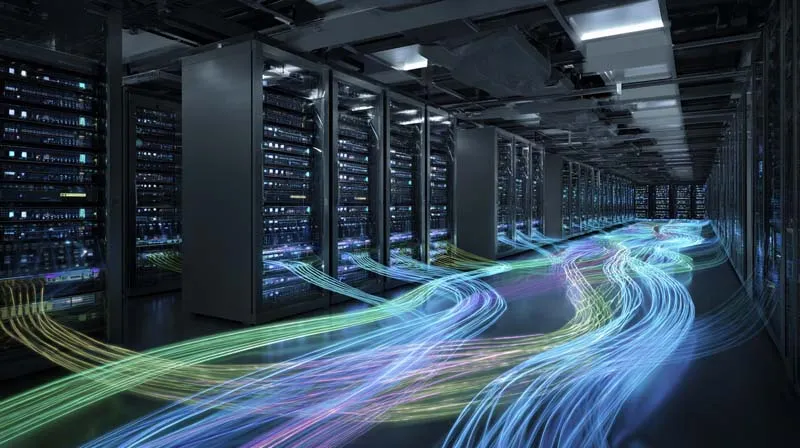
2. Data Center Interconnection (DCI) & Intra-Data Center Networks
As cloud providers and enterprises expand their data center footprints, DCI requires high-bandwidth, low-latency links to support data synchronization, disaster recovery, and load balancing.
DWDM is the backbone of long-haul DCI (100km+), while CWDM dominates short-range DCI (up to 80km) and intra-data center networks. A major cloud provider, for instance, uses CWDM to connect its campus-style data centers (2km apart), enabling 100Gbps connectivity between facilities with minimal fiber usage.
Within data centers, WDM-based optical transceivers (e.g., 100G CWDM4) are used to connect top-of-rack (ToR) and end-of-row (EoR) switches, reducing cable clutter and improving scalability compared to parallel fiber solutions.
3. Enterprise & Industrial Networks
Enterprises with large campuses (e.g., universities, manufacturing plants) and industrial facilities (e.g., smart grids, oil refineries) rely on WDM to simplify network infrastructure.
A global automotive manufacturer, for example, deployed CWDM in its smart factory to connect 20+ production lines (spread across 5km) to a central control system. By combining data from sensors, robots, and quality-control cameras onto a single fiber pair, the manufacturer reduced cable maintenance costs by 50% and improved real-time monitoring of production processes.
In smart grids, DWDM is used to transmit data from remote substations (100km+) to control centers, ensuring reliable communication for grid stability and renewable energy integration.
III. Industry Impact: WDM Drives the Future of Optical Communication
Beyond its immediate applications, WDM is a foundational technology that shapes the future of optical communication and digital transformation. Here’s how it delivers long-term industry value:
1. Enabling the “Fiber-Driven Economy”
WDM maximizes the utility of existing fiber infrastructure, which is critical given the high cost of fiber deployment (up to $100,000 per kilometer in urban areas). By unlocking terabit-scale capacity on a single fiber, WDM reduces the need for new fiber laying, accelerating the rollout of high-speed connectivity to underserved regions—aligning with global initiatives like the UN’s “Connect 2030” agenda.
2. Fueling Innovation in Next-Gen Technologies
Emerging technologies like 6G, quantum computing, and immersive metaverse applications will require even higher bandwidth and lower latency. WDM is evolving to meet these demands: next-gen DWDM systems (e.g., 800Gbps per channel, open WDM architectures) are already in development, promising to support 6G’s 1Tbps per user requirements and quantum-safe communication.
3. Advancing Sustainability
WDM contributes to greener networks by reducing energy consumption: a single DWDM fiber pair uses 70% less energy per Gbps than multiple single-wavelength fiber pairs. For data centers and telecom operators, this translates to lower carbon footprints—a key priority as the industry aims to achieve net-zero emissions by 2050.
IV. Looking Ahead: The Evolution of WDM
As network demands continue to escalate, WDM technology is poised for further innovation. Key trends include:
Open WDM: Decoupling hardware and software to enable multi-vendor interoperability, reducing vendor lock-in and lowering costs.
Coherent WDM: Using advanced modulation techniques (e.g., QPSK, 16QAM) to increase spectral efficiency, enabling 400Gbps+ per channel over long distances.
AI-Powered WDM: Integrating AI for real-time network monitoring, fault detection, and bandwidth optimization, improving network reliability and efficiency.
In conclusion, Wavelength Division Multiplexers are more than just components—they are the backbone of modern optical networks. By unlocking the full potential of fiber, WDM enables the bandwidth-hungry applications that power the digital economy, from 5G and cloud computing to AI and IoT. As technology evolves, WDM will remain at the forefront of optical communication, driving innovation, sustainability, and global connectivity for decades to come.