
Every video you watch, every cloud file you open, and every online meeting you join begins far away from your device.In fact, this digital journey starts inside massive cloud data centers and ends at your smartphone or computer.At the heart of this journey lies WDM technology, which quietly enables high-capacity, long-distance optical transmission.
The Cloud Origin: Where Digital Content Is Born
All modern digital content is stored and processed in large-scale cloud data centers.
These facilities host thousands of servers that manage enormous volumes of information.
When you click “play” on a video, the servers immediately locate the required data packets.
As a result, the transmission process begins within milliseconds.
However, delivering this data to your screen requires far more than computing power alone.
It also depends on a fast, stable, and scalable optical transport network.
Backbone Networks: WDM Technology on the Global Information Highway
Once data leaves the cloud, it enters the global optical backbone network.
This network connects cities, countries, and continents through ultra-long-haul fiber links.
Here, WDM technology plays a decisive role.
Instead of sending data through a single light signal, WDM technology transmits multiple wavelengths simultaneously.
Each wavelength acts as an independent data channel within the same optical fiber.
In particular, Dense WDM technology enables dozens or even hundreds of wavelengths to coexist.
Therefore, a single fiber can carry massive data traffic at near-light speed.
As a result, video streams, cloud services, and enterprise data flow efficiently across oceans and borders.
Metropolitan Area Networks: From Highways to City Arteries
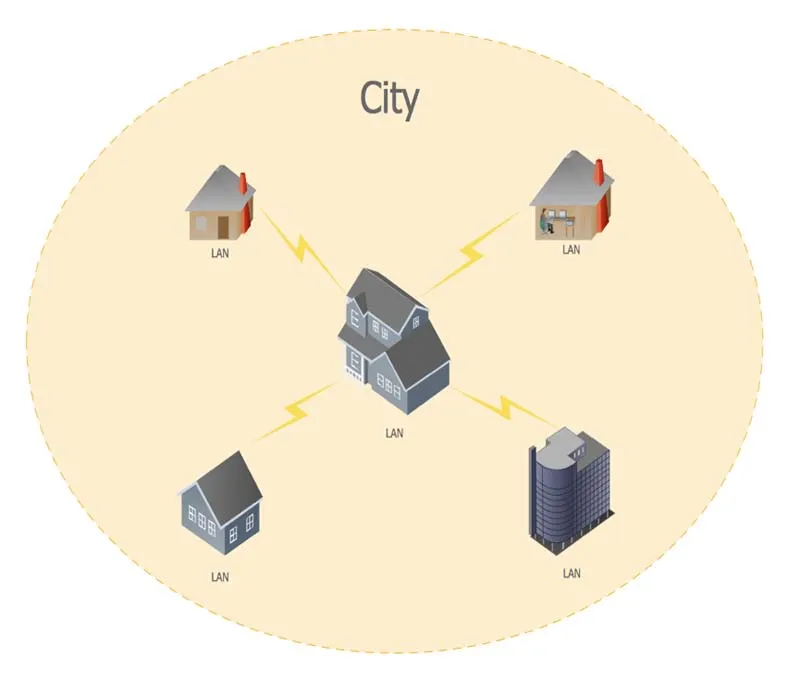
After crossing the backbone network, data enters the Metropolitan Area Network (MAN).
This stage is similar to traffic leaving a highway and moving onto city main roads.
In this environment, WDM technology continues to play an important role.
However, operators often adopt Coarse WDM technology for greater flexibility and cost efficiency.
CWDM distributes data across urban districts while maintaining stable performance.
Meanwhile, this approach balances bandwidth demand with practical deployment costs.
As a result, cities can support growing data traffic without excessive infrastructure expansion.
The Last Mile: Fiber to the Home
The most complex part of the journey is the “last mile.”
This is where data travels from metropolitan aggregation points directly into homes and offices.
Through FTTH (Fiber to the Home) networks, a single optical fiber connects users to the service provider.
Data passes through the Optical Line Terminal (OLT), optical splitters, and distribution fibers.
Eventually, it reaches the optical modem installed inside your building.
At this stage, WDM technology ensures signal stability and transmission efficiency.
In addition, high-quality optical components protect signal integrity across the entire access network.
Final Delivery: From Optical Signals to Your Screen
Once data arrives at your optical modem, the optical signal is converted into an electrical signal.
It is then transmitted wirelessly via a router or Wi-Fi connection.
Finally, your device receives, decodes, and displays the content instantly.
Therefore, the experience feels seamless and immediate, even though the data has traveled vast distances.
Why WDM Technology Matters
From cloud data centers to metropolitan networks and residential access, WDM technology acts as the invisible backbone of modern connectivity.
It enables high-capacity transmission, reduces infrastructure costs, and supports the explosive growth of digital services.
Meanwhile, reliable optical components form the foundation that keeps signals clean and stable.
Together, they ensure that high-definition content arrives clearly, quickly, and reliably.
Ultimately, the speed of optical fiber and the power of WDM technology transform cloud computing into everyday digital experiences—delivered directly to your desk.