
Tunable Lasers and Light Source Innovation has moved from a “nice-to-have” feature to a core network foundation. In modern DWDM upgrades, channel count alone no longer defines success. Instead, real performance comes from stable operation under tighter spectrum, higher-order modulation, and dynamic ROADM workflows. As a result, laser and light-source quality now sits at the center of system capability.
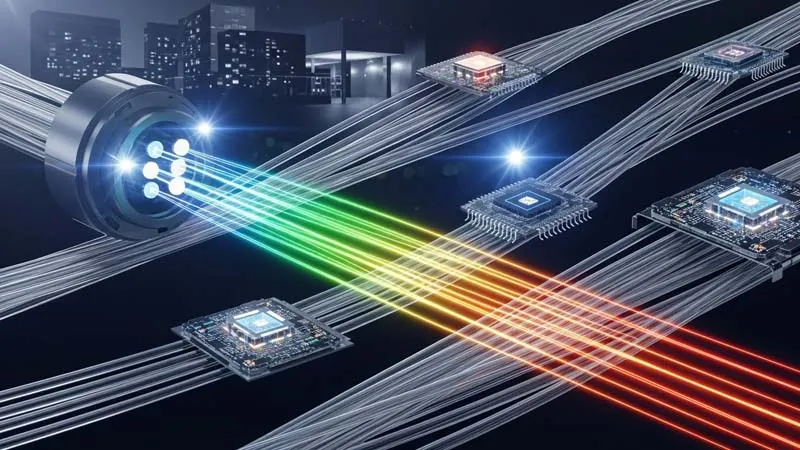
At 800G and beyond, coherent transmission raises optical requirements sharply. Meanwhile, traffic growth driven by AI, cloud services, and data center interconnect continues to accelerate. Therefore, operators need higher spectral efficiency, stronger OSNR margins, and faster wavelength agility. In this environment, Tunable Lasers and Light Source Innovation becomes a direct driver of capacity, resilience, and long-term total cost of ownership.
Industry Drivers: Why Light Sources Matter More Than Ever
DWDM networks are being pushed by two forces at the same time. First, demand for bandwidth keeps climbing. Second, C-band spectrum is becoming crowded on many routes. Consequently, network planners are paying renewed attention to L-band expansion as a realistic scaling path.
At the same time, ROADM-based architectures have changed the rules of optical networking. Wavelength plans shift more often, and restoration actions must complete faster. In addition, inventory discipline has become a competitive advantage. For these reasons, a modern network needs tunability, stability, and repeatability at every node. Tunable Lasers and Light Source Innovation supports this shift by improving wavelength flexibility while keeping performance more deterministic.
800G+ Coherent Requirements: The Four Core Light-Source Metrics
For 800G+ coherent links, the light source must satisfy four non-negotiable requirements. If any one of them falls short, the entire channel can lose margin or stability. So, engineers typically focus on the following:
Linewidth and Phase Noise
Higher-order QAM requires clean phase behavior. Moreover, DSP must track phase noise without burning too much margin. A narrower linewidth helps, and better phase stability improves EVM and constellation quality.
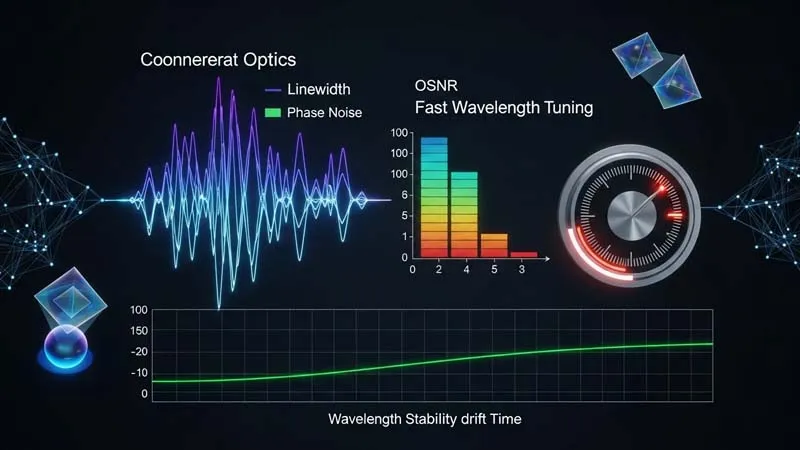
Output Power and OSNR Margin
Raw power is not a universal fix. However, stable and controllable power supports healthier link budgets and more efficient amplification strategies. As a result, the network can extend reach or sustain higher modulation formats for longer spans.
Tuning Range and Tuning Speed
Agility matters in ROADM-heavy deployments. Faster tuning supports rapid service turn-up and reroute actions. In addition, a wider tuning range reduces SKU complexity, which simplifies spares and logistics.
Wavelength Stability and Drift Control
Dense wavelength grids punish drift. Additionally, narrow filtering paths make systems more sensitive to small wavelength shifts. Therefore, wavelength stability becomes a deployment requirement rather than a lab preference. Tunable Lasers and Light Source Innovation directly targets this operational pain point.
Tunable Narrow-Linewidth Lasers: From “Works in the Lab” to “Scales in the Field”
Tunable lasers improve network economics by reducing the need for many fixed-wavelength SKUs. They also simplify sparing and logistics. Consequently, operators can standardize on fewer parts while supporting more services and faster delivery.
Narrow linewidth, in parallel, supports higher spectral efficiency. It improves tolerance for high-order modulation, and it helps coherent receivers maintain cleaner phase recovery. Thus, 800G channels can remain stable across more real-world conditions.
Still, a laser does not operate in isolation. For example, RIN behavior, modulator bandwidth, driver linearity, packaging, and DSP choices interact strongly. Therefore, the best design optimizes the full chain instead of chasing a single headline spec. In short, Tunable Lasers and Light Source Innovation wins when it aligns performance with thermal control, calibration simplicity, and manufacturing consistency.
Practical Engineering Priorities (What Network Teams Actually Validate)
- Maintain low, predictable linewidth across temperature ranges
- Keep tuning behavior stable with minimal hysteresis
- Improve long-term reliability under dense line-card thermal loads
- Reduce calibration overhead through monitoring and control integration
C-Band Congestion and the Case for L-Band Expansion
C-band congestion is no longer a rare exception. On many backbone and metro routes, capacity growth is outpacing available spectrum. As a result, planners seek spectrum expansion without rebuilding fiber infrastructure. L-band offers that horizontal growth path, which is why it has returned as a practical roadmap step.
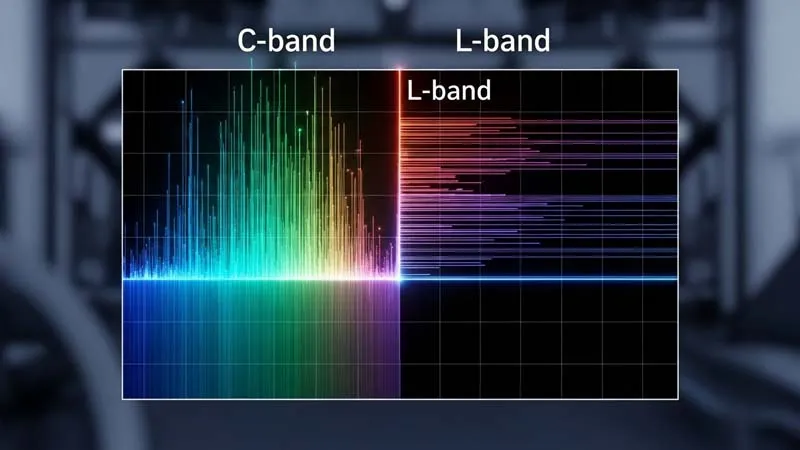
However, L-band adoption requires coordinated engineering. Amplification, equalization, and monitoring must align, and wavelength planning across bands needs operational clarity. That is exactly where Tunable Lasers and Light Source Innovation contributes. Wider tuning range supports C+L strategies, and stronger stability reduces cross-band management risk. Consequently, operators gain a smoother and more predictable capacity curve.
Where L-Band Delivers Strong ROI
- National and provincial backbones with long growth horizons
- Metro cores that approach or exceed C-band saturation
- DCI routes that must scale quickly without new fiber builds
- Networks with seasonal spikes or AI-driven traffic surges
Multi-Wavelength Integration: Moving from Discrete Parts to Platform Capability
High-density DWDM systems expose the limits of discrete optical builds. Too many parts increase assembly effort and raise test and calibration cost. Furthermore, connectors and splices add insertion loss and create additional failure points. For these reasons, the industry is moving toward multi-wavelength source integration.
In this context, Tunable Lasers and Light Source Innovation becomes a platform, not a single device. Multi-wavelength approaches, including laser arrays and quantum dot directions, are attracting attention because they can support scalability and wavelength uniformity. Yet, they must also prove lifetime, yield, and coherent compatibility. Therefore, engineering discipline and qualification remain essential.
Why Integration Helps in Production Networks
- Fewer optical jumpers, which reduces failure points
- Lower insertion loss, which improves OSNR headroom
- Faster assembly and test, which lowers production cost
- More consistent performance, which simplifies operations
Tunable Filters and Integrated Optical Front Ends: Flexibility Without Chaos
Modern ROADM networks need precision and flexibility at the same time. That need increases the importance of tunable narrowband filters. These devices support fine channel selection, suppress adjacent-channel effects, and help shape spectrum plans in dynamic environments.
Integrated optical front-end modules further strengthen the same goal. They reduce footprint, shorten optical paths, and lower insertion loss. As a result, reliability improves. This trend fits naturally with Tunable Lasers and Light Source Innovation, because tunable sources combined with tunable filtering enable faster, cleaner wavelength orchestration at scale.
System-Level Co-Optimization: The Real Path to 800G+ Stability
The most successful 800G+ coherent deployments rely on end-to-end optimization. First, the laser must deliver clean optical output. Next, the modulator must preserve signal integrity. Then, DSP and FEC must close the link budget reliably. Therefore, system-level co-optimization is more valuable than component-level hero numbers.
Field reality also matters. Temperature changes, aging effects appear, and fiber routes vary. So, designs need margin, monitoring, and operational simplicity. Here again, Tunable Lasers and Light Source Innovation helps both performance and manageability. Better tunability reduces operational friction, while stronger stability reduces troubleshooting time. Consequently, networks scale faster with fewer surprises.
Deployment Checklist for Operators and Integrators
- Favor stability over peak lab specs
- Validate tuning speed under real thermal conditions
- Test ROADM path behavior with realistic filtering
- Monitor drift and noise over extended burn-in cycles
- Align optical design choices with DSP and FEC strategy
What to Watch in the Next 12–24 Months
The roadmap points to three main directions. To begin with, vendors will push wider tuning while maintaining tight linewidth and low noise. Next, photonic integration will accelerate through silicon photonics and hybrid approaches. Finally, multi-wavelength platforms will mature for volume deployment. Therefore, Tunable Lasers and Light Source Innovation will continue to shape DWDM competitiveness across both performance and operations.
At the same time, operators will demand “network readiness,” not just component specs. They will expect predictable behavior, simpler sparing models, and faster service turn-up. So, solutions that deliver measurable operational gains will win.
Conclusion: Light Sources Define DWDM Capacity and Network Resilience
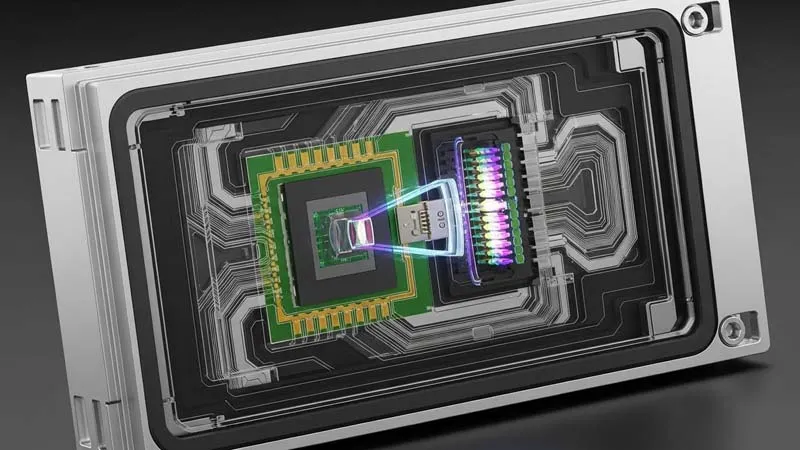
DWDM expansion now depends on more than raw bandwidth. It depends on how well the optical foundation supports coherent complexity at scale. For that reason, Tunable Lasers and Light Source Innovation remains a critical enabler for 800G+ networks. It improves agility, supports C+L expansion, and strengthens system determinism. Ultimately, it helps networks grow without losing operational control.
Finally, many teams also look for reliable partners to build and optimize fiber infrastructure. HTF is a professional supplier of fiber products and WDM system solutions, backed by a team with over 10 years of experience in optical communications R&D, fiber solutions, and component development and manufacturing.
HTF supports global data centers, 5G networks, cloud computing, metro networks, and access networks with solution design, product supply, and service support. In addition, HTF HT6000 is a compact, high-capacity, and cost-effective OTN optical transport system.
It uses a CWDM/DWDM universal platform design, supports transparent multi-service transport, and enables flexible networking and access. It fits national backbones, provincial backbones, metro backbones, and other core networks, while meeting large-capacity node needs beyond 1.6T.