
In optical networking, we often praise the “stars” of the rack. We talk about WSS agility, amplifier reach, and OTDR visibility. However, Multiplexers and Demultiplexers quietly enable every one of those capabilities. They are the steady hands that combine light and then separate it again, with accuracy you can trust.
Because WDM depends on precision, the network depends on them too. Therefore, Multiplexers and Demultiplexers deserve more attention than they usually get. They shape capacity, protect signal quality, and simplify operations.
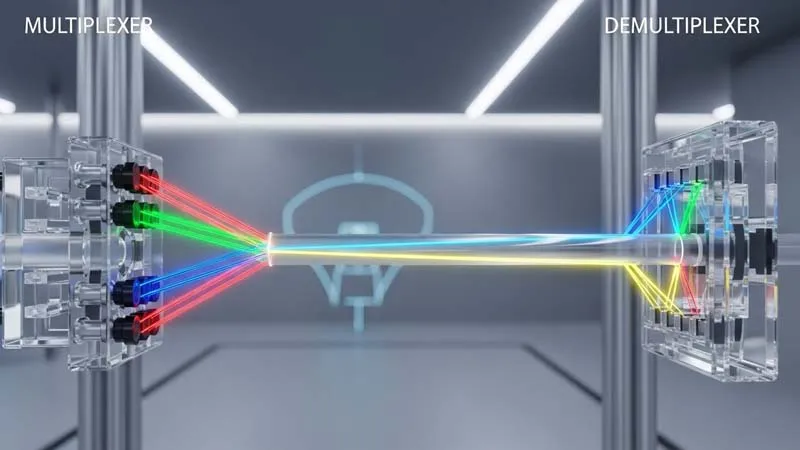
The Simple Idea Behind WDM: Combine, The lp you if those streams share the same path. That is where Multiplexers and Demultiplexers take the lead.
What a Multiplexer Does
A multiplexer (Mux) brings many wavelengths into one composite signal. It acts like a high-precision optical funnel. In practice, it takes channels from transponders and launches them into a single fiber. As a result, It let you multiply capacity without adding more fibers.
What a Demultiplexer Does
A demultiplexer (Demux) performs the reverse action. It receives the composite WDM signal and splits each wavelength back out. Then, it routes every channel to the correct receiver. Meanwhile, Multiplexers and Demultiplexers keep channels cleanly separated, even when spacing gets tight.
Why “Just Combining” Is Not Simple in Real Networks
The concept sounds easy. Yet, the execution defines your network limits. In addition, It influence performance far beyond basic connection.
1) Capacity Starts With Channel Spacing
Channel spacing (100 GHz, 50 GHz, 25 GHz, and beyond) dictates how many wavelengths fit into your spectrum. When spacing shrinks, requirements rise. You need tighter filtering and better stability. That is why technology choice matters.
Common approaches include:
- Thin-Film Filters (TFF): Practical and widely deployed for fixed Mux/Demux designs.
- Arrayed Waveguide Gratings (AWG): Strong for dense channel packing and compact integration.
Therefore, Multiplexers and Demultiplexers often decide your maximum spectral efficiency. If they perform well, the system scales with confidence.
2) Signal Integrity Depends on Loss and Isolation
Every optical component affects the link budget. So, insertion loss matters. A good design keeps loss low during combining and separation. Moreover, It must maintain strong channel isolation. Without isolation, adjacent wavelengths leak into each other.
That leakage creates crosstalk. Crosstalk reduces OSNR margin and raises error risk. In real deployments, it can limit reach and capacity upgrades. However, It with high isolation help keep channels “in their lanes.”
3) Stability and Reliability Reduce Operational Risk
Fixed Mux/Demux units typically run as passive, solid-state devices. They need no power for operation. They also avoid active control loops in many designs. As a result, Multiplexers and Demultiplexers deliver excellent long-term stability.
That stability supports consistent performance across:
- Temperature shifts
- Field vibrations
- Long service lifetimes
- Minimal maintenance requirements
And because they are predictable, they reduce troubleshooting time. Consequently, Multiplexers and Demultiplexers improve both reliability and day-to-day operations.
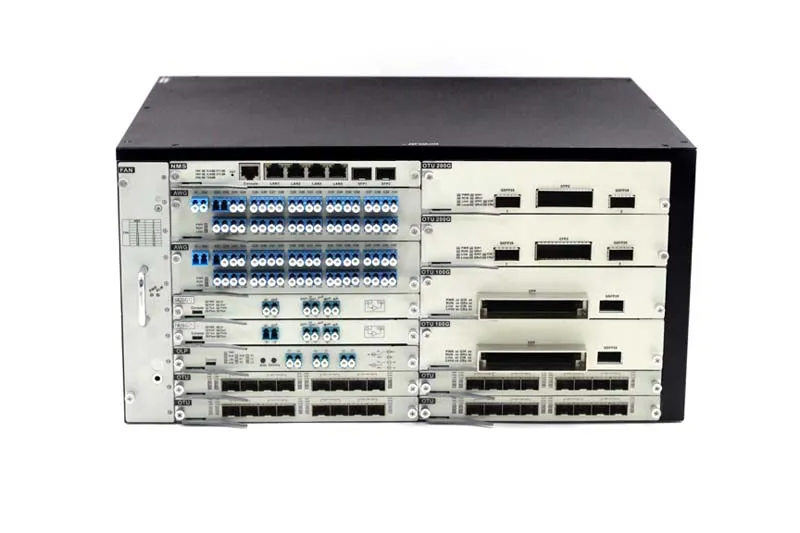
Where Multiplexers and Demultiplexers Fit in Modern Architectures
Some networks remain simple. Others grow into complex meshes. Either way, Multiplexers and Demultiplexers appear at the beginning and the end of every optical path.
Point-to-Point Links: The Workhorse Scenario
For static routes, fixed Mux/Demux designs deliver cost-effective capacity. You add channels as demand grows. You keep the fiber plant unchanged. So, Multiplexers and Demultiplexers create a clean “pay-as-you-grow” roadmap.
This approach works well for:
- Metro aggregation
- Data center interconnect (DCI) corridors
- Campus backbones
- Private fiber routes for enterprise or utilities
The Bridge Toward ROADM Flexibility
When networks need dynamic routing, ROADMs enter the picture. Yet, the ROADM idea still relies on wavelength separation and selection. In other words, Multiplexers and Demultiplexers form the functional foundation that ROADMs build upon.
Inside a ROADM node, the Demux-like separation happens before switching. Then, WSS elements route wavelengths. Finally, channels recombine for outgoing directions. Therefore, Multiplexers and Demultiplexers remain essential even in “fully flexible” systems.
Business Impact: Why This Hardware Changes Your Cost Curve
Engineering decisions shape commercial outcomes. The good news is that Multiplexers and Demultiplexers often improve both CAPEX and OPEX.
Capital Efficiency: Maximize Every Fiber Strand
Fiber construction costs can dominate budgets. If you can carry more services over one fiber pair, you delay new builds. As a result, Multiplexers and Demultiplexers raise the return on existing infrastructure.
They also reduce physical hardware needs. Fewer fibers mean fewer trays, fewer patch panels, and fewer interconnect points. Additionally, Multiplexers and Demultiplexers can simplify site design for dense deployments.
Operational Simplicity: Fewer Touch Points, Fewer Errors
Every manual patch increases risk. Every extra fiber increases complexity. When you consolidate wavelengths, operations become cleaner. Consequently, Multiplexers and Demultiplexers reduce provisioning friction and cut human error rates.
They also help standardize workflows:
- Add a new service by lighting a new wavelength
- Keep routing predictable for fixed segments
- Reduce documentation overhead for fiber maps
Scalable Growth: Add Capacity Without Rebuilding
Networks rarely jump from small to massive overnight. They grow in steps. Therefore, Multiplexers and Demultiplexers shine when you expand incrementally. You can populate new channels while keeping the base architecture stable.
This is especially valuable when demand grows unevenly across regions. You can upgrade only where needed. Meanwhile, Multiplexers and Demultiplexers keep the expansion path straightforward.
Practical Selection Checklist for Multiplexers and Demultiplexers
When you evaluate options, focus on measurable parameters. Moreover, Multiplexers and Demultiplexers should match your growth plan, not only today’s needs.
Consider these key factors:
- Channel plan: How many wavelengths now, and how many later?
- Spacing: 100 GHz vs 50 GHz vs tighter grids
- Insertion loss: Protect your link budget
- Isolation: Reduce crosstalk risk
- Passband shape: Support modulation formats and tolerances
- Packaging: Rack density, connector types, field handling
- Environmental stability: Temperature range and long-term drift
If these align, upgrades become easier. As a result, Multiplexers and Demultiplexers turn into a strategic asset, not a constraint.
The First Combine, The Final Separation
Every optical channel begins with combination and ends with separation. That statement stays true from small links to complex meshes. In short, Multiplexers and Demultiplexers are the indispensable first and last step of WDM delivery.
Before you add agility, you must build a stable foundation. Before you push reach, you must control loss and isolation. Therefore, Multiplexers and Demultiplexers define how far your network can scale, and how safely it can evolve.
Build Your Optical Foundation With Precision
If you want higher capacity, cleaner performance, and smoother growth, start with the components that shape the spectrum. Multiplexers and Demultiplexers help you unlock WDM’s promise in a practical, repeatable way.
When you’re ready to plan your channel roadmap, we can help you match the right multiplexing architecture to your network goals.