
Metro Network DCI Box has become an essential component of modern network infrastructure, supporting high-speed data transfer across urban areas, enterprise cloud services, and interconnecting data centers. Moreover, in today’s digital economy, data traffic is growing exponentially. Metro networks require both high capacity and flexibility to ensure reliable service. Therefore, the Metro Network DCI Box addresses these needs, offering robust performance, scalability, and low latency to enable a stable backbone for future digital networks.
As data demands increase, network reliability and speed become critical. It ensures seamless communication between geographically distributed data centers, enterprise clusters, and carrier networks, maintaining consistent performance even under heavy loads. Furthermore, it enables businesses and operators to plan network expansions efficiently.
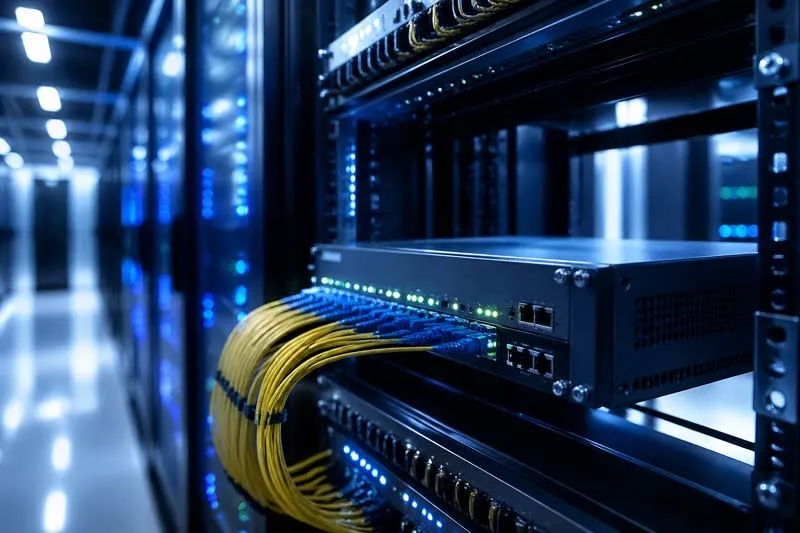
Understanding Metro Networks and DCI
Metro Network Overview
A metro network connects key nodes within a city, supporting high-speed data transmission for enterprises, ISPs, and public services. It carries diverse traffic types, including video, voice, and large-scale data streams. In addition, industry reports indicate that the global metro network market has grown at an average annual rate of over 12% in recent years. Consequently, network devices must handle larger volumes while maintaining low latency and high reliability.
Data Center Interconnect (DCI) Basics
DCI enables high-speed connections between data centers to support massive data transfer and real-time synchronization. Key technologies include optical fiber transmission, DWDM/CWDM wavelength multiplexing, and intelligent traffic management. As a result, with cloud computing, 5G, and AI applications proliferating, the demand for DCI bandwidth continues to rise, making it a critical solution for modern data infrastructures.
Positioning of Metro Network DCI Box
The Metro Network DCI Box integrates advanced hardware and software solutions to support city-scale network operations. Its high bandwidth, low latency, and modular design allow it to adapt to different network topologies, thus meeting the growing requirements of enterprises and operators alike.
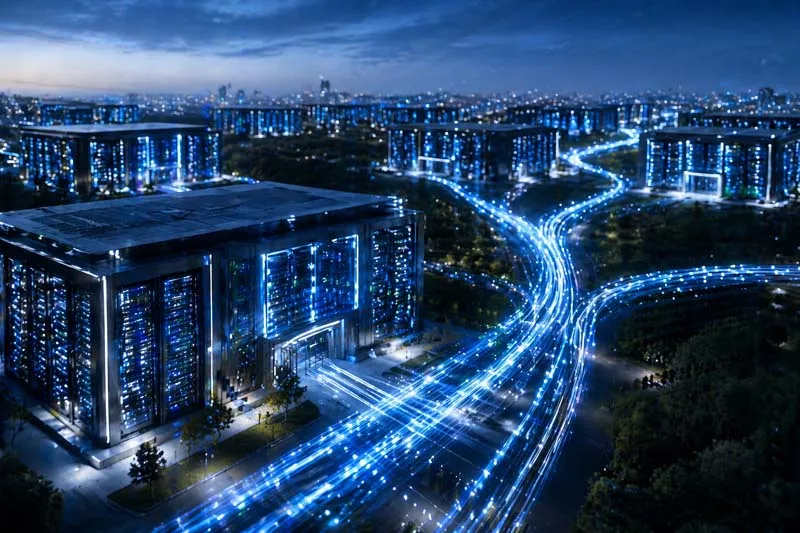
Core Technical Features of Metro Network DCI Box
High-Speed Data Transmission
It leverages DWDM and CWDM technologies to achieve multi-terabit data transfer. It ensures low-latency and high-throughput connections between data centers. For instance, peak traffic in some metropolitan data centers can exceed 1.2 Tbps. The Metro Network DCI Box handles such volumes efficiently, ensuring seamless operations for critical applications.
Intelligent Network Management
Modern Metro Network DCI Boxes incorporate traffic scheduling and load balancing features. By doing so, they optimize path selection, reducing latency and packet loss. Additionally, visual management platforms allow operators to track performance, receive automated alerts, and proactively manage network traffic, which enhances overall reliability.
Modular Design and Flexible Deployment
It uses a modular architecture, supporting scalable expansion of ports, wavelengths, and service types. It accommodates ring, star, and hybrid topologies, providing network flexibility without extensive infrastructure changes. As a result, this design reduces initial investment costs while supporting future network growth.
Reliability and Security
Data security and network reliability are crucial in critical infrastructure. Metro Network DCI Box incorporates end-to-end encryption, redundancy, and rapid failover capabilities to ensure continuous service. These features minimize operational risks and maintain high service availability for enterprise, government, and carrier networks. Consequently, operators can achieve both security and high performance simultaneously.
Applications and Industry Impact
Enterprise Networks
For enterprises with multiple data centers, Metro Network DCI Box enables fast, secure interconnection and real-time synchronization. Cloud platforms, office networks, and backup services benefit from reduced latency and improved efficiency. Indeed, case studies show that high-performance DCI solutions can increase data transfer efficiency by over 30% while simplifying network management.
Telecommunications and ISP Networks
Service providers use Metro Network DCI Box to optimize metropolitan backbone networks. It supports high-bandwidth services, including video streaming, online gaming, and cloud storage. Flexible wavelength allocation and transparent multi-service transport allow operators to expand capacity without costly infrastructure upgrades. Moreover, this flexibility supports evolving network demands efficiently.
Smart Cities and Public Services
In smart cities and public safety networks, Metro Network DCI Box ensures that critical data flows reliably and in real time. Traffic monitoring, emergency response, and urban management systems rely on high-capacity, low-latency optical transmission. Therefore, the technology enables rapid decision-making and effective city governance.
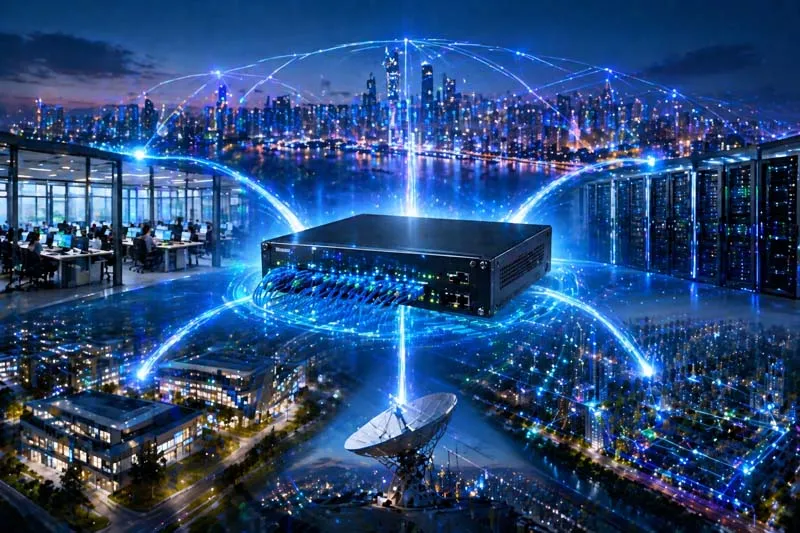
Trends and Future Outlook
Digital economy growth and AI-driven applications continue to drive demand for higher bandwidth. Global data center traffic grows at over 35% annually, with cloud computing and 5G further increasing network requirements. Metro Network DCI Box is evolving to meet these demands with higher speeds, lower latency, and enhanced intelligence.
Emerging technologies, such as compact, high-capacity, and cost-efficient optical transport systems, are transforming metro networks. In particular, AI-enabled traffic management, flexible wavelength assignment, and energy-efficient designs will enhance performance and reliability. Metro Network DCI Box will continue to play a pivotal role in data center interconnectivity, enterprise cloud services, and smart city infrastructures.

Conclusion
Metro Network DCI Box offers high-speed transmission, intelligent network management, modular deployment, and strong reliability, making it a cornerstone of digital backbone networks. It ensures that enterprise clouds, ISP networks, and smart city systems operate efficiently, supporting the broader digital economy.
In this context, HTF provides a robust technology foundation. With a team experienced in optical communication products and solutions, HTF designs, supplies, and supports high-performance fiber infrastructure worldwide. The HT6000 OTN optical transport system, featuring CWDM/DWDM universal platform design, supports multi-service transparent transport, flexible network configuration, and access capabilities. It accommodates nodes exceeding 1.6 Tb, offering a cost-effective WDM expansion solution for data centers and ISPs.
By combining Metro Network DCI Box with advanced optical technologies, future digital backbone networks will achieve unprecedented speed, reliability, and intelligence, powering enterprises, cities, and global digital infrastructure. Furthermore, continued innovation will ensure sustainable growth for digital networks worldwide.