
In today’s digital economy, data traffic continues to surge at an unprecedented pace. Cloud computing, AI workloads, video collaboration, and IoT deployments are all driving demand for higher bandwidth and greater reliability. Therefore, building a High-Performance DWDM Network has become a strategic necessity rather than a technical upgrade.
Instead of focusing only on equipment, organizations must adopt a holistic design mindset. It combines fiber quality, site planning, scalable architecture, and proactive maintenance. The following best practices outline how to achieve a resilient and future-ready DWDM infrastructure.
High-Performance DWDM Network Starts with the Right Dark Fiber Strategy
Dark fiber forms the physical foundation of any it. Unlike shared infrastructure, it provides full control over capacity, latency, and security. As a result, network operators gain predictable performance and long-term scalability.
First, availability must be evaluated carefully. Mapping data centers, colocation sites, and enterprise locations ensures that dark fiber routes align with operational needs. In many regions, partnerships with telecom carriers or utility providers simplify access to suitable fiber assets.
Moreover, fiber quality directly affects DWDM performance. It deployments should prioritize fiber optimized for C-band and L-band transmission. With attenuation as low as 0.2 dB/km at 1550 nm, premium fiber reduces amplifier requirements and operational complexity.
Finally, redundancy is essential. Mission-critical sectors such as finance and healthcare benefit from dual fiber paths. By adding backup routes, It maintains uptime even during unexpected fiber failures.
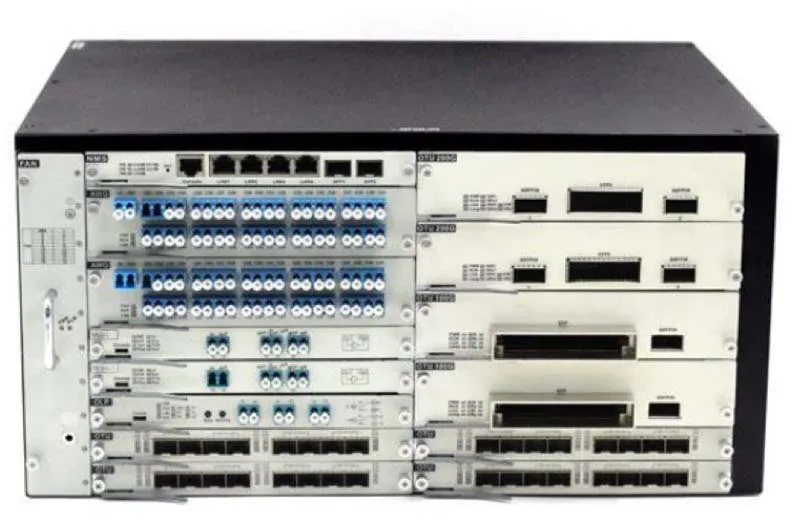
Colocation Site Planning Strengthens a High-Performance DWDM Network
Colocation facilities act as critical nodes within it. Their placement, power design, and scalability significantly influence network stability.
For long-haul links, spacing sites every 80–120 km helps balance signal integrity and amplifier density. Consequently, this approach lowers latency while preserving optical performance.
In addition, power and cooling reliability cannot be overlooked. DWDM equipment requires stable energy delivery and precise thermal control. Redundant power feeds, UPS systems, and advanced cooling solutions collectively protect service continuity.
Equally important, future growth must be anticipated. Selecting colocation sites with spare rack space and fiber capacity allows a High-Performance DWDM Network to expand without costly relocations.
DWDM Equipment Selection Defines High-Performance Outcomes
A High-Performance DWDM Network relies on tightly integrated optical components that maximize fiber utilization and signal quality.
Transponders and muxponders enable seamless conversion of client signals into DWDM wavelengths. As a result, existing network services can scale without disruptive changes.
Optical amplifiers, especially EDFAs, compensate for signal loss over long distances. When properly deployed, they ensure stable transmission across extended fiber spans.
Meanwhile, multiplexers and demultiplexers efficiently manage multiple wavelengths on a single fiber. This capability allows it to deliver massive capacity without interference.
Additionally, dispersion compensation modules preserve signal clarity at higher data rates. Combined with real-time fiber monitoring systems, they simplify fault detection and minimize downtime.
Scalability Is a Core Principle of a High-Performance DWDM Network
A truly High-Performance DWDM Network must adapt as bandwidth demands evolve. Therefore, scalability should be built into the design from day one.
Modular platforms allow incremental upgrades. Operators can add wavelengths or increase transmission speeds without shutting down live services.
At the same time, flexible optical architectures support emerging technologies. Whether integrating 5G transport, edge computing, or AI-driven applications, a High-Performance DWDM Network remains ready for change.

Testing and Maintenance Sustain High-Performance DWDM Network Reliability
Even the best-designed network requires ongoing care. Proactive testing ensures that a High-Performance DWDM Network continues to operate at peak efficiency.
Before deployment, OTDR testing verifies fiber quality, attenuation levels, and link integrity. This step reduces deployment risks and improves design accuracy.
After launch, continuous monitoring delivers early warnings of degradation. Regular inspections and scheduled maintenance further extend network lifespan and performance stability.
Why a High-Performance DWDM Network Delivers Lasting Value
In conclusion, It is more than an infrastructure upgrade. Instead, it is a long-term investment in capacity, reliability, and scalability. By aligning dark fiber selection, colocation planning, advanced equipment, and proactive maintenance, organizations can transform their networks into strategic assets.
If you are preparing to build or upgrade a High-Performance DWDM Network, the HTF team is ready to help. HTF provides customized DWDM equipment and solutions designed to reduce costs while maximizing performance.