
Fiber optic patch cords play a critical yet often underestimated role in optical communication systems. While backbone fiber cables act as the main arteries carrying massive volumes of optical signals, fiber optic patch cords function as capillaries—precisely and flexibly delivering signals to every terminal device. Although compact in size, fiber optic patch cords directly influence network stability, performance ceilings, and operational efficiency .
Enable Flexible and Modular Network Connections
First and foremost, It form the foundation of flexible connectivity in modern optical networks. Optical communication systems are not rigid structures; instead, they are modular assemblies of switches, transceivers, servers, and distribution frames.
Without fiber optic patch cords, network connections would rely solely on fusion splicing. As a result, expansion, reconfiguration, and maintenance would become slow, expensive, and impractical.
With it, however, engineers can quickly plug, unplug, and reroute connections. Therefore, network deployment becomes faster, troubleshooting becomes easier, and scalability improves significantly.
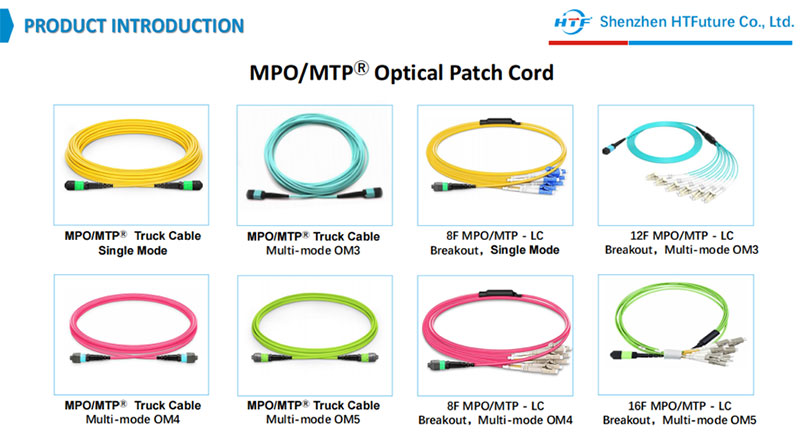
Fiber optic patch cords Safeguard the “Last Meter” of Signal Quality
After long-distance transmission through backbone fibers, optical signals must pass through a short but decisive physical channel before entering equipment. This final channel is it.
Consequently, the quality of them directly determines signal integrity at the receiver.
High-quality them offer:
- Low insertion loss, ensuring minimal signal attenuation
- High end-face precision, reducing return loss and back reflection
- Stable mechanical structure, maintaining consistent performance over time
Thus, even a short patch cord can either preserve or degrade an entire optical link budget.
Fiber optic patch cords Often Represent the Weakest Link
According to the barrel principle, overall system performance depends on the weakest component. In many optical networks, It become that critical vulnerability.
Statistics show that more than 70% of optical network failures are related to physical connections. In particular, patch cord contamination, connector damage, and excessive bending are the most common causes. Even microscopic dust on a connector end face can interrupt high-speed transmission.
Moreover, low-quality it introduce excessive loss and nonlinear effects. As a result, they can severely limit high-speed applications such as 100G, 400G, and even 800G transmission.
Fiber optic patch cords Must Evolve with Optical Technology
As optical communication advances toward higher speeds and higher density, It must evolve accordingly.
On one hand, next-generation networks require tighter geometric tolerances and lower polarization mode dispersion. On the other hand, data centers demand higher port density, which accelerates the adoption of MPO/MTP multi-fiber patch cords capable of carrying 24 or more signals simultaneously.
In addition, emerging fiber types—such as multi-core fibers and few-mode fibers—also rely on specialized fiber optic patch cords to ensure efficient coupling and signal stability.
Fiber optic patch cords Are Central to Operation and Maintenance
From an operational perspective, They are core objects of daily network management.
Clear labeling and accurate routing records enable fast fault localization. Meanwhile, routine cleaning and testing with optical power meters or OTDR tools help maintain long-term network health.
Furthermore, neat and orderly patch cord routing improves airflow and heat dissipation inside equipment racks, indirectly enhancing system reliability.

Fiber optic patch cords: A Practical Network Analogy
To better understand their role, consider the following analogy:
- Backbone optical cables: Highways
- Optical transmission equipment: Interchanges and hubs
- Fiber optic patch cords: Ramps and final access roads
If a ramp is blocked by contamination, damaged by bending, or poorly designed, traffic cannot reach its destination—no matter how advanced the highway system may be. The same principle applies to optical signals.
Why It Truly Matter
In conclusion, It may appear simple and inexpensive, yet they are indispensable and technically sensitive components within optical communication systems. Their selection, quality, and management directly determine network reliability, maximum performance, and operational efficiency.
As optical networks continue to expand across data centers, 5G fronthaul, and future high-speed infrastructures, It will remain the silent but decisive capillaries sustaining the entire system.