
In today’s digital age, DWDM technology (Dense Wavelength Division Multiplexing) has become a core driving force, pushing global optical communication networks to a new level. With the explosive growth of data traffic, technologies such as AI, 5G, cloud computing, and supercomputing demand higher speed, larger capacity, and smarter networks. The evolution of DWDM technology is leading us into a brand-new era of intelligent optical networks.
Continuous Breakthroughs in Speed and Capacity
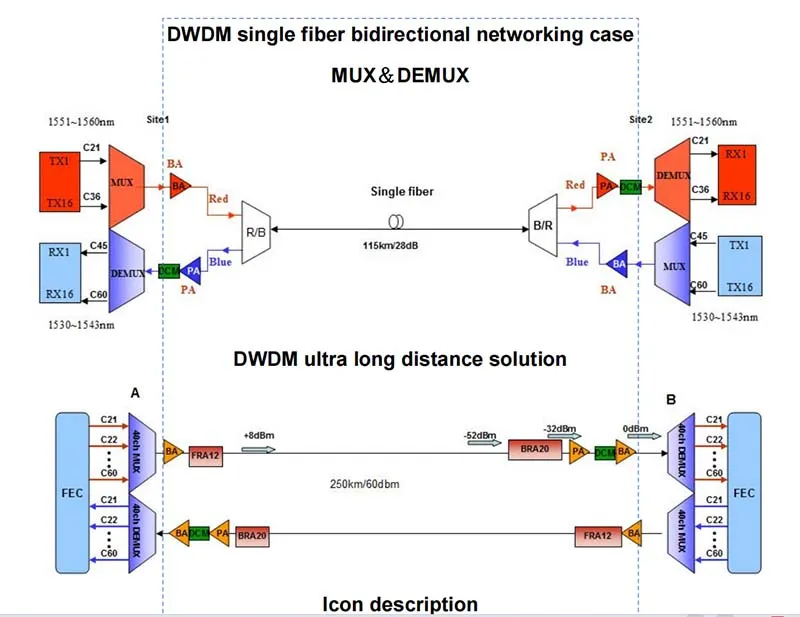
In future networks, speed and capacity will continue to be the most visible breakthroughs. DWDM technology has already moved from 400G and 800G per wavelength to the upcoming 1.6T in 2025, and is expected to reach 2.4T by 2027. This means not only higher transmission capability but also better spectrum efficiency and longer transmission distance. With Beyond C+L multi-band multiplexing, optical spectrum resources can be used more deeply, supporting the fast-growing digital economy.
Silicon Photonics and CPO: Higher Integration and Better Maintainability
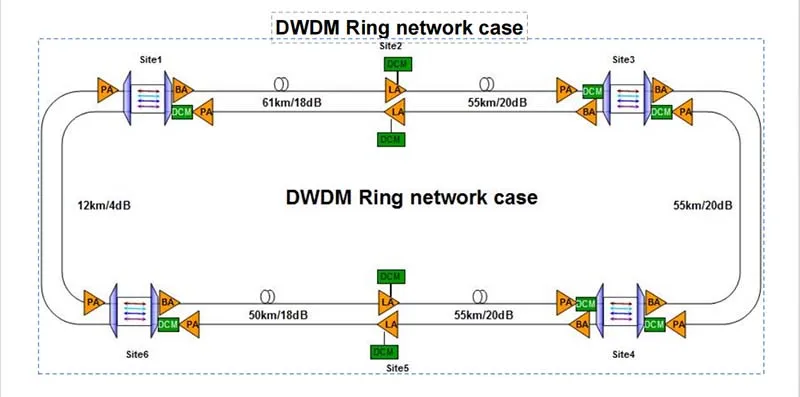
As electronics and optics become more integrated, silicon photonics stands out with advantages like low cost, low power use, and high integration. It is becoming an important direction for DWDM systems. At the same time, CPO (Co-Packaged Optics) technology helps overcome the power and heat challenges of high-speed connections. Industry players are exploring new solutions such as external light sources, which bring higher maintainability and reliability to CPO. These advances will accelerate the practical use of DWDM systems in real-world applications.
AI Empowerment: Smarter Optical Networks
With the help of AI, DWDM technology is no longer just about adding capacity, but about becoming smarter. AI-driven optical networks can monitor traffic in real time, adjust data flow dynamically, and predict maintenance needs. This not only increases network efficiency but also lowers operating costs. However, challenges remain, such as ensuring the stability and accuracy of AI algorithms in complex networks, and integrating AI smoothly with existing equipment.

Openness and Collaboration: The Rise of IPoDWDM
The spread of IPoDWDM makes the boundary between optical networks and routers or switches less clear. In the future, a unified module operation experience, open API interfaces, and multi-vendor collaborative control will be key to achieving truly open networks. Only by building an ecosystem based on cooperation and openness can we fully support global data flows and cross-industry innovation.
New Optical Fibers: Breaking Physical Limits
Traditional solid-core fibers are reaching their limits, such as the “nonlinear Shannon capacity limit” and “transmission delay limit.” To break these bottlenecks, researchers are exploring hollow-core fibers and other new types of optical fibers. These fibers offer lower latency, higher capacity, and stronger resistance to nonlinear effects. They will provide vital support for AI, financial trading, and supercomputing applications that need ultra-low latency and large bandwidth. Combining DWDM technology with new fiber types will shape the foundation of future optical networks.
Future Outlook: Toward an Intelligent Optical Network Ecosystem
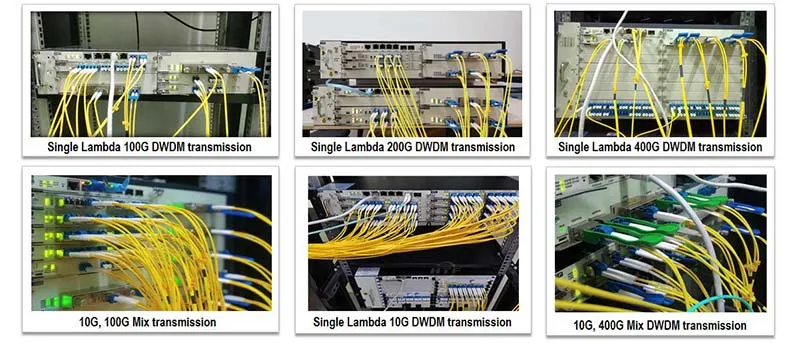
Looking at the big picture, the future of DWDM technology is not only about faster speeds but also about a full upgrade toward intelligence and ecosystem development. From higher capacity to better integration, from AI-driven operations to open cooperation, and from physical breakthroughs with new fibers to intelligent network management, DWDM is shaping a smarter, more open, and more efficient optical future.
For the industry, this means planning ahead, tracking new technology, joining global standards, and supporting ecosystem building. Only with such forward-looking actions can we meet the challenges of the intelligent communication era.
Building the Future of Optical Communication Together
Every step forward in DWDM technology marks a leap in the information society. From speed upgrades to intelligent empowerment and physical breakthroughs, DWDM represents not only faster data transmission but also the evolution of a global digital ecosystem. Industry collaboration and innovation will be crucial in this journey.

As one of the active contributors, HTF continues to focus on optical fiber communication and WDM solutions. With more than 10 years of R&D and manufacturing experience, HTF provides transmission platforms for global data centers, 5G networks, cloud computing, and metro networks. The HTF HT6000 OTN system, with its compact design, cost advantages, and node capacity beyond 1.6T, is building large-scale WDM expansion solutions for IDC and ISP operators. It is recognized as one of the most cost-effective transmission platforms in the industry.
HTF will continue to work with global partners to move toward a new era of intelligent optical networks, driven by DWDM technology.