
Global data traffic is skyrocketing. 5G, cloud computing, and AI demand unprecedented bandwidth. DWDM systems deliver unmatched capacity. They transmit multiple wavelengths over a single fiber. This boosts network efficiency. From 40Gbit/s to 800Gbit/s, DWDM systems are transforming connectivity. They lead the ultra-high-speed network era.

Core Technology of DWDM Systems: Powering Speed and Capacity
DWDM systems use dense wavelength spacing, typically 0.4-1.2nm. They operate in C-band (1530-1565nm) and L-band (1565-1625nm). With Erbium-Doped Fiber Amplifiers (EDFA), they support 40, 80, or even 160 channels. A single fiber achieves tens of Tbit/s. In contrast, CWDM systems use wider 20nm spacing. They support only 18 channels. This limits CWDM to shorter distances.
The evolution of DWDM systems is remarkable:
- 40G era: QPSK modulation and NRZ encoding met early backbone needs.
- 100G/400G era: 16QAM and coherent detection improved efficiency. PAM4 encoding boosted data rates.
- 800G era: 800G modules like QSFP-DD DR8 use silicon photonics. They support 2-40km distances.
Silicon photonics and low-loss multiplexers drive progress. For example, PLC-based demultiplexers achieve low insertion loss (<2dB). They ensure stability under ITU G.694.1 standards. Thus, DWDM systems excel in harsh environments.
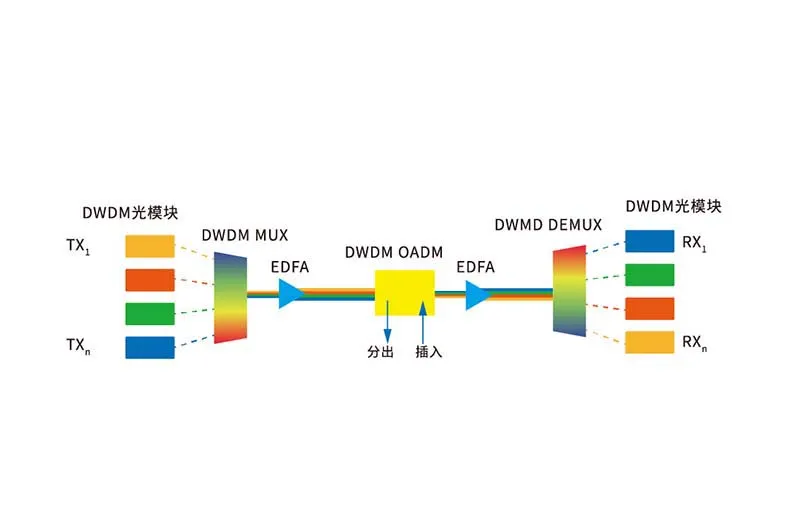
Market Drivers: Why DWDM Systems Are Essential
Data growth fuels DWDM systems. In 2024, the WDM market reached billions. DWDM systems hold a 58% share. The Asia-Pacific region leads with 43% of the market. Cloud services, AI, and 5G push demand. DWDM systems evolve from 100G to 800G to keep up.
Key applications include:
- Data Center Interconnect (DCI): DWDM systemsdeliver high bandwidth for AI and distributed computing.
- 5G Networks: They ensure low-latency, high-capacity front/mid-haul connections.
- Cloud and Edge Computing: OADM and OXC enable flexible wavelength allocation.
Moreover, costs are dropping. Integrated PLC gratings and uncooled lasers reduce power use. DWDM systems stay competitive against CWDM. Leading vendors like Huawei and Ciena drive global adoption.

Applications: DWDM Systems in Action
DWDM systems shine across scenarios. They power long-haul backbone networks, metro networks, and DCI.
- Long-Haul Backbone: EDFA and Raman amplifiers extend reach beyond 2000km. FEC cuts costs.
- Metro Networks: DWDM systemssupport Ethernet, SDH, and OTN protocols. They meet diverse needs.
- Data Centers: 800G modules enable high-density, low-power (15W) deployments.
For instance, a North American operator used Nokia’s 1830 PSS platform. It achieved 8Tbit/s over 3000km. Another cloud provider deployed 400G DWDM systems. This cut latency by 20%. These cases show DWDM systems boost efficiency.
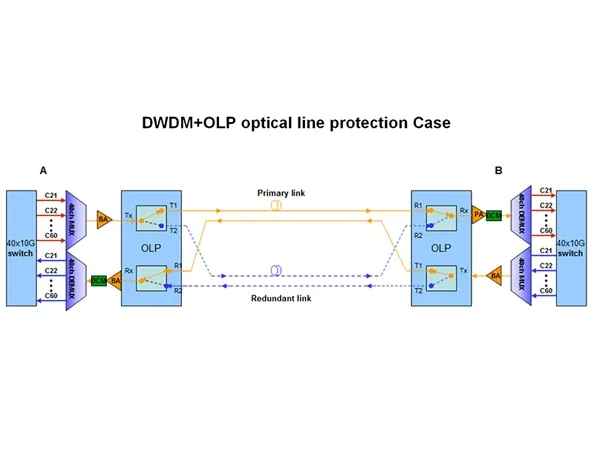
Future Outlook: Challenges and Opportunities for DWDM Systems
DWDM systems aim for 1Tbit/s per wavelength. They will shape the future. Key trends include:
- 1Tbit/s Rates: 64QAM and advanced optics will drive capacity.
- Smart Networking: OADM and OXC enable dynamic SDN-managed networks.
- Green Design: Silicon photonics cuts power use, supporting sustainability.
However, challenges remain. Dispersion management is critical for 800G and 1T signals. High-power 800G modules need better cooling. Interoperability across vendors must improve. Still, DWDM systems will lead high-speed networks. By 2030, their market share will grow. They will power global digital transformation.
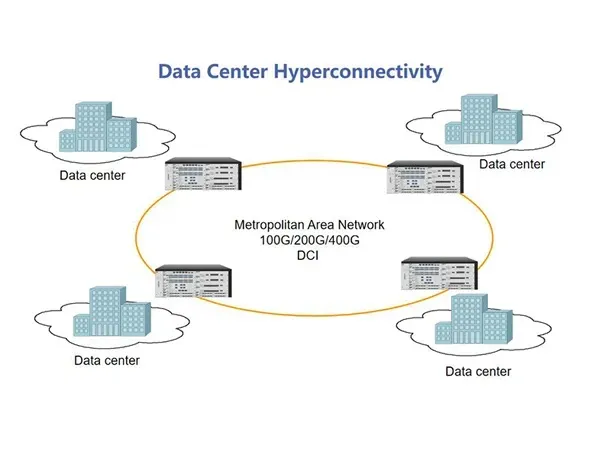
DWDM Systems Shape the Future
DWDM systems have evolved from 40G to 800G. They redefine connectivity. From data centers to 5G, they deliver unmatched performance. Looking ahead, 1Tbit/s and smart networking will solidify their role. DWDM systems are the backbone of ultra-high-speed networks.
HTF, a leading fiber and WDM solution provider, supports this revolution. With over a decade of expertise, HTF builds and optimizes fiber infrastructure. It serves data centers, 5G, cloud, and metro networks.
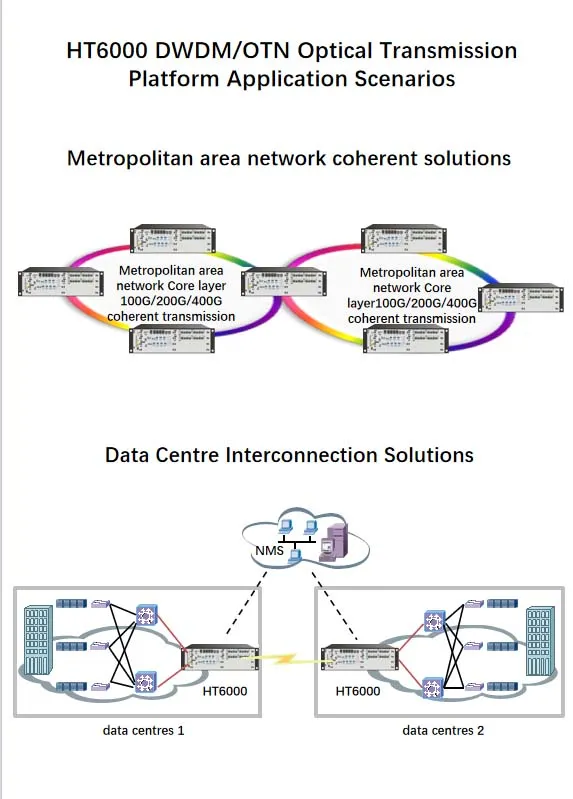
The HTF HT6000, a compact OTN system, uses CWDM/DWDM platforms. It supports multi-service transmission and over 1.6T capacity. Ideal for backbone and metro networks, it offers cost-effective solutions for IDC and ISP operators. HTF empowers clients to lead in the ultra-high-speed network era.