
The DWDM battlefield is the frontier of optical communication technology. It’s not just a race for innovation. It’s the backbone driving AI and high-performance computing (HPC) interconnects. As the “copper-to-fiber” trend surges, optical interconnects reshape data transmission. They usher in an efficient, intelligent era for computing power centers.

The “Copper-to-Fiber” Trend Gains Momentum
The “copper-to-fiber” shift is no longer a concept. It’s reality. Optical fibers outshine copper cables. They offer faster speeds, lower energy use, and longer reach. In the DWDM battlefield, fiber adoption fuels global network upgrades. Data from the International Telecommunication Union shows a 30% rise in fiber deployment over five years. Asia-Pacific and North America lead the charge.
Why this shift? Digital transformation drives demand. Businesses and governments embrace cloud services. Data traffic explodes. 5G and upcoming 6G networks amplify the need for speed. Copper cables struggle with bandwidth and signal loss. They can’t keep up. Meanwhile, cloud computing spikes energy use. Optical fibers cut costs and emissions. In Europe, the “Green Deal” pushes fiber as a sustainability key.
Yet, challenges persist. High upfront costs deter investment. Compatibility issues arise. Supply chain disruptions loom. However, DWDM technology eases these hurdles. It enables multiple signals on one fiber. This boosts capacity without replacing infrastructure. It’s cost-effective and scalable. Looking ahead, “copper-to-fiber” will expand from edge to core networks. It’s building a seamless digital world.
Diverse Applications Expand Rapidly
The DWDM battlefield thrives on versatility. Traditionally, DWDM powered telecom. It optimized long-distance backbone and metro networks. It ensured reliable, low-latency data flow. For example, national fiber projects rely on DWDM to transmit data across thousands of miles. Signal loss is minimal.
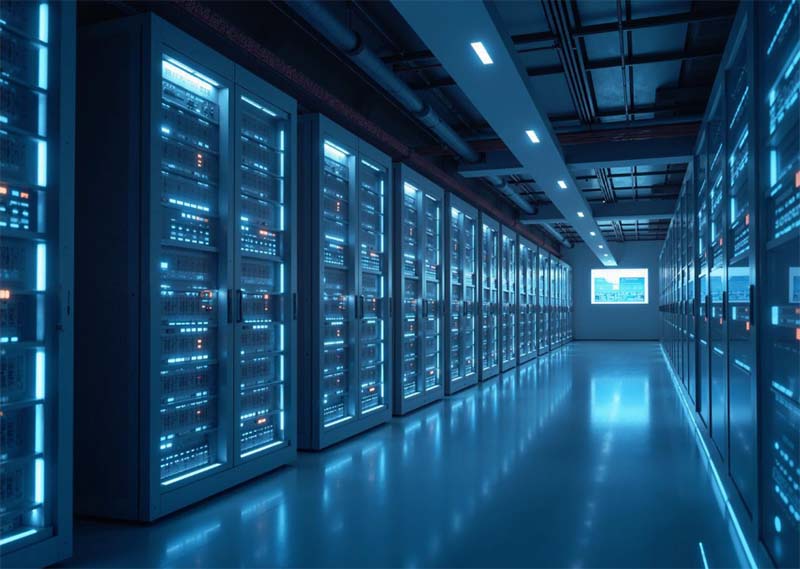
Now, the battlefield shifts to data centers. Demand for optical interconnects soars. From rack-to-rack to chip-to-chip, fibers dominate. Copper cables falter in high-density settings. Heat and power issues overwhelm them. Optical interconnects excel. They’re fast and cool. Gartner predicts the data center optical market will hit $50 billion by 2025. Annual growth? A staggering 25%.
Technically, DWDM shines in short-range interconnects. Silicon photonics shrinks devices for chip-level links. High-density wavelength multiplexing supports hundreds of channels. This meets AI’s parallel data needs. Take Google. Its data centers use DWDM for rack-to-rack efficiency. Energy savings reach 20%. Amazon’s AWS leverages optical interconnects for real-time cloud responses.
Beyond data centers, DWDM serves edge computing and IoT. In smart cities, it aggregates sensor data. In Industry 4.0, it enables machine collaboration. These expansions broaden DWDM’s reach. They inject vitality into the industry. The result? End-to-end network optimization.
AI/HPC Clusters: The Heart of the DWDM Battlefield
The DWDM battlefield centers on AI and HPC interconnects. AI models, like GPT, now handle trillion-scale parameters. Traditional interconnects can’t cope. Copper cables hit bandwidth and latency walls. DWDM steps in. It powers ultra-fast, reliable data transfer for computing clusters.
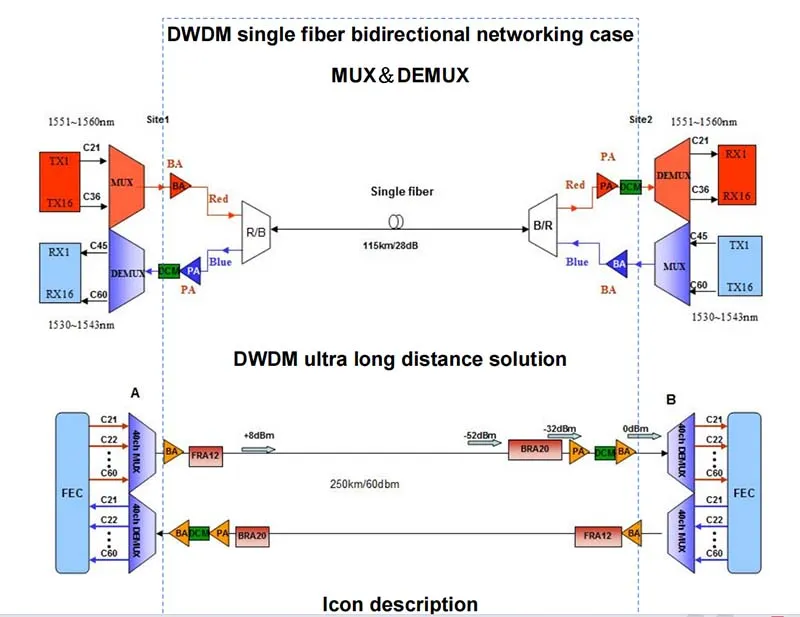
Why the demand surge? AI and HPC require massive parallel processing. Training large models involves thousands of GPUs. Data volumes reach petabytes. DWDM delivers. It supports hundreds of terabits per second on a single fiber. Far beyond copper’s limits. In computing centers, chip-to-chip links use silicon-based DWDM modules. Latency drops to nanoseconds. Rack-to-rack setups rely on DWDM multiplexing. Flexible network designs emerge.
Technically, DWDM excels. Coherent detection boosts signal quality. It fights noise. Automated wavelength management simplifies operations. Industry giants like Huawei and Ciena dominate the DWDM battlefield. Huawei leads in Asia with patents. Ciena drives innovation in North America. Market forecasts predict DWDM demand will double by 2030. Patents focus on density and efficiency.
Risks remain. Supply chain issues and geopolitics threaten progress. Yet, opportunities outweigh challenges. Policies like China’s “East Data, West Computing” accelerate DWDM adoption. The battlefield is reshaping AI ecosystems. It ensures efficient training and inference.
Challenges, Opportunities, and Future Horizons
The DWDM battlefield isn’t without obstacles. High technical barriers demand skilled talent. Standardization lags, causing compatibility issues. Power and cooling challenges persist. Industry collaboration is key. Open-source communities and standards like IEEE can help.
Opportunities abound. Policies fuel growth. China’s “dual-carbon” goals and Europe’s digital strategies back DWDM. Light-electric integration cuts costs. Looking forward, the DWDM battlefield will expand. Quantum computing and edge AI are next. Optical interconnects will democratize computing power.
In this grand narrative, companies like HTF play a vital role. HTF, a leader in optical fiber products and WDM solutions, boasts a team with over a decade of expertise. They focus on building, connecting, and optimizing fiber infrastructure. HTF serves global data centers, 5G networks, cloud computing, metro, and access networks. They provide tailored transmission solutions, products, and support.
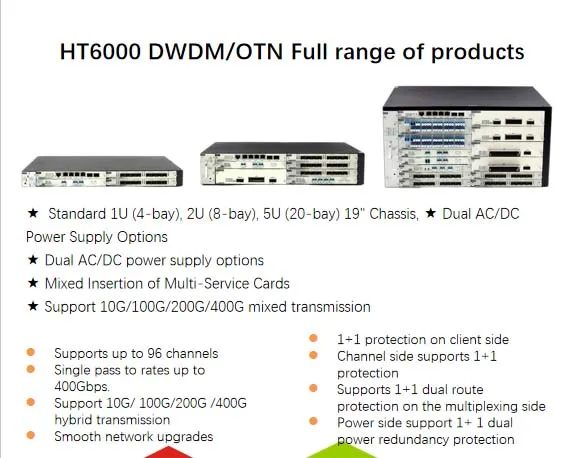
Notably, the HTF HT6000 stands out. It’s a compact, high-capacity, low-cost OTN system. Built on a CWDM/DWDM platform, it supports multi-service transmission. It’s flexible and scalable. Ideal for national, provincial, and metro backbone networks, it handles over 1.6T capacity. It’s a cost-effective solution for IDC and ISP operators seeking WDM expansion.
The DWDM battlefield is poised for greatness. Optical interconnects will lead AI and computing into a bold new era. Act now. Embrace the revolution. Build your digital future.