
Modern data centers are no longer isolated facilities. Instead, they form large, distributed systems that operate across cities, regions, and even countries. As a result, DCI (Data Center Interconnect) has become a core technology for ensuring seamless communication between geographically separated data centers.
This article explains what it is, why it matters, and how mainstream it I technologies support modern data center architectures.
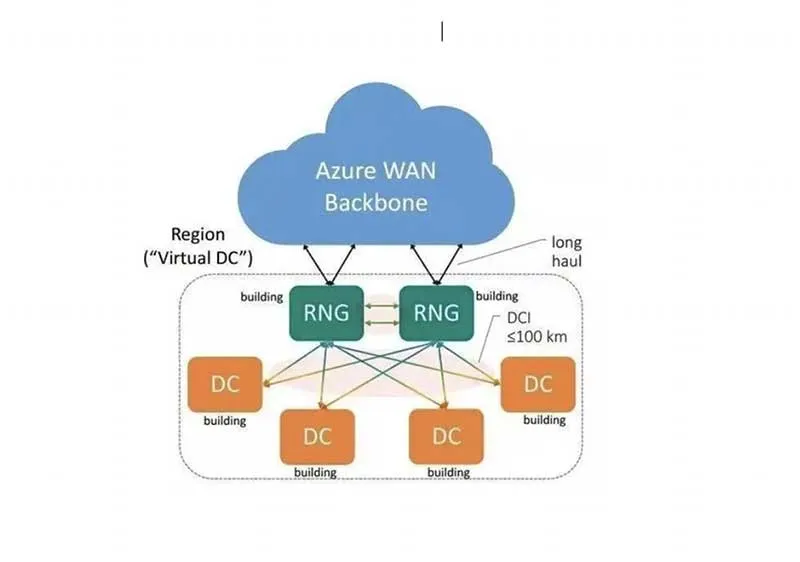
What Is DCI?
A data center today often consists of multiple branch facilities deployed in different locations. These sites work together to support cloud services, enterprise applications, and user access. Therefore, reliable interconnection between data centers becomes essential.
DCI, short for Data Center Interconnect, refers to the technologies used to connect two or more data centers. These technologies operate at both the physical and logical network layers. Through it , data centers can exchange data, replicate storage, and support disaster recovery.
Large Internet enterprises typically deploy data centers in multiple regions. As a result, it networks help improve user experience, reduce latency, and enhance service availability.
Why DCI Is Critical for Modern Data Centers
As applications evolve, data centers must support high availability and flexible resource scheduling. Therefore, it plays a critical role in several scenarios:
- Business continuity during disasters
- Virtual machine migration between sites
- Storage data replication
- Load balancing across regions
At the same time, traditional single-site architectures can no longer meet these requirements. As a result, advanced DCI solutions have emerged to support large-scale deployments.
Three Traditional DCI Interconnection Models
Front-End Network Interconnection (Layer 3)
This approach connects data centers through IP networks at the front-end layer. Enterprises typically use this model for WAN or campus network access.
However, Layer 3 interconnection cannot support seamless virtual machine migration. Therefore, its application is limited in modern cluster environments.
Server Network Interconnection (Layer 2 Extension)
In this model, a large Layer 2 network spans multiple data centers. As a result, virtual machines can migrate transparently across sites.
However, large Layer 2 domains introduce serious risks. For example, broadcast storms may affect all connected data centers. Therefore, scalability and security become major concerns.
Storage Network Interconnection (SAN)
SAN-based it focuses on storage replication between data centers. It typically relies on technologies such as DWDM or SDH.
Before cluster applications became widespread, this approach worked well. However, it cannot fully meet the needs of modern cloud architectures.
MPLS-Based DCI Solutions
MPLS-based it uses an existing MPLS core network to interconnect data centers. Technologies such as VLL and VPLS enable Layer 2 connectivity over MPLS.
VPLS provides standardized Layer 2 VPN services and supports metropolitan or wide-area networks. However, deployment and maintenance remain complex. As a result, operational risks increase.
Moreover, many networks prefer Layer 3 MPLS due to simplicity. Unfortunately, Layer 3 MPLS cannot support cluster-based applications that require Layer 2 connectivity.
IP Tunneling Technology for DCI
IP tunneling technology offers greater flexibility. It enables Layer 2 interconnection over any IP network using encapsulation techniques.
The core idea is “MAC in IP”. Through this approach, Layer 2 packets traverse Layer 3 networks. Technologies such as Cisco OTV and H3C EVI follow this design.
Therefore, IP tunneling allows data centers to interconnect without changing existing core networks. At the same time, it supports high availability through dual-homing designs.
VXLAN-DCI: The Future of Data Center Interconnection
VXLAN is a widely adopted Layer 2 VPN technology based on IP networks. It uses “MAC in UDP” encapsulation and supports massive network virtualization.
In modern data centers, VXLAN has become a standard architecture. Therefore, VXLAN-DCI extends VXLAN tunnels beyond a single data center.
As a result, virtual machines can migrate freely between sites. Moreover, VXLAN-DCI integrates naturally with SDN platforms, enabling centralized control and automation.
Common Characteristics of Modern DCI Technologies
Despite different implementations, modern DCI technologies share several features:
- Packet encapsulation to extend Layer 2 domains
- Preservation of existing network architectures
- Support for virtual machine mobility
- Improved scalability and flexibility
Although encapsulation introduces some bandwidth overhead, it effectively solves critical interconnection challenges. Therefore, these technologies remain widely adopted.
The Role of SDN in DCI
SDN is increasingly important in DCI environments. By separating control and forwarding planes, SDN enables simplified operations and flexible resource management.
As a result, SDN reduces operational costs while improving service agility. In the future, SDN will play an even greater role in large-scale DCI deployments.
Professional Optical Communication Support
As a high-tech enterprise specializing in optical communication solutions, Shenzhen Hengtong Future provides comprehensive products and technical services for data center interconnection.
By continuously improving service quality, the company delivers flexible and reliable DCI solutions. Therefore, customers benefit from stable networks, efficient operations, and long-term support.