
CWDM and DWDM technologies lead the global high-speed network revolution with unmatched bandwidth and efficiency. Driven by 5G, cloud computing, and AI, data demands soar. CWDM and DWDM systems deliver high capacity and low latency, powering data centers, backbone networks, and metro networks. Silicon photonics and PLC (Planar Lightwave Circuit) technologies cut costs and boost performance.
The Backbone of Optical Communication: CWDM and DWDM
CWDM (Coarse Wavelength Division Multiplexing) and DWDM (Dense Wavelength Division Multiplexing) maximize fiber bandwidth. They transmit multiple wavelengths on a single fiber. CWDM uses 20nm wavelength spacing, ideal for cost-sensitive metro and access networks. It requires no precise temperature control, reducing power use. Conversely, DWDM employs tight 0.2-1.6nm spacing, supporting up to 192 channels. It excels in long-haul backbone networks and data center interconnects.
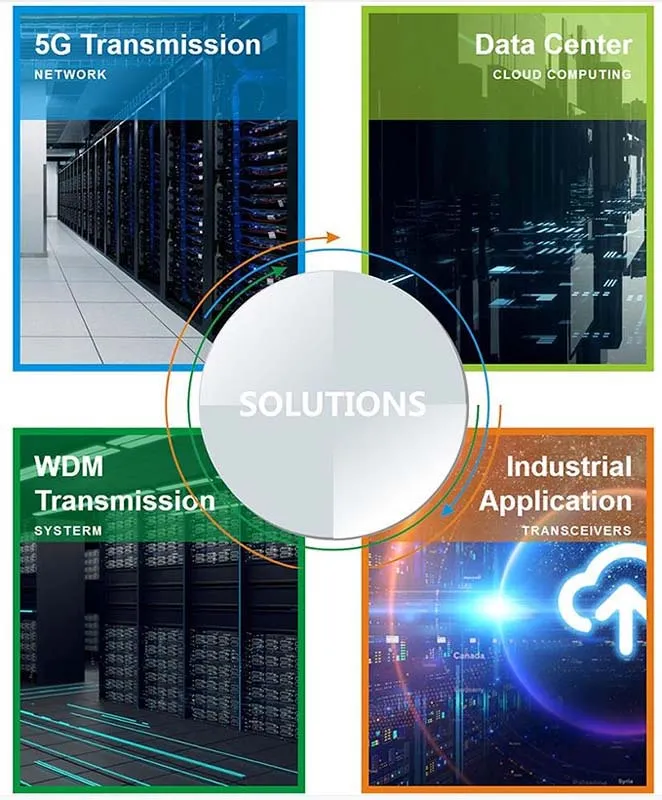
Moreover, CWDM and DWDM applications are merging. CWDM shines in 5G fronthaul with its low-cost edge. Meanwhile, DWDM dominates 400G/800G modules for cloud infrastructure. Silicon photonics and PLC technologies enhance both, cutting costs and driving growth in the optical communication market.
Silicon Photonics: Powering Cost-Effective CWDM/DWDM Systems
Silicon photonics revolutionizes optical communication. It integrates photonic and electronic components on silicon platforms. This slashes manufacturing costs and power consumption. In CWDM and DWDM systems, silicon photonics enables compact, high-density optical modules. For instance, 400G QSFP-DD modules using silicon photonics cut power use by 30%. They also reduce module size by nearly half.
Additionally, silicon photonics boosts signal processing. It enhances CWDM and DWDM system efficiency in 100G/400G networks. InP monolithic integration simplifies manufacturing by combining multiple components into one chip. This lowers DWDM module costs by about 20%. As a result, businesses gain affordable, high-bandwidth solutions, fueling global market growth.

PLC Technology: Boosting CWDM/DWDM Efficiency
PLC (Planar Lightwave Circuit) technology is a cornerstone of CWDM and DWDM systems. It builds passive devices like splitters and wavelength multiplexers on silicon or glass substrates. These devices improve wavelength management precision. In CWDM systems, PLC optimizes wavelength spacing, reducing fiber usage in metro networks. In DWDM, PLC supports high-density multiplexing for long-haul signal integrity.
For example, in 400G networks, PLC multiplexers enable DWDM systems to handle up to 192 channels. This boosts capacity tenfold. PLC’s low-loss design ensures stability in harsh environments, cutting maintenance costs. Consequently, CWDM and DWDM systems excel in 5G, data centers, and backbone network upgrades.

Market Surge: Global and Domestic Opportunities for CWDM/DWDM
The global CWDM and DWDM optical module market thrives. In 2023, it reached billions, per QYResearch. By 2030, it will grow at an 8-10% CAGR. China drives global demand, fueled by 5G and data center growth. In 2023, China held nearly 30% of the market share. By 2030, its share will rise further.
Domestically, companies like Accelink and Huawei lead with silicon photonics and PLC innovations. They break international monopolies. For instance, Accelink’s 100G/400G DWDM modules power China Mobile’s backbone networks. Globally, Coherent and Broadcom launch low-power CWDM/DWDM modules. These advancements cut costs, making high-speed networks accessible to smaller businesses.
Real-World Applications: CWDM/DWDM in Action
CWDM and DWDM, enhanced by silicon photonics and PLC, transform multiple sectors:
- 5G Fronthaul and Backhaul: China Mobile uses CWDMwith PLC multiplexers for 10km low-cost 5G fronthaul, saving 40% on fiber.
- Data Center Interconnects: A leading cloud provider adopts silicon photonics-based DWDMmodules for 400G interconnects, boosting efficiency by 50% and cutting costs by 30%.
- Metro Network Upgrades: CWDMsystems with PLC optimize wavelength management, enabling cost-effective expansion for IoT and edge computing.
These cases show how CWDM and DWDM enhance performance and affordability, driving digital transformation.
Challenges and Future: The Evolution of CWDM/DWDM
Silicon photonics and PLC face challenges. Manufacturing complexity slows silicon photonics’ mass production. PLC compatibility with legacy systems needs improvement. Additionally, CWDM and DWDM systems require faster standardization to meet diverse needs.
Looking ahead, CWDM and DWDM will power 800G networks, AI, and cloud computing. Silicon photonics will further cut power use, supporting green networks. PLC will enhance high-density wavelength management. Driven by carbon neutrality goals, CWDM and DWDM systems will adopt low-power designs, ensuring sustainable growth.
Conclusion: CWDM/DWDM Shape the Future of Optical Networks
CWDM and DWDM, powered by silicon photonics and PLC, revolutionize 100G/400G networks. They deliver high bandwidth at lower costs. From 5G to data centers and metro networks, these technologies drive efficiency and scalability. As innovation and demand grow, CWDM and DWDM will lead optical communication into a new era.
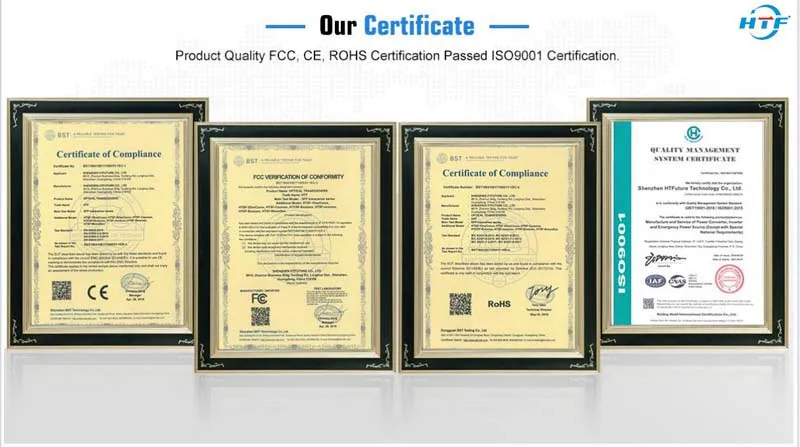
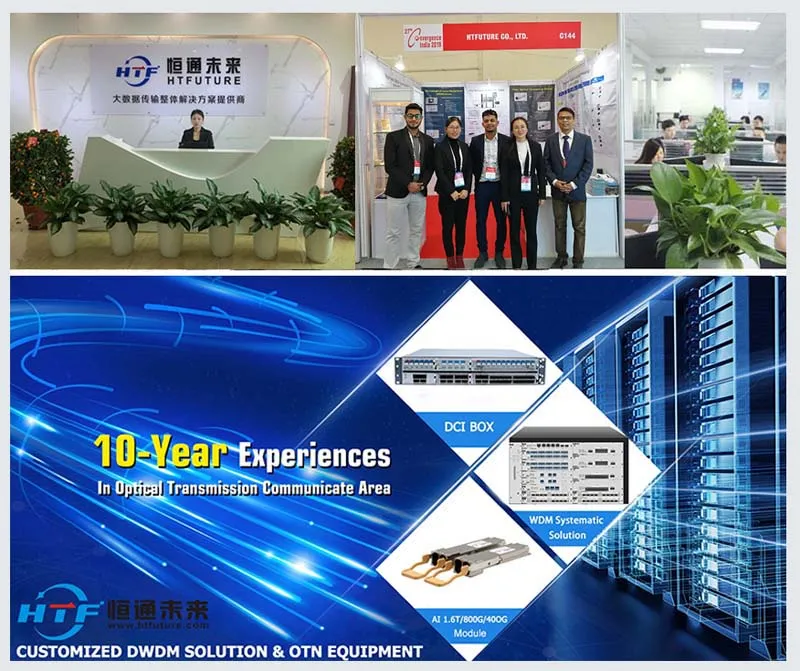
HTF, a trusted leader in optical fiber solutions, delivers cutting-edge CWDM/DWDM systems. With over a decade of expertise, HTF’s team designs high-capacity, low-cost solutions for global data centers, 5G, and cloud networks. The HTF HT6000, a compact OTN platform, leverages CWDM/DWDM technology for multi-service transmission. It supports over 1.6T capacity, ideal for backbone and metro networks. HTF empowers IDC and ISP operators with cost-effective WDM solutions, connecting and optimizing your optical infrastructure for the digital future.