
CFP plays a foundational role in the evolution of high-speed optical networks. As the first standardized pluggable optical module designed for commercial 100Gbps deployment, CFP fundamentally changed how high-capacity networks are built, upgraded, and maintained. Although newer form factors now dominate higher speeds, the importance of CFP remains both technical and historical.
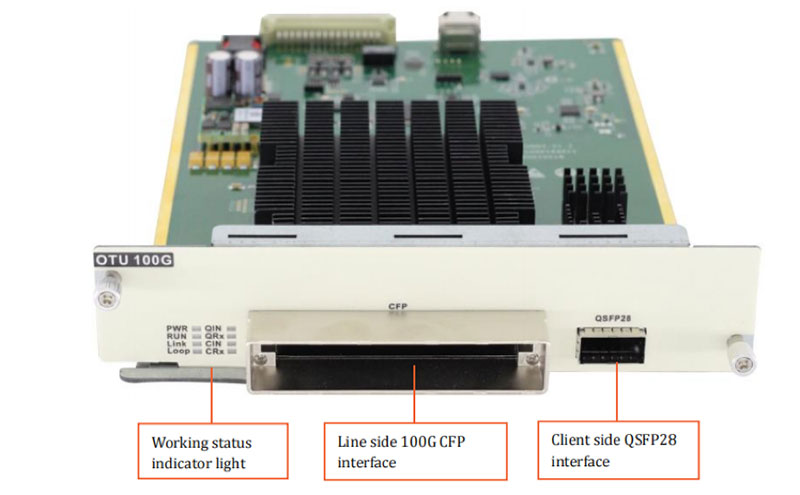
CFP as a Pioneer of High-Speed Optical Transmission
First and foremost, It was the earliest standardized optical module to successfully commercialize 100Gbps transmission. Before it entered the market, most high-speed optical solutions were fixed designs. As a result, upgrades were slow, maintenance was complex, and operational flexibility was limited.
By contrast, It introduced a modular and standardized approach. Consequently, network operators could finally deploy high-speed links with greater confidence, scalability, and interoperability. This shift marked the true beginning of the 100G era in optical communications .
Modular CFP Design Improves Network Flexibility
Equally important, It integrates complex optoelectronic conversion functions into a hot-swappable module. This design innovation transformed responsibilities across the industry.
For equipment manufacturers, It allows teams to focus on switch and router motherboard design without mastering every optical detail. Meanwhile, for operators and end users, different CFP models can be selected based on transmission distance, performance, and cost. Therefore, failed modules can be replaced quickly, which greatly improves network uptime and maintainability.
CFP Enables Long-Distance and Carrier-Grade Applications
In addition, the relatively large physical size of CFP provides clear technical advantages. It can accommodate advanced lasers, sophisticated modulators, and robust heat-dissipation structures. Because of this, It supports high-order modulation formats such as DP-QPSK.
As a result, It is well suited for long-distance transmission scenarios. These include data center interconnects, metropolitan area networks, and backbone networks. In other words, It bridges the gap between ultra-high speed and carrier-grade reliability.
CFP Introduced Pluggable High-Speed Optics to the Industry
More importantly, It was the first optical module to bring the “pluggable” concept into both high-speed (100G and above) and long-distance optical networks. This breakthrough reshaped research and development workflows. At the same time, it simplified deployment and reduced long-term operational costs.
Because CFP proved that pluggable optics could work reliably at carrier scale, it accelerated industry adoption of 100G networks worldwide. Consequently, optical networking entered a new phase of rapid evolution and standardization.
CFP’s Role in the Era of Smaller Form Factors
With ongoing technological advances, smaller modules such as QSFP-DD and OSFP are now mainstream for 400G and 800G applications. These newer formats inherit the high-speed capabilities pioneered by CFP while offering better power efficiency and smaller size.
However, It has not disappeared. Instead, the CFP family continues to evolve toward ultra-long-distance transmission scenarios. Therefore, its value lies not in market dominance today, but in its lasting architectural influence.
Why CFP Still Matters Today
In conclusion, It is important not because it remains the most popular optical module, but because it successfully ushered in the era of high-speed pluggable optics. It changed how optical networks are designed, deployed, and maintained. More importantly, It laid the technical and conceptual foundation for every modern high-speed optical module that followed.
Without CFP, the rapid expansion of 100G—and beyond—would not have been possible.