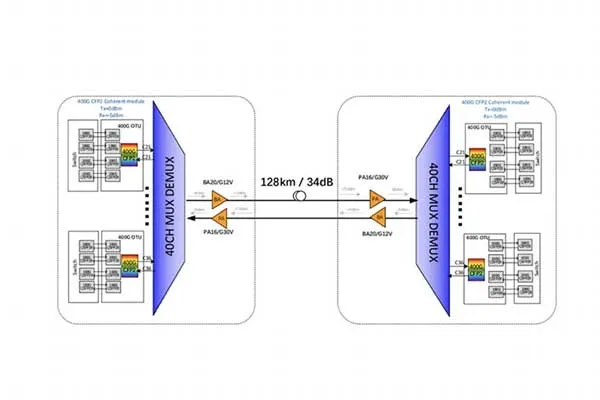
Why Use a 400G DWDM Muxponder Board in Modern Optical Networks?

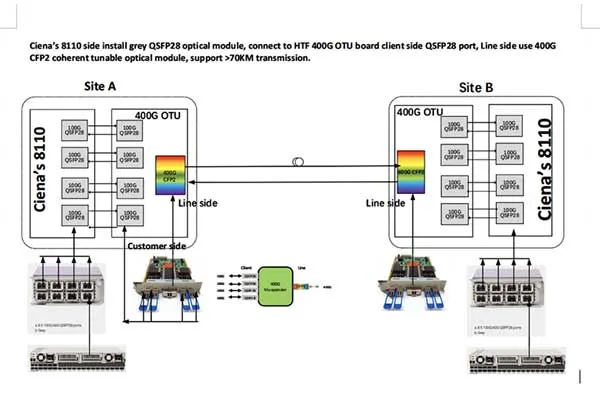
  The 400G dwdm muxponder board has become a key building block for today’s high-capacity optical networks. As data demand continues to rise, many operators need a solution that increases bandwidth, boosts efficiency, and supports future growth. This board delivers all three. Below is an optimized overview of why it is essential.     Higher… Continue reading Why Use a 400G DWDM Muxponder Board in Modern Optical Networks?

Untitled

400G DWDM Practical Application Scenarios 400G DWDM has become a key technology that supports today’s rapid growth in cloud computing, AI training, and global connectivity. As bandwidth demand continues to rise, more enterprises and carriers are adopting flexible 400G DWDM solutions to upgrade their optical transport networks. The following sections show how this technology empowers… Continue reading Untitled

400G DWDM Coherent Muxponder: Key Applications and Network Advantages

  The 400G DWDM coherent muxponder is becoming a core device in modern optical networks. It supports high-capacity transmission, flexible service integration, and efficient fiber utilization. Because digital transformation continues to accelerate, more service providers now prefer this device for stable and scalable network upgrades.     Data Center Interconnect (DCI) Deployment Data centers require… Continue reading 400G DWDM Coherent Muxponder: Key Applications and Network Advantages

Optical Module Market: AI Clusters Drive Explosive Growth Toward 2025

  The Optical Module Market is entering a stage of rapid expansion, as global AI clusters continue to scale at an unprecedented pace. In July 2025, LightCounting released its Cloud Data Center Optics Report, revealing that cloud companies’ increasing investments in data center and network infrastructure have created a highly dynamic new segment within this… Continue reading Optical Module Market: AI Clusters Drive Explosive Growth Toward 2025

What Is China Telecom’s Enterprise OTN Network

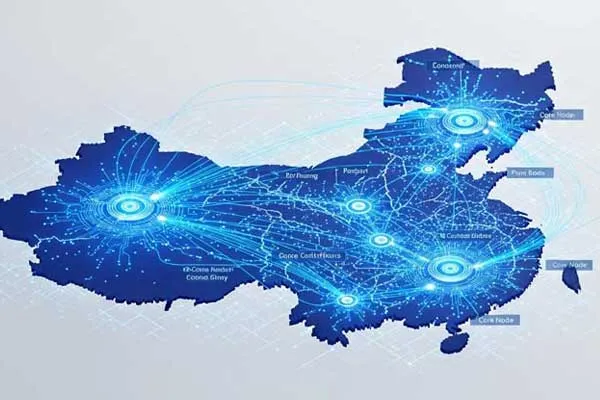
  The Enterprise OTN network is China Telecom’s premium nationwide bearer network designed for high-quality enterprise leased lines. It supports business users with reliable, low-latency, and high-bandwidth connectivity. Although its structure is extensive, it mainly contains three layers: the backbone network, the metropolitan area network (MAN), and the OTN-CPE access terminals. Together, they create an… Continue reading What Is China Telecom’s Enterprise OTN Network

DCM Solutions for High-Performance DWDM Systems: Why They Matter

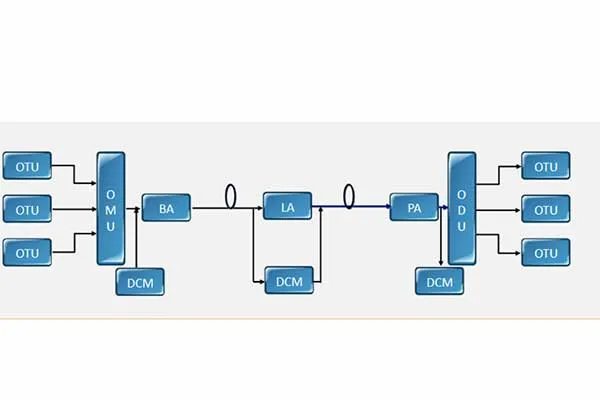
Chromatic Dispersion (CD) is a critical challenge in high-speed DWDM transmission. It stretches optical pulses and increases bit-error rates. As a result, DWDM links lose stability and reach. A DCM (Dispersion Compensation Module) reverses this distortion. Consequently, modern DWDM networks depend on DCMs to preserve signal integrity over medium- and long-haul fiber routes.    … Continue reading DCM Solutions for High-Performance DWDM Systems: Why They Matter

Untitled

DWDM: The Shift from Transmission Tool to Intelligent Network Foundation DWDM is no longer only a method of increasing bandwidth. It is now becoming the fundamental layer that supports intelligent, flexible, and high-performance networks. As AI computing, cloud platforms, and ultra-high-definition applications grow quickly, traditional systems struggle to keep up. Therefore, DWDM is emerging as… Continue reading Untitled

DWDM Design: Key Factors for a Robust Solution

Dense Wavelength Division Multiplexing (DWDM) is the backbone of modern optical communication networks. It enables massive data transmission by using multiple light wavelengths over a single fiber pair. To design a truly robust DWDM solution, engineers must balance performance, reliability, cost, and scalability. This guide outlines the essential factors to consider.   1. Understanding Capacity… Continue reading DWDM Design: Key Factors for a Robust Solution

EDFA Is Indispensable for DWDM Solutions

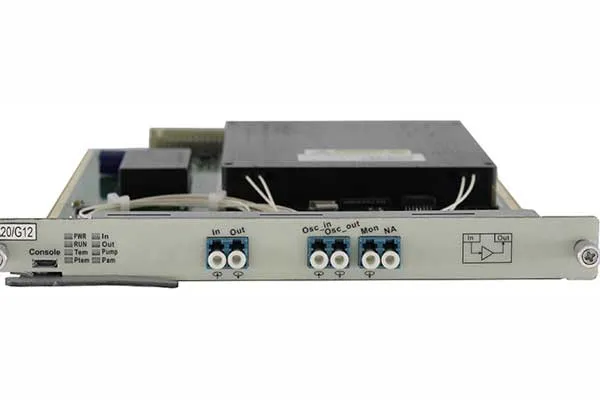
1. Overcoming Signal Attenuation in Long-Haul Transmission In dense wavelength-division multiplexing (DWDM) systems, signal attenuation is a major challenge. Without an EDFA, a 100 km fiber link would lose around 25 dB of power—over 99% of its original strength. An EDFA uses erbium-doped fiber and a 980 nm or 1480 nm pump laser to amplify… Continue reading EDFA Is Indispensable for DWDM Solutions

Raman Amplifiers: Core Functions in Modern DWDM Systems

Raman Amplifiers have become essential in Dense Wavelength Division Multiplexing (DWDM) networks. They utilize stimulated Raman scattering (SRS)—a quantum optical process where high-energy pump photons transfer energy to weaker DWDM signal photons. Unlike conventional EDFAs, they amplify signals directly within the transmission fiber, offering broader bandwidth, lower noise, and greater flexibility.   1. Distributed Optical… Continue reading Raman Amplifiers: Core Functions in Modern DWDM Systems