
In today’s digital age, the communication industry is experiencing an unprecedented boom. At the heart of this transformation are 400G and 800G optical modules, which are revolutionizing the way we transmit and receive data. These high — speed optical modules have become the cornerstone of modern communication networks, enabling seamless connectivity and high — speed data transfer across the globe.
400G Optical Modules: Meeting the Growing Demand for Bandwidth
400G optical modules have emerged as a game — changer in the communication industry, providing a significant boost in data transmission speeds. With the exponential growth of data — intensive applications such as cloud computing, big data analytics, and video streaming, the need for higher bandwidth has become more critical than ever. 400G optical modules are designed to meet this demand, offering a transmission rate of 400 gigabits per second (Gbps). This high — speed capability allows for the rapid transfer of large volumes of data, ensuring smooth and efficient operation of data — hungry applications.
One of the key advantages of 400G optical modules is their ability to support high — density port configurations. This means that more data can be transmitted through a single fiber, maximizing the use of existing network infrastructure. In data centers, where space and power are at a premium, 400G optical modules offer a compact and energy — efficient solution. They can be easily integrated into existing switches and routers, providing a cost — effective way to upgrade network performance without the need for a complete overhaul of the infrastructure.
400G optical modules also play a crucial role in long — haul and metropolitan area networks. With their extended transmission distances, they can connect data centers across cities and even countries, enabling seamless data transfer between different regions. This is particularly important for businesses that operate globally and require real — time access to data from multiple locations. By using 400G optical modules, these companies can ensure fast and reliable communication, enhancing their competitiveness in the global marketplace.
800G Optical Modules: Pushing the Boundaries of Speed and Performance
As the demand for even higher data rates continues to grow, 800G optical modules have emerged as the next frontier in optical communication technology. These cutting — edge modules offer a staggering transmission rate of 800 Gbps, doubling the speed of 400G modules. This exponential increase in speed opens up new possibilities for applications that require ultra — high — speed data transfer, such as artificial intelligence (AI) and machine learning (ML) workloads, virtual reality (VR) and augmented reality (AR) experiences, and 8K video streaming.
800G optical modules are designed to meet the challenges of the future — proof communication networks. They feature advanced technologies such as pulse amplitude modulation (PAM4) and coherent detection, which enable them to achieve higher data rates while maintaining signal integrity over long distances. These technologies also help to reduce power consumption, making 800G optical modules more energy — efficient and environmentally friendly.
In addition to their high — speed capabilities, 800G optical modules also offer improved port density and flexibility. They can support a larger number of channels per module, allowing for more efficient use of network resources. This makes them an ideal choice for data centers and cloud service providers that need to handle massive amounts of data traffic. With 800G optical modules, these providers can scale their networks more easily and cost — effectively, ensuring that they can meet the growing demands of their customers.
Applications of 400G and 800G Optical Modules in the Communication Industry
The applications of 400G and 800G optical modules in the communication industry are vast and diverse. Here are some of the key areas where these high — speed optical modules are making a significant impact:
Data Centers
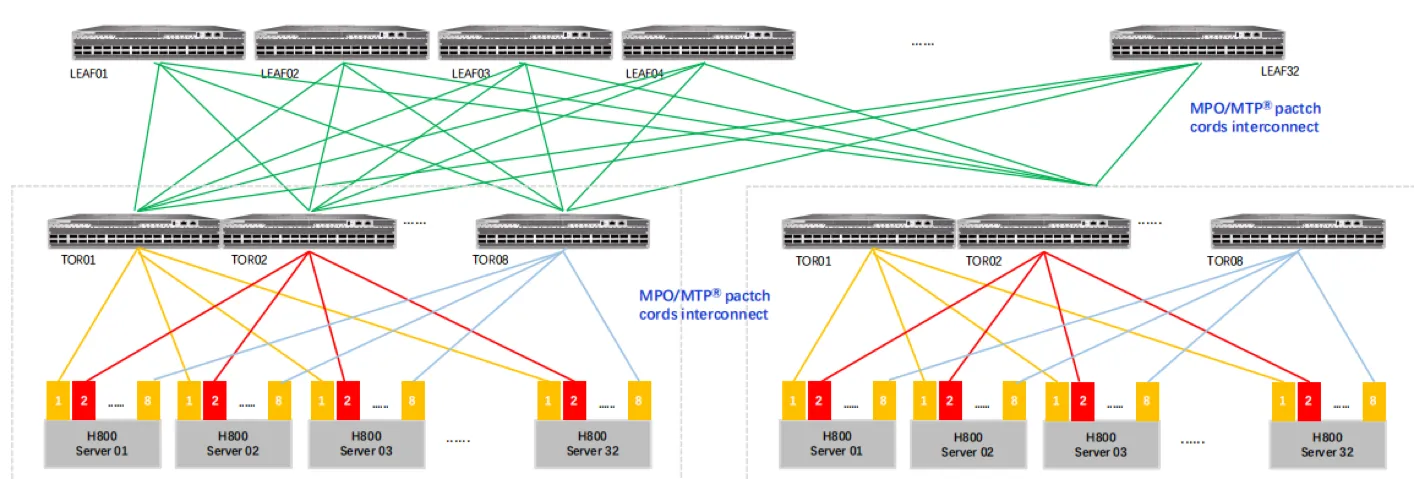
Data centers are the backbone of the digital economy, storing and processing vast amounts of data. With the increasing demand for cloud services, online gaming, and video streaming, data centers need to be able to handle massive amounts of data traffic. 400G and 800G optical modules provide the high — speed connectivity required to meet this demand, ensuring that data can be transferred quickly and efficiently between servers and storage devices. They also enable data centers to scale their operations more easily, allowing them to accommodate more users and applications without sacrificing performance.
5G Networks
The roll — out of 5G networks is transforming the way we communicate, enabling faster and more reliable wireless connections. 400G and 800G optical modules play a crucial role in 5G networks, providing the high — speed backhaul connectivity required to support the massive amount of data traffic generated by 5G devices. They are used to connect 5G base stations to the core network, ensuring that data can be transmitted quickly and efficiently between the edge and the cloud. This is essential for enabling applications such as autonomous driving, smart cities, and industrial IoT, which require low — latency and high — bandwidth connectivity.
Telecom Networks
Telecom operators are constantly looking for ways to improve the performance of their networks and offer better services to their customers. 400G and 800G optical modules provide a cost — effective way to upgrade existing telecom networks, enabling operators to increase their network capacity and offer higher — speed services. They can be used to upgrade long — haul and metropolitan area networks, as well as to improve the performance of access networks. By using these high — speed optical modules, telecom operators can stay ahead of the competition and meet the growing demands of their customers.
High — Performance Computing
High — performance computing (HPC) is used in a wide range of applications, from scientific research and weather forecasting to financial modeling and artificial intelligence. These applications require massive amounts of computational power and high — speed data transfer capabilities. 400G and 800G optical modules provide the high — speed connectivity required to support HPC workloads, ensuring that data can be transferred quickly and efficiently between compute nodes and storage devices. This is essential for enabling researchers and scientists to perform complex simulations and analyses in a timely manner.
The Future of 400G and 800G Optical Modules
The future of 400G and 800G optical modules looks bright, with continued innovation and development expected in the coming years. As the demand for higher data rates and more efficient network solutions continues to grow, these high — speed optical modules will play an increasingly important role in the communication industry.
One of the key areas of development for 400G and 800G optical modules is in the area of energy efficiency. As data centers and telecom networks consume large amounts of energy, there is a growing need for more energy — efficient solutions. Researchers are working on developing new technologies and materials that can reduce the power consumption of optical modules without sacrificing performance. This will not only help to reduce the environmental impact of the communication industry but also lower the operating costs of data centers and telecom operators.
Another area of development is in the area of integration. As the demand for smaller and more compact optical modules grows, researchers are working on integrating multiple functions into a single module. This will help to reduce the size and cost of optical modules, making them more suitable for use in a wide range of applications. For example, some researchers are working on developing integrated optical modules that combine the functions of a transceiver, a switch, and a router, enabling more efficient and cost — effective network solutions.
In conclusion, 400G and 800G optical modules have become essential components of modern communication networks. Their high — speed capabilities, high — density port configurations, and energy — efficient designs make them ideal for use in a wide range of applications, from data centers and 5G networks to telecom networks and high — performance computing. As the demand for higher data rates and more efficient network solutions continues to grow, these high — speed optical modules will play an increasingly important role in the communication industry, enabling seamless connectivity and high — speed data transfer across the globe.