
In the relentless race to keep pace with exploding bandwidth demands – driven by cloud computing, 5G, streaming, and AI – optical networks are the critical backbone. At the heart of the most advanced Wave Division Multiplexing (WDM) systems, particularly Reconfigurable Optical Add-Drop Multiplexers (ROADMs), lies a truly transformative component: the Wavelength Selective Switch (WSS) board. This sophisticated piece of hardware is far more than just a card; it’s the intelligent traffic controller shaping the future of optical connectivity.
Beyond Static Grids: The Need for Flexibility
Traditional fixed optical filters struggled with rigidity. Adding, dropping, or rerouting specific wavelengths required manual intervention, complex patch panels, and costly network downtime. This simply couldn’t scale to meet the dynamic nature of modern data traffic. Enter the WSS board – the key enabler of software-defined optical networking.
What Does a WSS Board Actually Do?
Think of a WSS board as an ultra-precise, programmable traffic director for light. Its core function is:
Spatial Routing: It takes a multi-wavelength optical signal entering its input port and can dynamically direct any individual wavelength (or group of wavelengths) to any one of its multiple output ports.
Flexible Spectrum Management: Advanced WSS boards support flex-grid technology, allowing them to manipulate channels not confined to the old 50GHz/100GHz grids, but instead allocate variable bandwidth slices (e.g., 37.5GHz increments) to match the exact needs of high-speed coherent transceivers (400G, 800G, 1.6Tb/s and beyond).
Add/Drop Flexibility: Within a ROADM node, WSS boards are fundamental to the “Add” and “Drop” functions. They selectively extract (Drop) specific wavelengths destined for local clients from the main line signal and inject (Add) new locally originating wavelengths onto the line signal heading to the next node.
CDC Capability: The most advanced ROADMs are Colorless, Directionless, and Contentionless (CDC). WSS boards are essential for achieving this:
Colorless: Any transponder (client) can use any wavelength (color) on the Add/Drop side.
Directionless: A dropped wavelength can be routed to any transponder port, regardless of its physical direction on the board.
Contentionless: Multiple instances of the same wavelength can be added/dropped simultaneously without conflict, dramatically increasing capacity and flexibility.
The Impact: Why WSS Boards are Indispensable
The integration of WSS boards into WDM/ROADM platforms delivers profound benefits:
Unprecedented Agility: Network operators can remotely provision, reroute, or optimize wavelength paths in minutes via software (SDN control), not days or weeks. New services launch faster.
Enhanced Efficiency: Optimized spectral usage through flex-grid and precise channel control maximizes fiber capacity, delaying costly new fiber deployments.
Increased Resilience: Fast, software-controlled reconfiguration enables rapid restoration after fiber cuts or equipment failures, boosting network uptime.
Reduced Operational Costs (OpEx): Eliminates manual patching for wavelength changes, lowers truck rolls, and simplifies network management.
Future-Proofing: Designed to handle higher-order modulation formats and ever-increasing baud rates, WSS boards provide a scalable foundation for next-generation speeds like 1.6Tb/s.
Simplified Architecture: WSS boards enable highly integrated ROADM designs, reducing the number of discrete components and overall footprint.
The Invisible Engine Driving Innovation
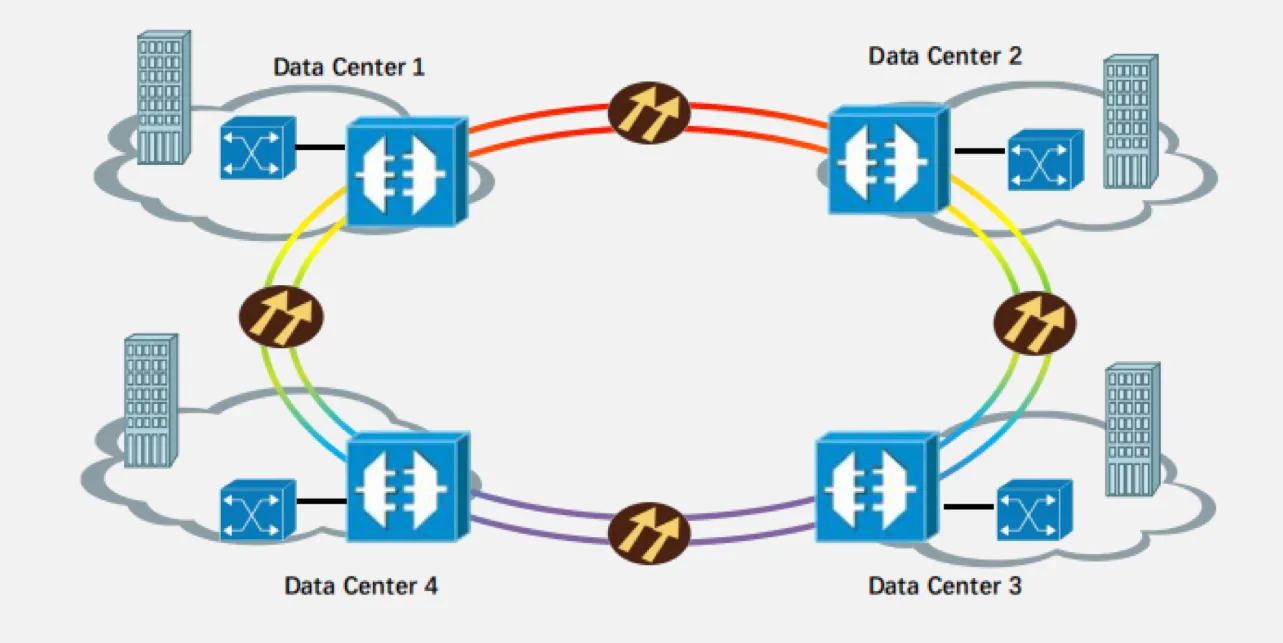
While transceivers grab headlines for speed, and fiber provides the highway, the WSS board is the intelligent switching fabric that makes the entire dynamic optical network possible. It transforms rigid point-to-point DWDM links into a flexible, reconfigurable mesh – the essential architecture for cloud-scale applications, content delivery, and global connectivity.
Conclusion
In the invisible world of photons racing down fiber, the WSS board is a master conductor. Its ability to dynamically manage light paths with precision and programmability is fundamental to the agility, efficiency, and scalability demanded by today’s and tomorrow’s optical networks. As bandwidth demands continue their exponential climb, the sophisticated capabilities embedded within WSS boards will remain absolutely critical, quietly powering the seamless flow of data that defines our connected world. Investing in WDM platforms with advanced WSS technology isn’t just an upgrade; it’s building the intelligent foundation for the future of optical networking.
Welcome to contact us, if you have any needs,