
Dense Wavelength Division Multiplexing (DWDM) systems power modern communication networks. They transmit multiple wavelength signals over a single fiber, boosting capacity and efficiency. Furthermore, efficient modulation and smart wavelength control elevate DWDM performance significantly. These advancements meet the soaring demand for high-bandwidth, low-latency networks.

Technical Progress
Breakthroughs in Efficient Modulation
DWDM systems excel in high-capacity, long-distance data transmission. Efficient modulation techniques amplify this strength. For instance, coherent detection combines phase and amplitude modulation, like QPSK and 16QAM. This boosts single-channel speeds to 400Gbps or even 800Gbps. Compared to older systems, capacity soars. Additionally, coherent detection uses digital signal processing (DSP) to counter fiber dispersion and nonlinear effects. This extends transmission distances without repeaters, cutting costs for operators.
Moreover, high-order modulation, such as 64QAM, maximizes data transfer within limited wavelengths. It suits high-bandwidth needs in 5G and data centers. Companies like VIAVI Solutions provide testing tools to ensure coherent DWDM reliability. These advancements make DWDM systems robust and efficient.

Advances in Smart Wavelength Management
Smart wavelength management transforms DWDM performance. Traditional systems used fixed wavelengths, limiting flexibility. Now, flexible wavelength selection and dynamic allocation optimize resources. For example, tunable lasers and ROADM (Reconfigurable Optical Add-Drop Multiplexers) adjust wavelengths on demand. This increases wavelength utilization and network adaptability.
Additionally, posts on X from highlight innovations like micro-ring resonator-based Collaborative Integrated Optics (CIO). These support 16-wavelength DWDM systems, enhancing modulation and energy efficiency. They’re ideal for AI computing and data centers. Furthermore, smart wavelength control automates fault detection and optimization. This reduces maintenance complexity, streamlining operations.

CWDM vs. DWDM
Compared to Coarse Wavelength Division Multiplexing (CWDM), DWDM offers tighter channel spacing (0.4nm or 0.8nm). It supports up to 80 channels or more. Thus, DWDM suits long-distance, high-capacity scenarios. In contrast, CWDM, with wider 20nm spacing, fits short-range, cost-sensitive networks. DWDM’s efficient modulation and smart wavelength control make it ideal for 5G, cloud services, and data center interconnects.
Market Trends and Drivers
Global and China Market Overview
The DWDM market thrives globally. LP Information reports the global DWDM optical module market reached $1.579 billion in 2023. It’s projected to hit $2.328 billion by 2030, with a 5.7% CAGR from 2024 to 2030. In China, QYResearch notes the CWDM and DWDM module market hit hundreds of millions in 2023. Growth continues, driven by strong demand. Moreover, China’s DWDM equipment market, already significant in 2024, eyes robust growth by 2030.
Key Growth Drivers
Several factors fuel DWDM market growth. First, 5G network expansion demands high-bandwidth, low-latency solutions. DWDM meets these needs perfectly. Second, data center interconnects (DCI) surge with cloud computing and AI growth. DWDM transceivers enable ultra-fast connections. Additionally, IoT devices and streaming services like OTT platforms increase data demands. DWDM systems handle this surge effectively.
Moreover, efficient modulation lowers per-bit transmission costs. Smart wavelength control reduces operational expenses through automation. These benefits make DWDM attractive, especially in cost-sensitive emerging markets like Southeast Asia and Africa.

Competitive Landscape and Company Dynamics
The DWDM market sees fierce competition. Leading players include Cisco, Nokia, and Huawei. Chinese firms hold a strong share in modules and equipment. For instance, Cisco’s open-architecture DWDM systems connect diverse devices like SONET terminals and IP routers. This enhances network compatibility. Similarly, VIAVI Solutions offers testing solutions for passive DWDM networks, addressing deployment challenges. Emerging markets, with rising infrastructure investments, offer growth opportunities. Companies leverage innovation and localization to gain market share.
Applications and Future Outlook
Diverse Applications
DWDM systems shine in multiple sectors. In telecom, they support 5G fronthaul, midhaul, and backbone networks. They ensure low-latency, high-reliability data transfer. In data centers, DWDM transceivers enable 400Gbps to 800Gbps interconnects, meeting cloud and AI needs. Additionally, DWDM powers smart city projects, supporting high-bandwidth applications like traffic systems and video surveillance.
Furthermore, efficient modulation and smart wavelength control enhance adaptability. Dynamic wavelength allocation optimizes resources for edge computing and AI workloads. Innovations like micro-ring resonators provide low-power, high-density solutions for data centers.
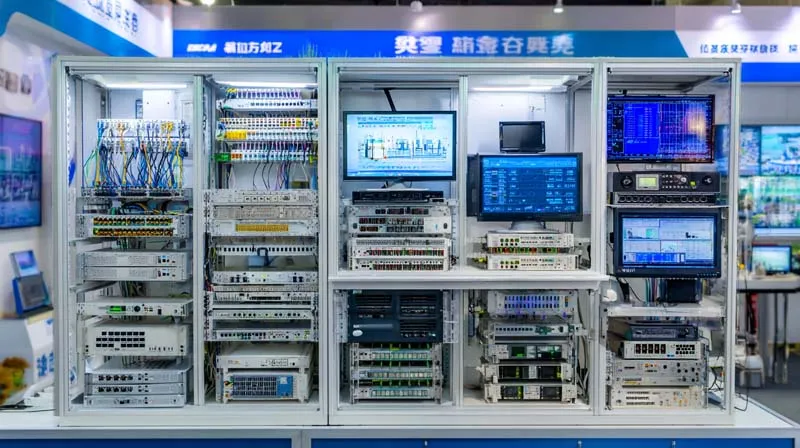
Looking ahead, DWDM systems will evolve in key ways. First, green technology will take center stage. Low-power DWDM modules reduce energy use, aligning with sustainability goals. Second, automation and AI-driven management will grow. Smart wavelength control will enable self-optimizing networks. Additionally, open-architecture systems will boost compatibility, easing multi-vendor collaboration.
Moreover, DWDM’s role in global digital transformation will expand. As AI, 5G, and cloud services grow, DWDM will support high-performance, flexible networks.
Efficient modulation and smart wavelength control revolutionize DWDM systems. They boost capacity, cut costs, and enhance flexibility. These advancements make DWDM vital for 5G, data centers, and smart cities. Looking forward, DWDM will drive digital transformation with greener, smarter solutions. Industry players should seize these innovations to unlock new opportunities.