
1. What’s Polarity?
In any installation, it is important to ensure that the optical transmitter at one end is connected to the optical receiver at the other. This matching of the transmit signal (Tx) to the receive equipment (Rx) at both ends of the fiber optic link is referred to as polarity.
2. Polarity Overview
Two types of fiber links are outlined in the TIA standard: serial duplex signals connections and parallel signals connections. This paper discusses the impact of polarity as it pertains to serial duplex signals and parallel signals.
2.1 Fiber Patch cords
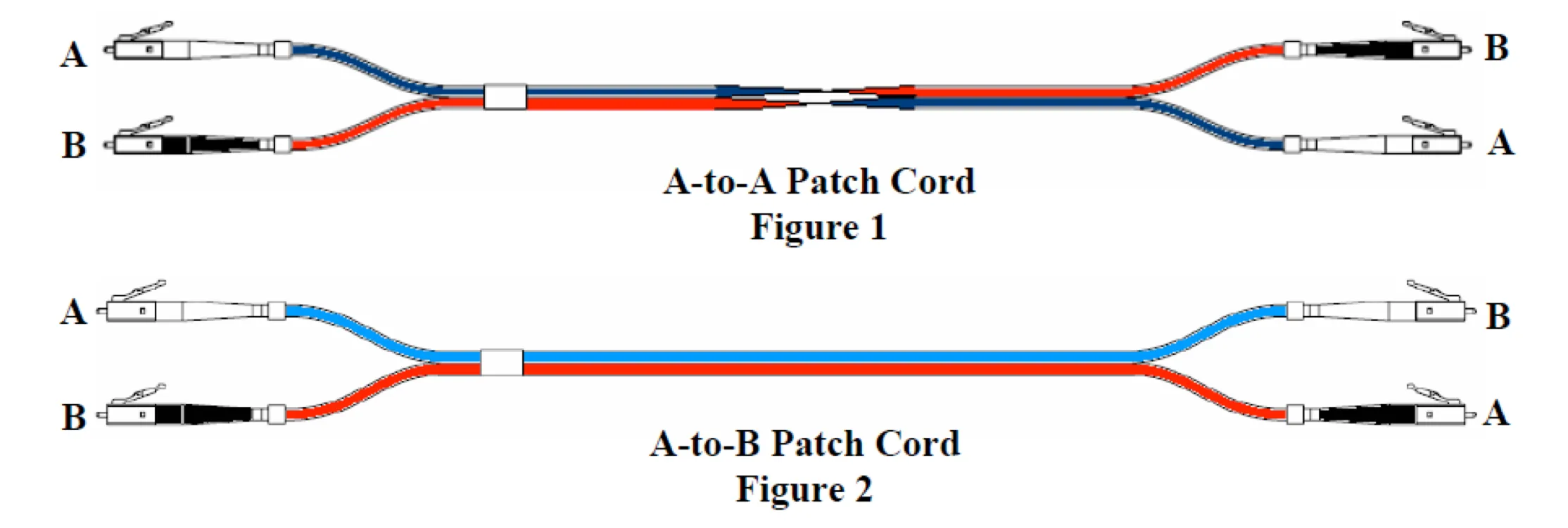
Two types of duplex fiber patch cords are defined in the TIA standard: A-to-A type shown in Figure 1 and A-to-B type shown in Figure 2.
Note: A-to-A patch cords are not commonly deployed and should be used only when necessary as part of a polarity method (See ANSI/TIA-568-C.0).
2.2 MTP/MPO Fiber Adapter
2.2.1 Type-A adapters
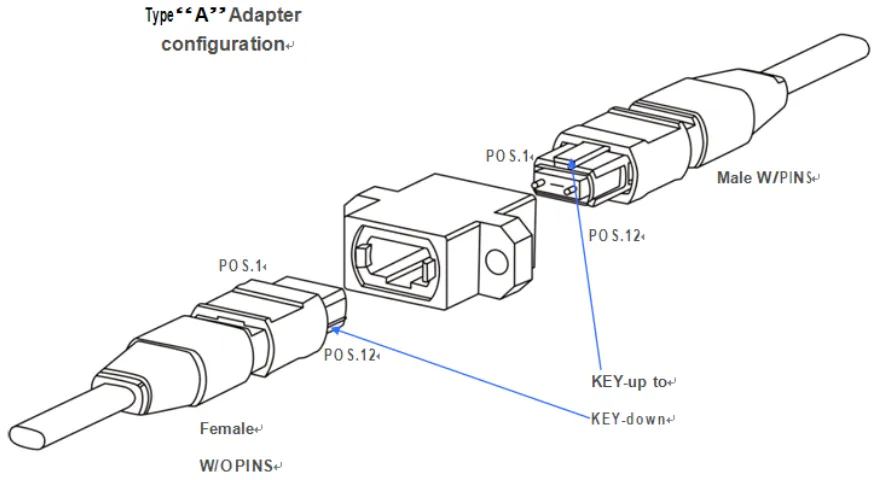
There are two types of array adapters, Type-A and Type-B. Type-A adapters shall mate two array connectors with the connector keys key-up to key-down.
2.2.2 Type-B adapters
Type-B adapters shall mate two array connectors with the connector keys key-up to key- up (keys aligned).

2.3 MTP/MPO array patch cord
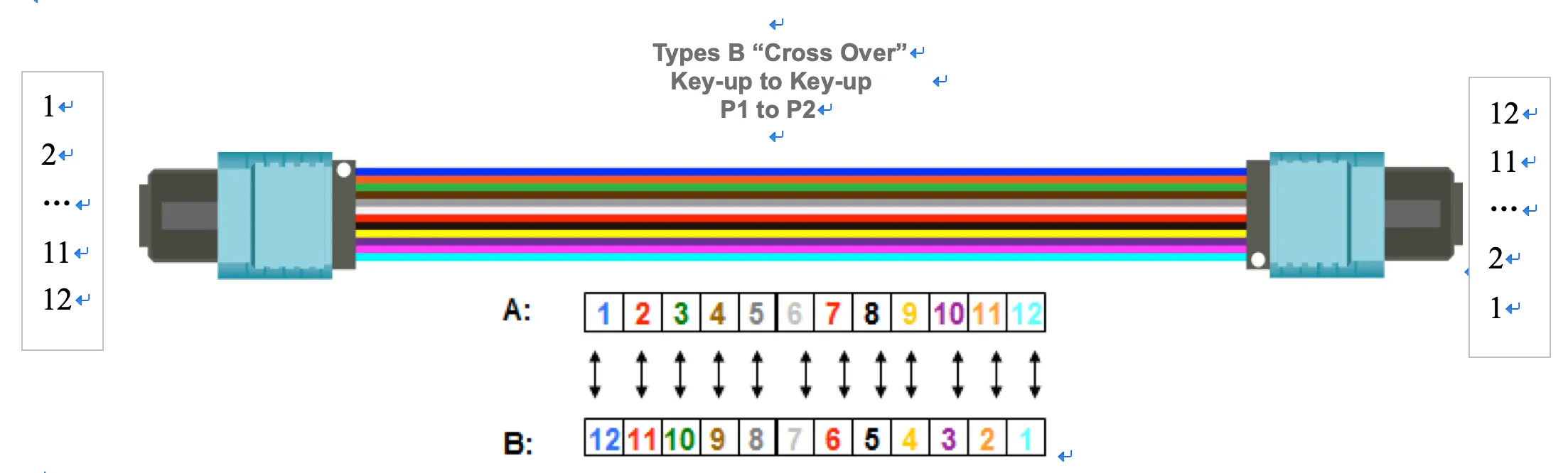
There are three different 12-fiber MPO/MTP-to-MPO/MTP backbone cables defined in the TIA standard. The three different cables: Types A, B and C are used for the three different connectivity Methods A, B and C respectively.


2.4 24-fiber MTP/MPO array patch cord
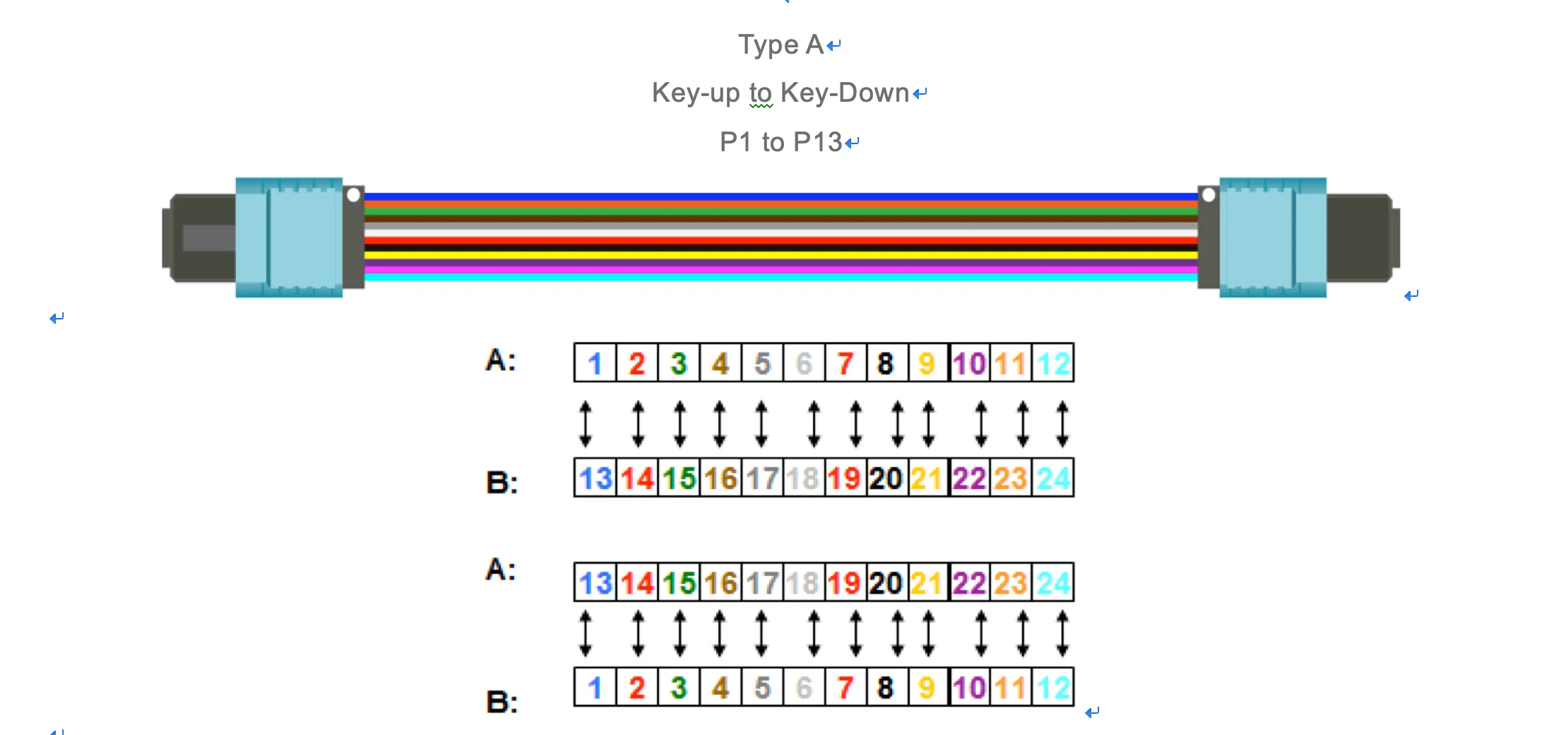
There are three different 24-fiber MPO/MTP-to-MPO/MTP backbone cables defined in the ,TIA standard (TIA-568.3-D). The three different cables: Type A, B and C are used for the three different connectivity Methods A, B and C respectively.
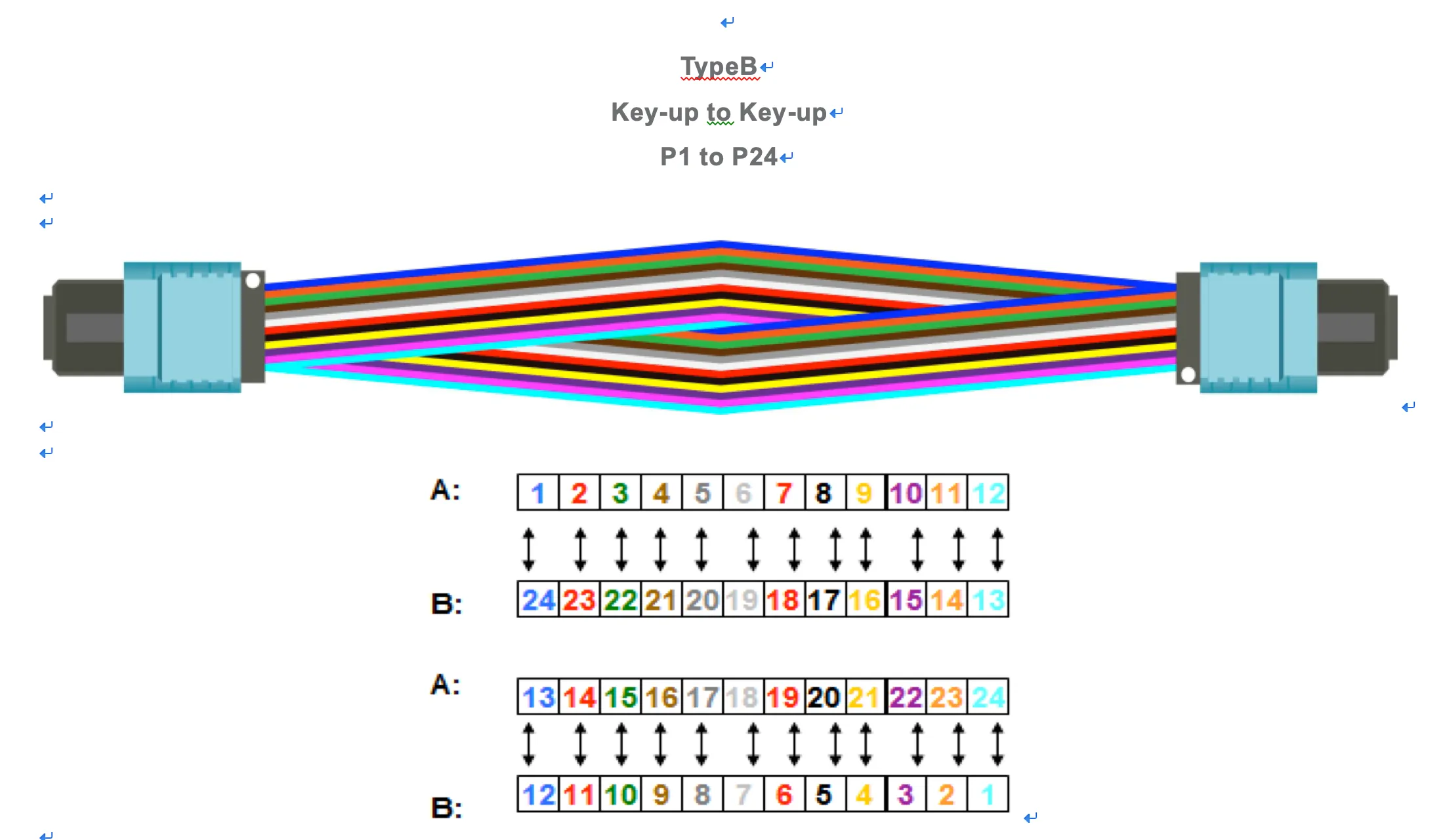
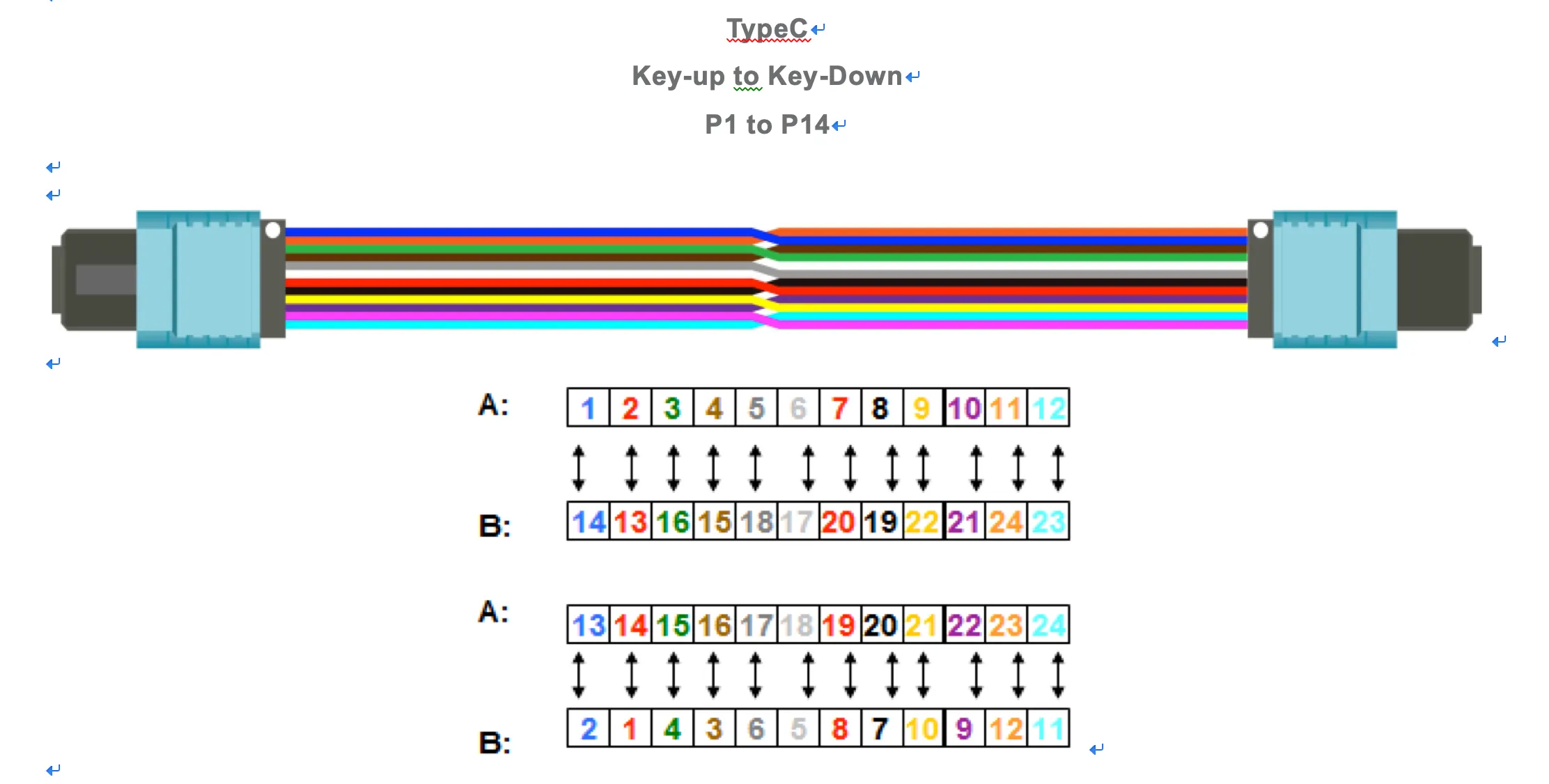
2.5 MTP/MPO breakout patch cord
There are two different 8-fiber MPO/MTP breakout cables:
40G to 4x10G
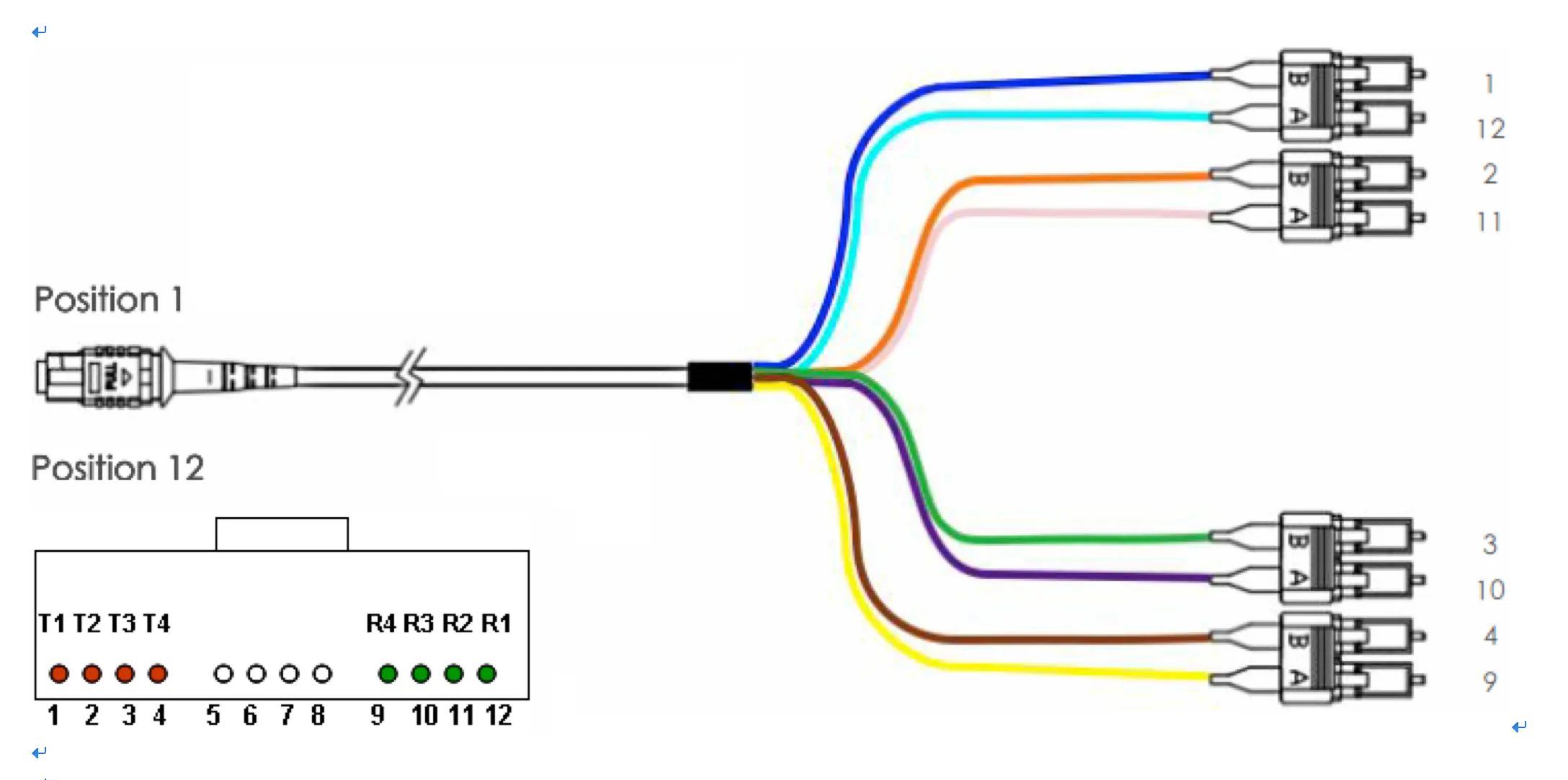
There are two different 12-fiber MPO/MTP breakout cables
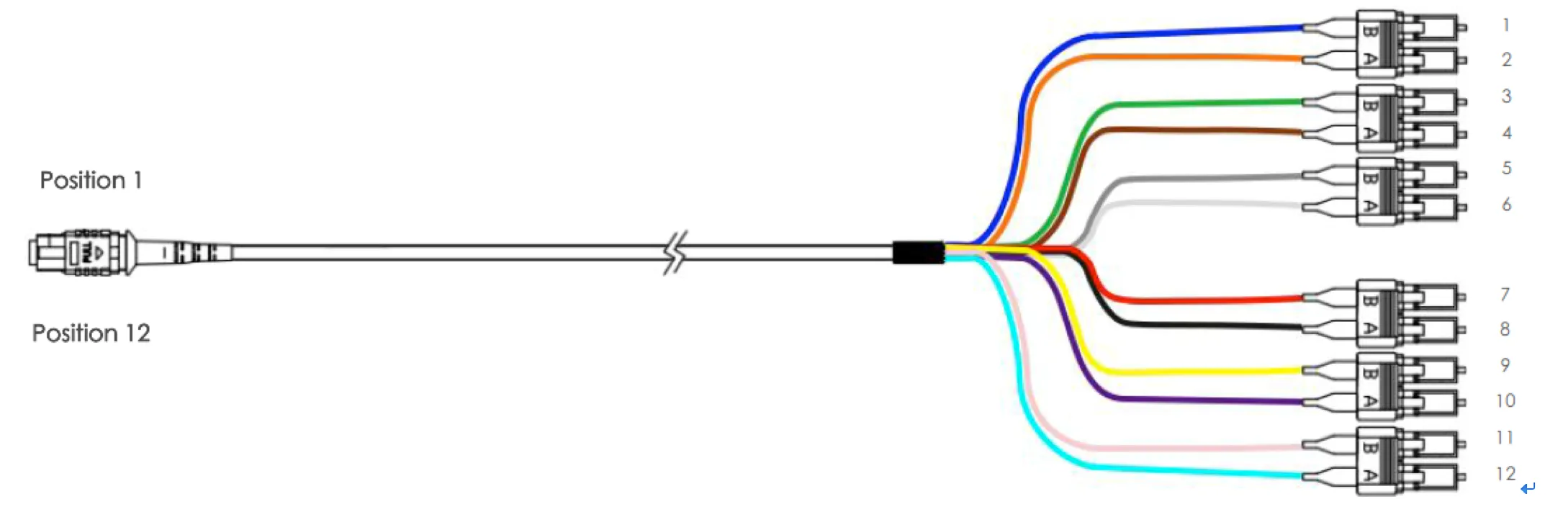
There are two different 24-fiber MPO/MTP breakout cables
