
Why OTDR and OSW Matter in Modern Optical Networks
OTDR and OSW have become essential tools in large-scale fiber optic network testing. As fiber counts continue to grow in data centers, backbone networks, and access networks, traditional manual testing methods are no longer sufficient. Therefore, integrating OTDR and OSW enables a fully automated, scalable, and highly reliable fiber testing solution.
In simple terms, the OTDR works as the “brain” and “analyzer,” while the OSW functions as an intelligent optical switch. As a result, they transform fiber testing from a manual task into a systematic and efficient operation.
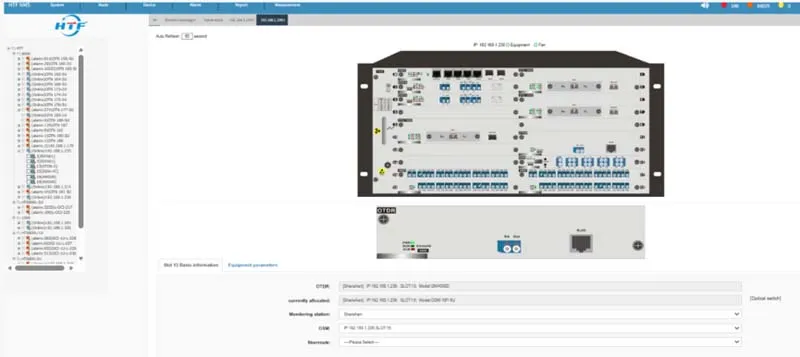
How OTDR and OSW Work Together
OTDR and OSW collaborate through a centralized control system. The OTDR sends test pulses and analyzes backscattered signals, while the OSW automatically selects and switches fiber channels under software control. At the same time, centralized software ensures that all test processes remain synchronized and repeatable.
A typical OTDR and OSW system includes:
- One OTDR, responsible for signal transmission and analysis
- One or more OSWs, providing multi-port optical switching
- Control software, managing test sequences and parameters
- The fiber network under test, often consisting of hundreds or thousands of fibers
Consequently, a single OTDR can sequentially test a massive number of fibers without manual intervention.
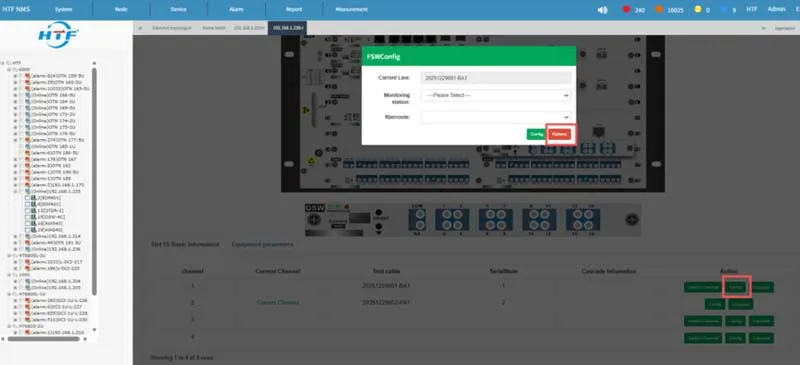
Key Advantages of OTDR and OSW Integration
- Dramatically Improved Testing Efficiency
Traditional fiber testing requires technicians to manually connect each fiber to the OTDR. However, this approach is slow and prone to errors, especially in high-density fiber environments.
With them, automated testing can complete hundreds of fiber measurements in minutes rather than days.
Therefore, testing efficiency increases exponentially as network scale grows.
- Significant Cost Reduction
OTDR and OSW systems reduce costs in multiple ways:
- Equipment cost savings: One centralized OTDR replaces multiple standalone devices
- Labor cost reduction: Technicians no longer perform repetitive manual connections
In addition, centralized testing lowers long-term maintenance expenses across large-scale optical networks.
- Higher Test Consistency and Reliability
All fiber measurements in an OTDR and OSW system use the same OTDR and identical test parameters. As a result, test results remain highly consistent and directly comparable.
Moreover, automated switching eliminates frequent manual fiber insertion, which significantly reduces the risk of connector contamination and physical damage.
- Remote and Unattended Fiber Testing
Another major benefit of it is remote operation. The system can be installed in a remote data center and controlled through a network connection. Therefore, maintenance teams can perform scheduled or on-demand tests without traveling on-site.
At the same time, this capability improves response speed and enables faster fault diagnosis across geographically distributed networks.
- Foundation for an Automatic Fiber Monitoring System
One of the most valuable applications of it is automated fiber monitoring. The system can continuously scan critical fibers on a 24/7 basis. As a result, potential risks are detected earlier than with manual inspection methods.
When the OTDR trace shows abnormal events, such as sudden loss increases or new reflections, the system immediately triggers alarms and accurately locates fault points. Consequently, network operators can resolve issues before service interruptions occur.
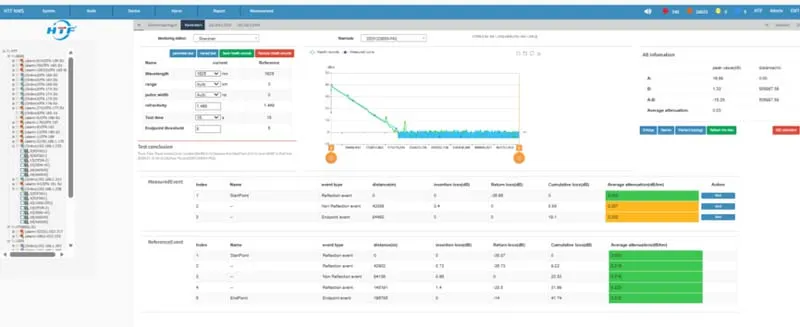
OTDR and OSW as the Cornerstone of Intelligent Optical O&M
In summary, It upgrade fiber testing from a single-point, reactive process to a comprehensive, automated, and proactive operation and maintenance system. Therefore, they play a critical role in modern optical infrastructure management.
They are not merely efficiency tools. Instead, they form the technological foundation of intelligent optical network monitoring, ensuring high reliability, high availability, and long-term network stability.