
In modern DWDM (Dense Wavelength Division Multiplexing) networks, maintaining service continuity is vital. Even a single fiber failure can lead to severe downtime and financial losses. This is where OLP (Optical Line Protection) comes into play—ensuring redundancy, automatic switching, and uninterrupted operation.
1. OLP Prevents Service Outages from Fiber Cuts and Link Failures
Fiber links are vulnerable to construction accidents, connector degradation, and natural disasters. Without OLP, a single fiber cut could disrupt thousands of users and take hours to fix.
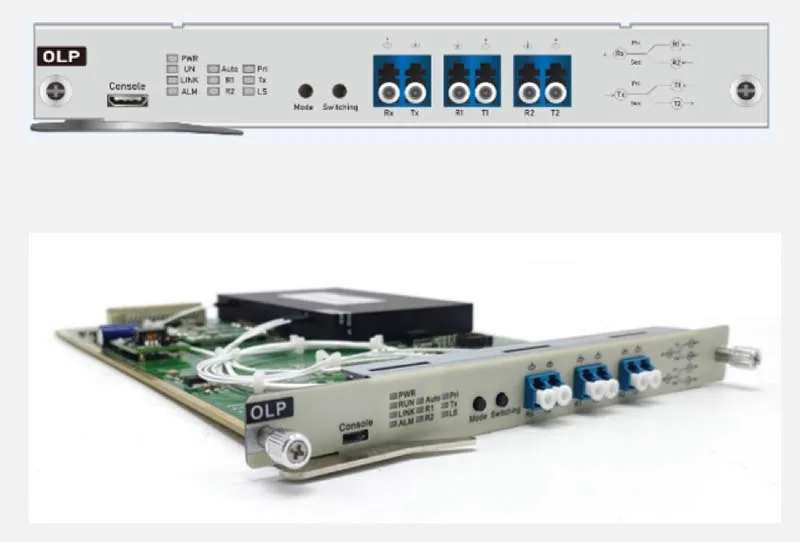
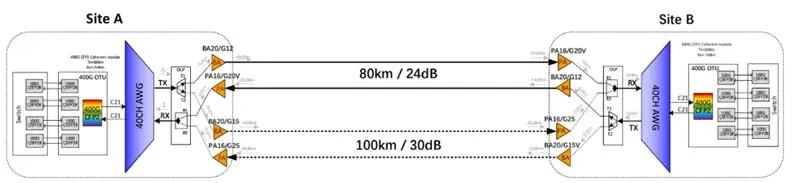
However, OLP eliminates this risk by providing dual fiber paths (primary and backup) between DWDM nodes.
When the primary link fails—detected by loss of signal or power fluctuation—OLP automatically switches traffic within 50 milliseconds. This rapid response keeps latency-sensitive services like 5G and VoIP running smoothly, ensuring zero service interruption.
2. OLP Ensures High Availability for Mission-Critical DWDM Services
In critical sectors such as finance, cloud computing, and government communication, availability is everything.
To meet the “five-nines” standard (99.999% uptime), OLP removes single points of failure in fiber infrastructure.
For instance, a Data Center Interconnect (DCI) using OLP can stay operational even when its primary fiber is damaged. Additionally, diverse path design—routing backup fibers through different regions—prevents simultaneous failures caused by storms or earthquakes.
3. OLP Complements DWDM’s High-Capacity Design
DWDM systems can carry up to 96×400G channels on a single fiber, meaning one fiber failure could disrupt massive capacity.
OLP safeguards this aggregated bandwidth by switching all channels simultaneously, without needing complex configurations at higher layers (L2/L3).
Moreover, OLP’s low-loss optical switches—such as MEMS or mechanical types—maintain signal integrity and minimize BER degradation during failovers.
As a result, both performance and reliability remain stable, even in challenging network environments.
4. OLP Reduces Operational Costs from Downtime
Downtime in DWDM networks can cost millions per hour, particularly for enterprises dealing with financial transactions or cloud services.
With OLP, downtime is reduced to milliseconds—avoiding the need for manual troubleshooting or dispatching repair crews.
Furthermore, OLP optimizes fiber utilization by activating backup paths only when needed, reducing unnecessary infrastructure investment.
This intelligent redundancy not only lowers operational costs but also enhances long-term ROI for network operators.
5. OLP Integrates Seamlessly with DWDM Network Management Systems
Beyond protection, OLP simplifies network management.
It integrates with existing NMS tools via SNMP or NETCONF/YANG, providing real-time monitoring of both primary and backup path statuses.
Operators can visualize switch events, assess link quality, and perform proactive maintenance.
During planned maintenance, OLP even allows manual override switching, enabling technicians to repair fibers without interrupting active services.
This flexibility is crucial for maintaining reliability during continuous upgrades and network expansions.
6. When OLP Is Most Critical
While OLP is optional for short campus links under 1 km, it is non-negotiable in most DWDM scenarios, particularly for:
- Long-Haul Backbones: Inter-city or cross-regional links, where repair time is long and failure impact is huge.
- Data Center Interconnect (DCI): Continuous cloud replication and storage synchronization require uninterrupted fiber connectivity.
- Mission-Critical Networks: Financial, healthcare, and government systems that demand zero tolerance for downtime.
In essence, OLP stands alongside EDFAs (for amplification) and DCMs (for dispersion) as a core component of resilient DWDM architecture.
Conclusion: The Backbone of Optical Resilience
In an age of digital transformation, OLP is not just a backup mechanism—it’s the foundation of optical resilience.
By ensuring automatic failover, protecting aggregated bandwidth, and integrating intelligent management, OLP allows networks to operate without fear of fiber failure.
Looking ahead, as DWDM networks evolve toward higher capacities and lower latencies, OLP will remain indispensable, powering the world’s most reliable optical infrastructures.