
1. What Is a Local Area Network?
A Local Area Network (LAN) is a small network that connects computers and devices within a limited area—such as a home, office, or school. It allows all connected devices to share resources, exchange data quickly, and access the internet through a single connection.
Because of its simplicity and high speed, a LAN is the foundation of most modern communication systems.
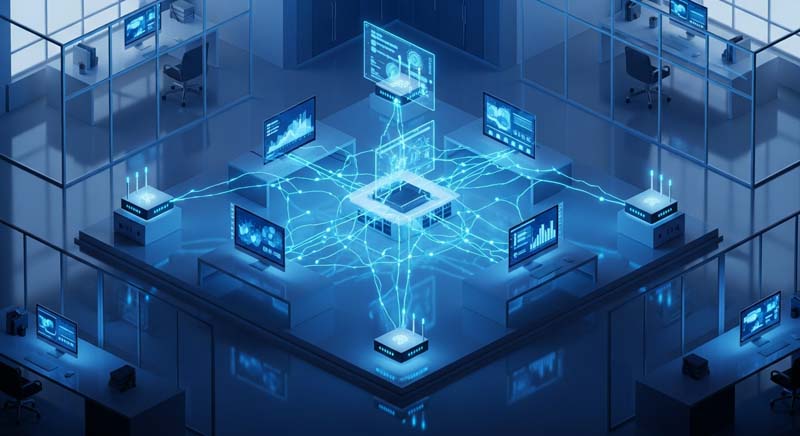

2. How a Local Area Network Works
In a typical setup, each device—like a laptop, smartphone, or printer—connects to a router or switch. This central hub manages data traffic so that files can move instantly between devices.
For example, your laptop can send a document to the printer without needing the internet. Similarly, your phone can stream videos from the same network with no delay.
3. Examples of Local Area Networks
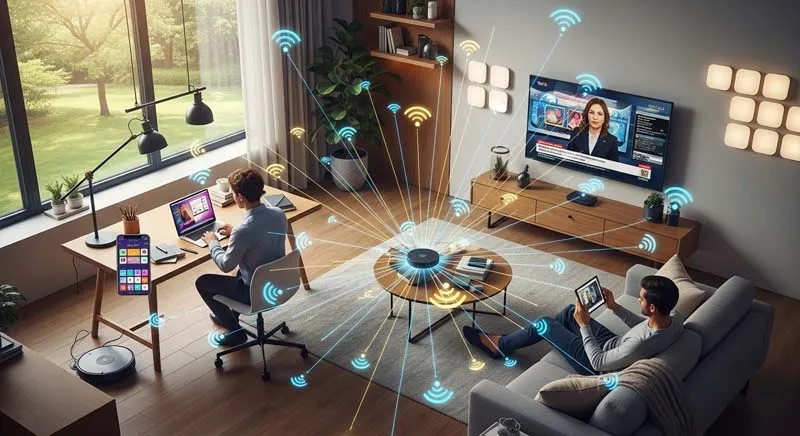
A simple example of a Local Area Network is your home Wi-Fi system. When your smart TV, laptop, and smartphone are connected to the same router, they are part of the same LAN.
In schools, students and teachers share files through the LAN. In offices, teams rely on LANs to store documents on shared drives and use network printers efficiently.

4. Key Benefits of a Local Area Network
a. Fast File Sharing
LANs enable instant data transfer between connected devices. Team members can work on shared files and exchange updates without relying on cloud uploads.
b. Stable Internet Access
All connected devices share the same internet source, which ensures stable and secure connectivity for everyone in the network.
c. Easy Troubleshooting
Understanding how your Local Area Network functions helps you detect and fix slow Wi-Fi or connection issues. You can identify whether problems come from the router, cables, or device setup.
5. Why Local Area Networks Matter
More than 90% of all internet traffic starts or ends inside a Local Area Network. These networks are the unseen engines behind streaming movies, online classes, and business operations.
By learning how your LAN works, you gain better control of your internet speed, security, and overall performance.
6. Final Thoughts
In today’s connected world, a Local Area Network is more than just a group of devices—it’s the backbone of communication in every digital environment. Whether at home or at work, mastering your LAN helps ensure smooth connections, fast data sharing, and reliable Wi-Fi performance.