
Understanding different types of Wide Area Network (WAN) is essential for building a stable, secure, and efficient multi-site communication system.

What Is a Wide Area Network (WAN)?
A Wide Area Network connects multiple local networks across cities, countries, or continents. In today’s digital operations, unreliable connectivity can cause downtime and customer frustration. Therefore, knowing the key types of Wide Area Network helps you make smarter, cost-effective decisions.
Why Understanding WAN Types Matters
Every organization has unique needs: startups often prioritize cost, while global enterprises demand high throughput and redundancy. By mapping needs to the right Wide Area Network type, you improve collaboration, reduce latency, and enhance security.

Common Types of Wide Area Network
Circuit-Switched WAN
A dedicated path between two points for the entire session. Pros: Stable, no interruptions during transmission. Cons: Wastes bandwidth when idle; setup time can be long. Best for: Real-time voice or video communication.
Packet-Switched WAN
Data is split into packets and routed independently for efficiency. Pros: Efficient bandwidth usage, scalable, flexible. Cons: Minor delays may occur due to dynamic routing. Best for: Modern data workloads where agility matters.
Leased Line WAN
A private, always-on connection between two locations. Pros: Consistent performance and strong security. Cons: Higher cost than shared networks. Best for: Sensitive or regulated data.
Switched WAN
Multiple sites connect through switching nodes for flexible routing. Pros: Efficient resource sharing, adaptable paths. Cons: Potential latency under heavy traffic. Best for: Multi-branch environments needing dynamic paths.
Point-to-Point (PPP) WAN
A direct link between two nodes with simple management. Pros: Reliable and straightforward. Cons: Not ideal for many branches. Best for: HQ to single branch connections.
Multi-Point WAN
Several devices share one link, trading bandwidth for cost savings. Pros: Cost-effective and flexible deployment. Cons: Less bandwidth per device. Best for: Small to mid-sized networks.
Mesh WAN
Each node interconnects with others, creating resilient paths. Pros: High fault tolerance; automatic rerouting. Cons: Complex and costly to maintain. Best for: Mission-critical uptime requirements.
How to Choose the Right WAN Type
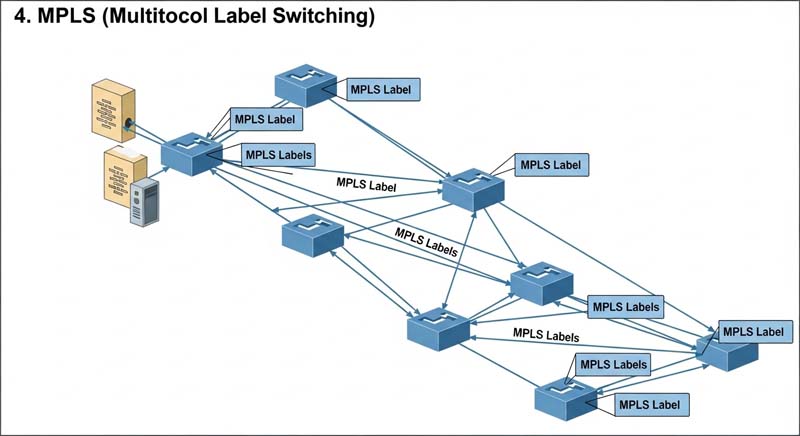
When comparing types of Wide Area Network, consider four factors: Coverage, Budget, Security, and Performance. Many organizations adopt a hybrid WAN (e.g., MPLS + SD-WAN) to balance cost, performance, and flexibility across sites.

The landscape of WAN can seem complex, but understanding the core types of Wide Area Network—from circuit-switched and packet-switched to mesh—simplifies decision-making. Align the technology with your coverage, security, and performance goals to achieve faster communication, stronger protection, and smoother operations across every location.