
The rise of AI and the digital economy is speeding up the use of 400G DWDM single wavelength technology. From data center interconnection (DCI) to metro and backbone networks, the demand for high-speed, high-capacity bandwidth is growing faster than ever.
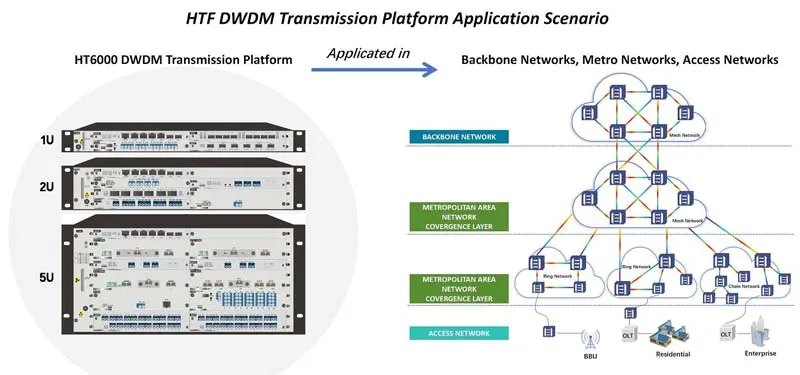
According to Zayo’s report, 400G DWDM single wavelength now leads the terabit-level bandwidth market. One terabit of capacity can move millions of files or HD videos in just milliseconds, marking a new level of speed and efficiency.
Bill Long, Zayo’s Chief Product and Strategy Officer, said the data reflects a strong market shift toward higher-bandwidth solutions. In the past, enterprises mainly used 100G circuits, but Ciena and Vertical Systems Group (VSG) expect 400G DWDM single wavelength to grow rapidly and become the new mainstream by 2029.
100G Still Dominates, but 400G Is Rising Fast
Although 400G DWDM single wavelength use is increasing, 100G is still the most common choice in manufacturing, finance, and data centers.
VSG reports that 100G circuits make up about 75% of the U.S. wavelength market. However, as AI computing, cloud networks, and IoT applications expand, more enterprises are moving to 400G DWDM single wavelength systems to upgrade their network infrastructure.
Big Customers Drive the 400G Market Boom
Zayo found that in 2024, nearly 62% of total wavelength capacity was bought by the top 10 customers — all large enterprises or telecom operators.
These high-capacity buyers (with needs over 1 terabit) completed about 15 deals in 2024, compared with 11 in 2020.
At the same time, dark fiber demand rose sharply — long-haul dark fiber purchases increased by 52.6% year over year.
Operators like FiberLight and Windstream have seen the same trend, showing how 400G DWDM single wavelength is driving growth in high-bandwidth markets.
Beyond AI: Real-World Uses of 400G DWDM Single Wavelength
The demand for 400G DWDM single wavelength is not only from AI workloads.
In manufacturing, thousands of IoT sensors send real-time data for robot control, quality checks, and environment monitoring.
The high throughput and low latency of 400G DWDM single wavelength enable digital twins and 3D simulations for predictive maintenance.
In finance, growing trade volumes require faster and more secure data transmission.
Long explained, “Even without AI, financial firms must move and store sensitive data to meet regulations. That’s why 400G DWDM single wavelength is vital for both performance and compliance.”
Hospitals also need high bandwidth to safely transfer large medical images and records for remote diagnosis.
Future Trend: 400G Becomes the Core of Network Upgrades
As enterprises continue to demand more bandwidth, 400G DWDM single wavelength will spread even faster.
While 100G is still the current mainstream, 400G offers higher capacity, lower power use, and greater scalability.
With AI, IoT, and cloud computing driving change, 400G DWDM single wavelength is leading a new era of optical communication — faster, smarter, and more connected.
HTF Helps Build the Next-Generation Network
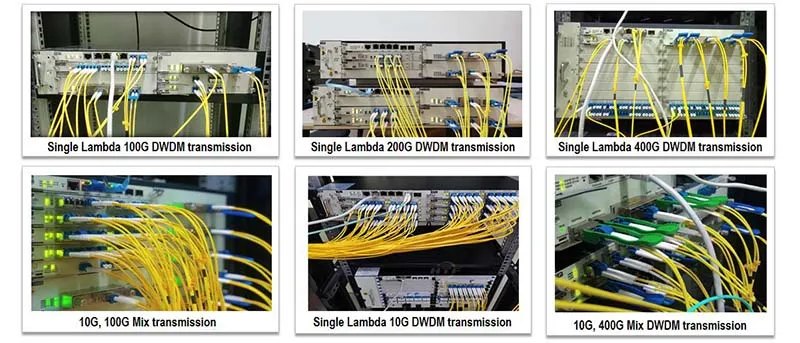
HTF focuses on advanced optical communication systems, offering complete 400G DWDM single wavelength, 200G, and 100G coherent DWDM/OTN solutions.

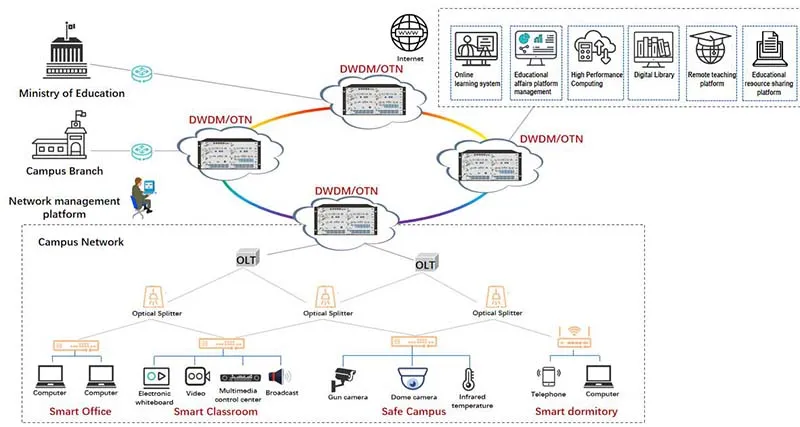
Our DWDM single wavelength systems support dual-fiber or single-fiber ultra-long-distance transmission, helping you expand DCI networks easily.
With HTF, your network becomes more efficient and intelligent — powering the AI and data-driven future.
400G DWDM single wavelength is not just a trend — it’s the key to enterprise digital transformation.
It will support AI, cloud computing, and IoT applications, creating a stronger, faster global data network.