
In today’s information society, the speed of data generation, transmission, and storage is rising at an unprecedented scale. The rapid growth of artificial intelligence, the expansion of hyperscale data centers, the rollout of 5G/6G networks, and the integration of cloud computing and IoT are all creating huge demands for bandwidth. In this context, DWDM (Dense Wavelength Division Multiplexing) has become an essential technology in global communication infrastructure. With its outstanding capacity and scalability, DWDM is laying the foundation for a high-bandwidth future.
Global Market Size and Growth Trends
According to the latest forecasts, the global DWDM market will reach between USD 13.87 billion and USD 20.77 billion in 2025. By 2032, this figure is expected to grow to USD 24.45–48.69 billion, with a CAGR of 8% to 12%. The DWDM transceiver market is growing even faster, expected to hit USD 4.35 billion by 2029 with a CAGR of 12%, reflecting strong demand for high-speed transceivers in data centers.
In China, the DWDM compact module market was worth about RMB 2.71 billion in 2024 and is expected to reach RMB 3.56 billion by 2031. Localization and 5G integration are driving the domestic DWDM market toward independence and efficiency.
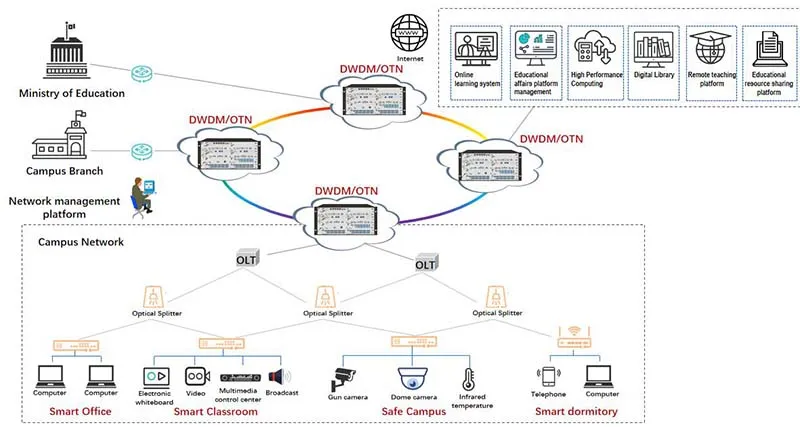
Technology Advances: Building Smarter and More Efficient Networks
The rapid evolution of DWDM is making optical networks smarter and more efficient, meeting the growing need for bandwidth.
- AI-driven intelligent optical networks
DWDM is no longer just a bandwidth multiplier but also the “nervous system” of smart networks. With AI, it enables dynamic wavelength allocation, predictive maintenance, and self-healing functions. These features lower latency and improve efficiency. With 160+ channels, 0.4nm spacing, and open standards like OpenZR+, DWDM is leading the way toward intelligent and scalable networks. - High-speed coherent pluggables and optical modules
From 400G to 800G, and now 1.6T coherent pluggable modules, DWDM innovation is accelerating. 800G modules are already in commercial use, and 1.6T technology is moving from labs to deployment. Tech giants like NVIDIA, Google, and AWS are driving demand for high-speed optical transceivers to support AI workloads. - New materials and green efficiency
New materials such as niobium phosphide (NbP) offer higher conductivity than copper at thicknesses below 5nm, improving efficiency and reducing heat. At the same time, renewable energy and DWDM are working together to support greener data centers. Advances like perovskite-silicon solar cells and advanced chip packaging (CoWoS-L, BSPDN) are enabling more sustainable and efficient networks. - China’s breakthroughs and independence
China is making progress in DWDM-related chip and module manufacturing. In 2025, the first EUV lithography machine with LDP technology entered testing, supporting DWDM chip production. SMIC is also advancing 7nm processes using local DUV equipment, reducing reliance on global suppliers. These developments strengthen China’s ability to build an independent DWDM supply chain.
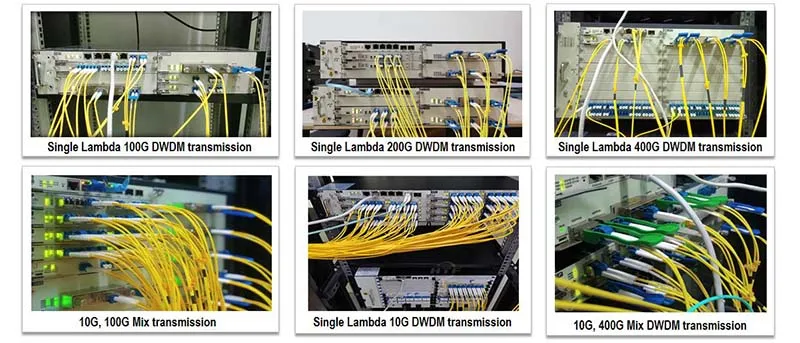
Applications: How DWDM Empowers Industries
The value of DWDM goes beyond telecom networks, extending into data centers, AI, healthcare, energy, and defense.
- Data centers and AI
Hyperscale data centers are the backbone of AI, but traditional interconnects can no longer handle the demand. DWDM enables high-speed interconnections, helping companies like OpenAI and Meta move data across facilities and accelerate AI development. - Telecom and 5G/6G
With the rollout of 5G and the exploration of 6G, backbone and edge networks require massive capacity. DWDM is widely applied in backbone transmission, ensuring stable and efficient long-distance connections. In China, 2025 reports highlight the role of DWDM in enabling vertical industry edge applications. - Healthcare and wearables
High-speed, low-latency transmission is vital in healthcare. DWDM, combined with HDI technology, supports compact wearable devices such as ECG monitors, enabling remote healthcare and real-time monitoring. - Renewable energy and defense
In energy and defense, DWDM also plays a role. For example, India’s DRDO has developed a 5kW continuous-wave fiber laser linked to DWDM optics. DWDM will also be part of future industries such as autonomous driving, immersive displays, and smart manufacturing.
Industry Dynamics: Global and China Perspectives
- International market
The CWDM/DWDM optical module market is expected to reach USD 12.5 billion by 2025. Growth in healthcare diagnostics, CDMO, and renewable energy industries also indirectly drives DWDM demand. - China market
Reports in 2025 highlight AI as a key driver for telecom and optical communication. Domestic semiconductor and optical module manufacturers are expanding DWDM capabilities, shaping a self-reliant ecosystem.
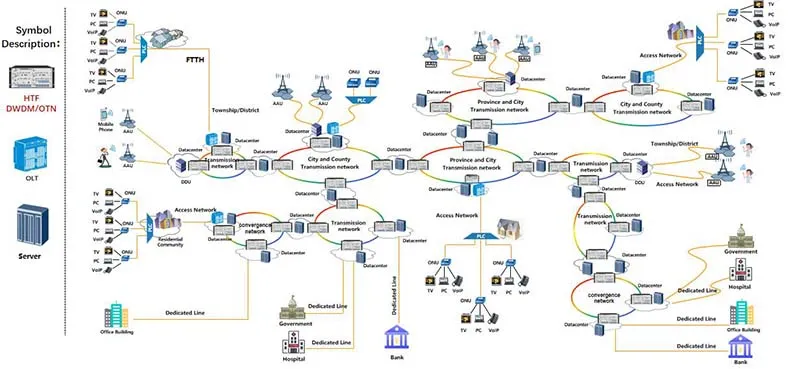
Future Outlook
- Sustainability and efficiency
Green growth will be central to DWDM’s future. Low-power operation, recyclable materials, and green data centers will shape sustainable development. - Localization and geopolitics
China’s chip production capacity is expected to triple by 2026 and rely fully on local tools after 2027. The DWDM market will show both global diversification and regional focus. - Emerging technology integration
From Micro LED to COB displays and immersive digital walls, DWDM will indirectly power new applications. Cross-industry collaboration will be a major driver of future expansion.
In a world of ever-growing bandwidth demand, DWDM is more than just a transmission technology—it is the backbone of digital progress. From supporting AI data centers to enabling green energy and driving 5G and 6G networks, DWDM is becoming the foundation of global digital infrastructure. With its capacity, intelligence, and sustainability, it will continue to play a central role in shaping the next decade.
As a leading solutions provider, HTF brings over 10 years of expertise in fiber optic R&D, WDM systems, and large-scale data transmission solutions. Its HTF HT6000 compact OTN transport system delivers high capacity, low cost, and flexible networking, supporting more than 1.6T at core nodes. Widely used in national, provincial, and metro backbone networks, it offers one of the most cost-effective platforms in the industry. For IDC and ISP operators, HTF provides scalable, efficient, and reliable DWDM solutions to unlock the full potential of the digital world.