
In an era where instant connectivity is not just a luxury but a necessity, the backbone of our digital world relies on the immense capacity and speed of optical fiber networks. At the heart of this revolutionary infrastructure lies a critical technology: Wavelength Division Multiplexing (WDM) equipment. Though often overlooked, WDM is the silent force powering the global communication renaissance, enabling the seamless flow of data that defines our lives today.
What is WDM Equipment?
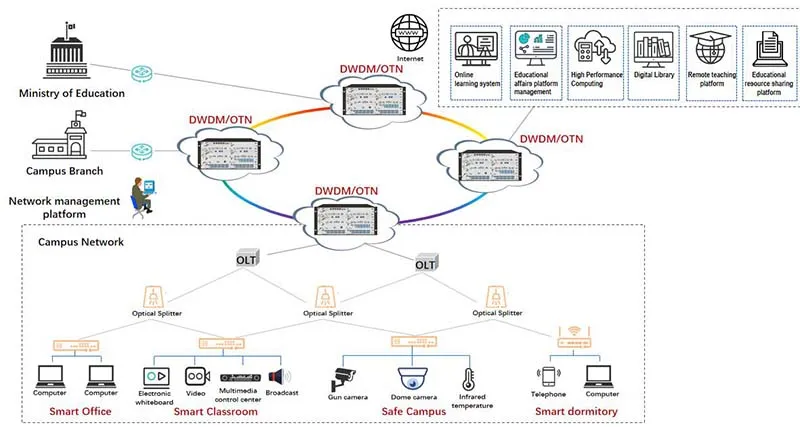
Wavelength Division Multiplexing is a technology that allows multiple optical carrier signals to be transmitted simultaneously on a single optical fiber by using different wavelengths (or colors) of laser light. WDM equipment, including multiplexers, demultiplexers, transponders, and optical amplifiers, makes this possible. It effectively creates virtual “lanes” on the fiber highway, dramatically increasing its capacity without the need for laying additional cables.
Why WDM is Indispensable in Today’s Communication Industry
Meeting Explosive Data Demand: The surge in video streaming, cloud computing, IoT, and 5G services has created an insatiable appetite for bandwidth. WDM systems, particularly Dense Wavelength Division Multiplexing (DWDM), can carry up to 80 or more wavelengths per fiber, multiplying capacity to terabit speeds. This makes it the only scalable and cost-effective solution to keep up with exponential data growth.
Long-Haul and Metro Networks: WDM is the cornerstone of long-distance and metropolitan area networks. It enables data to travel hundreds of kilometers without degradation, thanks to optical amplifiers that boost signals along the way. This efficiency reduces the need for frequent electronic regeneration, lowering both operational and capital expenditures for network providers.
5G Backhaul Foundation: The rollout of 5G promises ultra-low latency and high-speed connectivity. However, 5G base stations require robust backhaul connections to the core network. WDM provides the high-capacity, flexible, and reliable transport needed to support thousands of these stations, ensuring that 5G delivers on its promise.
Cloud and Data Center Interconnect: Major cloud providers and enterprises use WDM technology to interconnect data centers across continents. This allows for seamless data replication, load balancing, and disaster recovery, ensuring that services remain uninterrupted and responsive regardless of user location.
Future-Proofing Networks: With the advent of coherent optics and advanced modulation techniques, modern WDM systems are smarter and more adaptable than ever. They can dynamically allocate bandwidth, adjust to traffic patterns in real-time, and support next-generation services without requiring complete infrastructure overhauls.
The Future is Bright with WDM
As we move toward an increasingly connected future—with innovations like smart cities, autonomous vehicles, and the metaverse—the demand for bandwidth will only intensify. WDM technology continues to evolve, with innovations like Elastic Optical Networks and Space Division Multiplexing pushing the boundaries even further.
In summary, WDM equipment is not just important; it is fundamental to the communication industry. It is the invisible engine driving the digital transformation, empowering businesses, enriching consumer experiences, and bridging distances like never before. Without WDM, the digital world as we know it would simply not exist.
Investing in and advancing WDM technology is not an option; it is a necessity for building the resilient, high-capacity networks of tomorrow. The future of communication is bright, and it is being carried on a beam of light.